

New York City confirmed the first-ever 9/11 victim identification using forensic investigative genetic genealogy, nearly twenty-five years after the attacks.
At a Glance
- City officials identified an adult woman from World Trade Center remains using genetic genealogy.
- The technique links DNA from remains to family trees when direct matches are not possible.
- This marks the first 9/11 case solved with this method, expanding the toolkit for future IDs.
- The Office of Chief Medical Examiner has pursued identifications for decades with new DNA methods.
What New York City Confirmed And Why It Matters
Mayor Zohran Kwame Mamdani and the Office of the Chief Medical Examiner said an adult woman, previously unknown, has been identified from World Trade Center remains using forensic investigative genetic genealogy, with support from the New York City Police Department. This is the first time the city used this method to name a 9/11 victim, and officials presented it as a breakthrough in both science and service to families. The patient, years-long work to reach this point deserves attention on both counts.
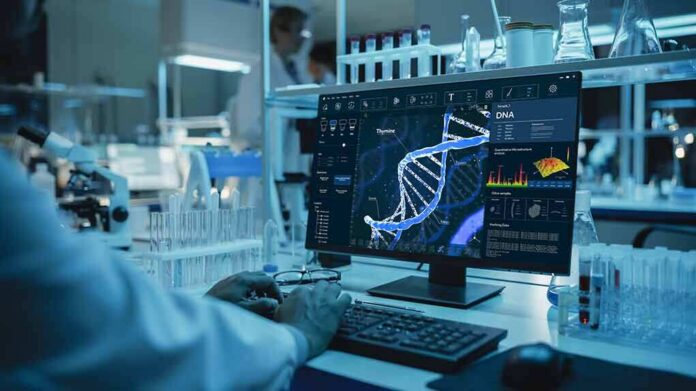
The method matters because many remains are tiny, degraded, and had failed earlier DNA tests. Traditional approaches look for short tandem repeat profiles or mitochondrial DNA, then compare them to family reference samples. Those steps can fall short when the sample is too damaged or the kinship link is distant. Genetic genealogy builds a family tree from partial DNA data and public or consent-based databases, then narrows toward a likely identity that lab scientists and detectives can confirm.
How The Technique Works When Others Do Not
Forensic investigative genetic genealogy starts with extracting whatever DNA signal remains in bone fragments. Scientists create a profile tailored for long-range matching, often across many genetic markers. Investigators then search for relatives who share segments that suggest a common ancestor. Teams trace those lines through records like obituaries, census rolls, and birth certificates, then test closer relatives to confirm. The New York City Office of Chief Medical Examiner confirmed they used this process to overcome prior dead ends.
That blended model reflects a wider shift in mass-fatality work. After the attacks, the Office of Chief Medical Examiner led the largest identification effort in United States history, cycling samples back through new methods as the science advanced. The lab has kept this mission active for decades, building on a deep database of victim references and remains, and retesting as technology improved. Moving to genetic genealogy is a natural next step in that long arc toward more answers.
The Scale Of The Challenge And The Long Fight To Name The Lost
The World Trade Center recovery created tens of thousands of remains that pushed forensic science forward. Early reports described thousands of bone samples selected for retesting after first waves of analysis, showing how often scientists had to revisit fragments as technology evolved. A peer-reviewed study tracked the heavy reliance on DNA because many bodies were fragmented, which limited traditional methods like dental or fingerprint comparisons. These facts explain why a single new identification, years later, still marks real progress.
City statements in recent years show steady, if slow, gains. Officials announced new identifications in 2023 and 2025 as advanced DNA tools delivered fresh matches, even from minuscule evidence. Each success reflects both a science story and a human story. Families want certainty. The lab wants accuracy. Public trust grows when leaders deliver clear, careful results, not headlines. On those terms, this new case aligns with conservative common sense: invest in what works, verify it, and honor the people involved.
What Comes Next For Families And Forensics
The first 9/11 identification via genetic genealogy opens realistic paths for more. ABC News reported city experts already see strong promise in the approach for other remains that resisted older tests. The New York City Office of Chief Medical Examiner can now apply this method in a focused way, guided by case triage, family consent, and privacy rules. This is not a silver bullet; it is a sharper tool in a careful toolkit, built to turn fragments into names with confidence.
The X post by @BarnabyHistory recounts the solemn recovery process at Ground Zero after 9/11, where crews paused work for prayers, flags, and honor guards carrying remains—intact or fragmented—until the official end on May 30, 2002, marked by bells, an empty flag-draped stretcher…
— Sherry Furr (@fur97671) September 5, 2026
Two guiding ideas should steer the work. First, keep retesting as methods advance. The city’s long record shows that patience plus better science leads to answers. Second, keep families at the center. Genetic genealogy depends on relatives’ trust and on clear consent channels. When government treats that trust as sacred, the lab earns room to innovate. When results come, the victory belongs to the families who waited and the professionals who refused to quit.
Sources:
townhall.com, abcnews.com, instagram.com, npr.org, youtube.com
© conservativefreepress.com 2026. All rights reserved.