

President Trump just put $10 billion on the table for Gaza’s reconstruction—but the biggest unanswered question is where the money comes from and who will control how it’s spent.
Quick Take
- Trump announced a $10 billion U.S. contribution to his new “Board of Peace” at its first meeting in Washington, D.C.
- Roughly 40–50 countries participated in some capacity, but reporting differs on the exact count and membership vs. observers.
- Nine countries pledged about $7 billion as an initial down payment toward an estimated $70 billion reconstruction need in Gaza.
- The funding source for the U.S. pledge and the board’s spending oversight mechanisms remain unclear in published reporting.
- The Board of Peace includes Israel but does not include Palestinian representatives, even as Gaza is the main focus.
Trump’s $10 Billion Pledge Puts America at the Center of a New Gaza Framework
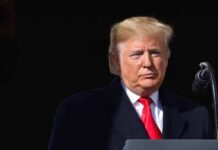
President Trump announced on February 19, 2026, that the United States will contribute $10 billion to the Board of Peace during the organization’s inaugural meeting in Washington, D.C. Reporting describes attendance as more than 40 nations to roughly 50, reflecting differences between members and observers. The board stems from Trump’s 20-point Gaza peace plan first proposed in September 2025, following a ceasefire reached in late 2025.
The size of the U.S. pledge stands out because it is substantially larger than other early commitments described in reporting. At the same time, the administration’s broader approach has included cuts to foreign aid, and published coverage said officials did not specify the funding source when asked. For taxpayers, that missing detail is not a footnote—it is the first question any constitutional republic should demand answered before billions move.
Big Reconstruction Numbers, Fragile Ceasefire Reality
Gaza’s reconstruction price tag is estimated around $70 billion, which puts the current pledges in perspective. Reuters reported nine countries committed $7 billion as an initial down payment, and other coverage describes additional pledges for specific projects, including FIFA funding tied to soccer-related efforts. The United Nations separately committed $2 billion for humanitarian assistance, but Trump publicly framed the board as an entity that could “almost be looking over” the UN.
Secretary of State Marco Rubio’s message underscored why the administration is pressing forward: “There is no plan B for Gaza,” he said, warning that the alternative is renewed war. Those stakes are real, but so are the unresolved issues that will decide whether rebuilding is durable or temporary. Reporting highlights major unanswered questions: Hamas disarmament, Israeli troop withdrawal, and the flow of humanitarian aid—each one capable of collapsing the ceasefire if mishandled.
Security Architecture: 20,000 Troops, 12,000 Police, and a Test of Sovereignty
Coverage describes an International Stabilization Force intended to deploy about 20,000 troops and help stand up roughly 12,000 police officers. Five countries—Indonesia, Morocco, Kazakhstan, Kosovo, and Albania—were reported as committing troops, while Egypt and Jordan were cited in connection with police training. Initial deployment plans reportedly focus on Rafah, a key population center, as the broader security environment remains unsettled.
Reporting also says about 2,000 Palestinians applied to join a transitional police force. That detail matters because rebuilding requires order, but order requires legitimacy. The plan’s biggest vulnerability is the one openly acknowledged: Hamas has promised disarmament but remains reluctant, in part due to fears of reprisals. Until a verifiable security arrangement exists, any reconstruction funding—American or otherwise—risks being poured into a landscape that could revert to conflict.
Governance Questions: Who Gets a Seat at the Table?
The Board of Peace’s structure is drawing scrutiny because it includes Israel but excludes Palestinian representatives, even as the board’s central mission is tied to Gaza’s future. Reporting points to a proposed technocratic Palestinian administration led by Ali Shaath, but details remain limited in public coverage. With power concentrated around the U.S. role and Trump’s leadership, the governance model may move faster than UN processes, but it also raises legitimacy questions.
Major U.S. allies including Germany, Italy, Norway, Switzerland, and the United Kingdom reportedly participated as observers rather than full members, signaling caution about the board’s authority and design. Norway also clarified it was not joining, contradicting earlier impressions. These are not minor diplomatic quirks; they are indicators that the board’s “what are we, legally?” problem is still unresolved—and unclear structure is exactly where bureaucracies hide waste and blurred accountability.
The Conservative Bottom Line: Accountability First, Outcomes Second
Trump’s supporters have long argued that the UN’s track record is heavy on talk and light on results, and the Board of Peace appears designed to challenge that model by concentrating oversight and demanding measurable outcomes. That may appeal to Americans tired of globalist institutions that spend freely without clear benchmarks. But the reporting also flags missing safeguards: how funds will be tracked, who audits spending, and what triggers a stop-payment if conditions are violated.
President Trump says U.S. will contribute $10 billion to Board of Peace. https://t.co/K10GJGuOZd
— CBS News (@CBSNews) February 19, 2026
For a constitutional republic, the principle is straightforward: bold diplomacy does not cancel out transparency. If the U.S. is committing $10 billion—on top of other international funding streams—Americans deserve clarity on the funding source, the legal authority for the board’s actions, and the enforcement mechanisms tied to security benchmarks like disarmament and safe aid delivery. Until those specifics are public, the promise is real, but so is the risk.
Sources:
Trump says U.S. will contribute $10 billion to Board of Peace
Trump to preside over first meeting of Board of Peace with many Gaza questions unresolved
Trump gathers members of Board of Peace for first meeting with some US allies wary of new body