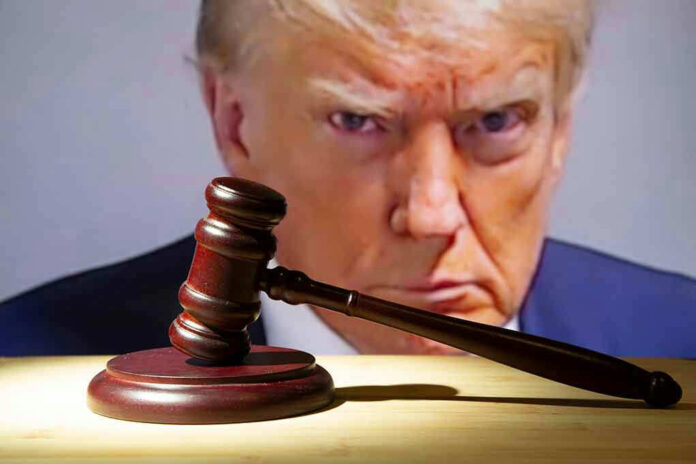
A federal judge’s ruling to halt workforce reductions threatens to check President Trump’s executive power, sparking controversy over constitutional boundaries.
Story Highlights
- Judge orders reinstatement of 675 federal workers with back pay after unlawful reductions.
- Trump administration argues against judicial interference in executive decisions.
- Legal battles highlight tension between congressional oversight and executive authority.
- Unions and affected workers celebrate the ruling as a victory for job security.
Judge Orders Reinstatement of Federal Workers
On December 17, 2025, U.S. District Judge Susan Illston issued a ruling requiring the Trump administration to reinstate 675 federal employees who were terminated following a government shutdown. The decision mandates that these workers, from agencies such as the State Department and the Education Department, receive back pay. This ruling underscores judicial checks on executive overreach, especially concerning workforce reductions that violate congressional resolutions established to protect federal employees.
The layoffs initially occurred during the 2018-2019 shutdown, with Congress explicitly prohibiting such reductions through budget resolutions. The Trump administration, seeking to streamline the federal workforce, had challenged these restrictions, arguing that they only applied to new notices and not to the rehiring of previously laid-off workers. Judge Illston’s ruling, however, emphasized the congressional intent to protect these jobs, marking a significant legal victory for unions and affected employees.
Legal and Political Implications
The ruling has intensified the debate over the limits of executive authority. The Trump administration has argued that such judicial decisions amount to an overreach, disrupting the executive branch’s ability to manage its workforce effectively. In contrast, unions and employee representatives, such as the American Federation of Government Employees, view the decision as a necessary check on potential abuses of power.
Judge Illston’s ruling is the latest in a series of legal actions examining the balance of power between the executive branch and other government entities. It follows similar decisions by other judges, such as Judge William Alsup’s ruling earlier in 2025, which also challenged the legality of mass firings of probationary employees. These cases highlight ongoing tensions over constitutional interpretations and the role of checks and balances in federal governance.
Impact on Federal Workforce and Future Developments
The immediate effect of Judge Illston’s order is the restoration of jobs and benefits for 675 workers, providing much-needed financial relief. However, the decision also poses logistical challenges for federal agencies, which must now manage the rehiring process and ensure compliance with the court’s directives. The Trump administration’s legal team has indicated plans to appeal the decision, potentially bringing the case before the Supreme Court.
The outcome of these appeals could set important precedents for the future of federal employment practices and the extent of executive power. As the legal battles continue, the broader implications for government operations and employee rights remain a central concern for policymakers, legal analysts, and the public.
Sources:
SCOTUSblog – Trump asks Justices to block ruling on rehiring federal employees
SF Chronicle – Judge orders rehiring of federal workers
GovExec – Trump’s mass probationary firings were illegal, judge concludes
Washington Times – Judge orders Trump to stop reductions in force, rehire workers
NASFAA – 20 Democratic-Led States Sue Trump Administration over Unlawful Layoffs