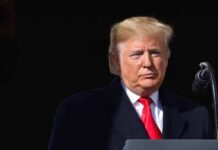
An Ohio Democrat running for attorney general just said he’s going to “kill Donald Trump”—then tried to wrap the threat in the language of “due process.”
Story Snapshot
- Democratic Ohio attorney general candidate Elliot Forhan posted a Jan. 27 Facebook video saying he is going to “kill Donald Trump,” later framing it as seeking a conviction and execution through the legal system.
- Republican officials, led by Ohio Auditor and AG candidate Keith Faber, condemned the remarks as disqualifying and dangerous political rhetoric.
- As of the morning of Jan. 28, prominent Ohio Democrats—including gubernatorial candidate Amy Acton and party leaders—had not publicly denounced Forhan’s phrasing.
- Forhan’s political background includes prior party discipline during his legislative term and earlier inflammatory posts cited by critics as a pattern.
What Forhan Said, and Why It’s Driving Outrage
Elliot Forhan, a former Ohio state representative now running for Ohio attorney general, posted a video on Jan. 27 declaring, “I want to tell you what I mean when I say that I am going to kill Donald Trump.” Reporting describes Forhan as clarifying that he meant pursuing a criminal conviction “beyond a reasonable doubt,” followed by appeals and execution under capital punishment. Even with that legal framing, the violent phrasing became the story’s flashpoint.
For conservatives who have watched politics normalize “ends justify the means” talk, the controversy is less about whether Forhan claims he meant a courtroom process and more about the deliberate choice of words. An attorney general is not a cable-news pundit; the office directs prosecutions and influences law enforcement priorities. Rhetoric about “killing” a political opponent—especially a sitting president—invites questions about temperament, ethics, and whether political passion is being placed above equal justice.
Republican Leaders Say the Language Is Unfit for a Top Law-Enforcement Job
Ohio Republicans moved quickly on Jan. 28, criticizing Forhan and urging Democrats to distance themselves. Keith Faber, the Republican candidate for attorney general and Ohio’s state auditor, publicly condemned the remarks and argued they showed Forhan is unqualified for the position. Republican gubernatorial candidate Vivek Ramaswamy also blasted the silence from Democrats and framed the lack of condemnation as a test of whether the party will police its own extremes.
Other Ohio Republicans echoed the same point: the attorney general’s job demands public trust and restraint, not inflammatory slogans. State Sen. Rob McColley and Republican treasurer candidate Jay Edwards highlighted Forhan’s past inflammatory statements as context for why critics view the video as more than a one-off. The political dynamic is straightforward: Republicans are using the episode to define Democrats as reckless on law-and-order standards in a state where Trump remains strong.
Democratic Silence Becomes Part of the Story
As the backlash spread, attention shifted from Forhan alone to the broader Democratic response—or lack of one. Reports said that as of Wednesday morning, Jan. 28, Ohio Democratic figures being pressed to respond, including Amy Acton, had not publicly denounced Forhan’s phrasing. In a tense national climate that has seen violence and threats pull into political life, voters tend to judge parties not only by what fringe candidates say, but by what leaders tolerate.
The practical stakes are larger than one video clip. If a candidate for the state’s top law-enforcement office normalizes talk of executing a political opponent—while campaigning—it can further erode confidence that prosecution decisions will be insulated from ideology. For voters who prioritize constitutional limits and equal treatment under the law, the controversy highlights why rhetoric matters: it signals how a public official might use discretion, power, and publicity when partisan emotions run hot.
Forhan’s Record and the Questions Still Unanswered
Forhan served one term in the Ohio House and previously faced party discipline during his tenure, including stripped committee assignments and reduced office access, according to reporting. He later lost reelection after finishing third in a Democratic primary. Republicans also point to earlier inflammatory posts as evidence of a pattern, citing commentary he made after conservative activist Charlie Kirk was assassinated in 2025. Those past incidents do not prove criminal intent, but they shape perceptions of judgment.
Key facts remain limited based on available reporting. No formal investigation or law-enforcement action connected to this specific video was reported in the research provided, and accounts differ on whether Forhan “walked it back” or simply added legal context. What is clear is that the video stayed online as the story circulated and campaign opponents amplified it. For Ohio voters, the central issue is whether the state’s chief prosecutor should speak in terms that blur activism with the power to prosecute.
Dem Candidate Threatens to Execute Trumphttps://t.co/yJfJz33SPF
— PJ Media (@PJMedia_com) January 28, 2026
The episode lands at a moment when Americans are demanding cooler heads and clearer lines between political speech and state power. Conservatives who care about due process should be consistent: if Forhan truly meant a lawful process, the “kill Trump” phrasing was still gratuitous and irresponsible for an attorney general candidate. If he meant it as provocation, it still raises the same concern—because public trust in law enforcement depends on leaders who respect limits, restraint, and the Constitution.
Sources:
Ohio Democrat outlines plan to ‘kill Donald Trump’ via death penalty
Democrat AG candidate announces plan to “kill Trump”
Who is Elliot Forhan? Ohio attorney general candidate explains vow to “kill Trump”