

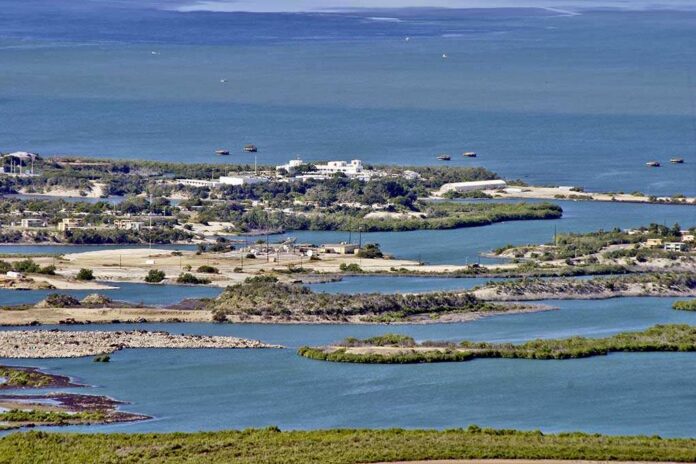
On a windswept Alaska island with more empty buildings than people, Americans quietly pay about $340,000 a year for internet service that no one uses.
Story Snapshot
- Federal phone fees fund obsolete internet at an abandoned Navy base on Adak Island.
- Investigators found zero residents using the Federal Communications Commission (FCC) subsidized service.
- Locals instead pay for faster Starlink satellite internet that gets no federal subsidy.
- The Universal Service Fund that pays for this waste collects billions from phone bills nationwide.
A near-empty island wired like a town that no longer exists
Adak Island sits about 1,200 miles southwest of Anchorage, Alaska, with harsh weather, rugged terrain, and a history that feels frozen in time. For decades it hosted a major United States Navy base, thousands of sailors, families, and the full support structure of a Cold War outpost. The base closed in 1997, and most people left soon after. Today, the state estimates around 77 residents, while people who live there say it is closer to two dozen.
Yet hundreds of buildings remain, many empty and decaying. Into this ghost town landscape, federal money still flows to keep old internet lines alive. An Anchorage-based telecom, Adak Eagle, receives more than $340,000 per year to provide wired internet service to these structures. Investigative reporters say the subsidy covers about 306 buildings, even though only a handful are occupied and the town functions like a tiny village, not a busy base.
Internet no one uses, paid for by everyone
Reporters from Anchorage Daily News and ProPublica traveled to Adak and walked the ground. They visited every building the telecom reported as having service. They knocked on doors and spoke with residents. They looked for a single person who actually subscribed to the subsidized internet service. They did not find one. The Benton Institute’s summary of their work puts it plainly: “No one subscribes to the island’s subsidized internet service.”
Residents instead go online using Starlink, the satellite internet service launched by Elon Musk’s company. Starlink arrived on Adak around 2023 and requires no support from the Federal Communications Commission’s Universal Service Fund. Locals say it is up to 40 times faster than the old wired service and costs roughly $90 to $140 per month, far less than the combined bills and high prices Adak Eagle used to charge on top of its federal checks. In other words, the market solved the speed problem, but Washington kept paying for the slow option.
The Universal Service Fund and how your phone bill feeds it
The money that pays for Adak’s unused internet does not come from a simple line item in the federal budget. It flows through the Universal Service Fund, a nationwide system of telecommunications fees and subsidies run by the Federal Communications Commission. The fund started in 1997 to help make phone service affordable in rural and high-cost areas and later expanded to cover broadband internet.
Every month, most Americans see a small charge on their phone bill, often labeled “Universal Connectivity Charge” or “USF fee.” That money does not appear out of nowhere. The Federal Communications Commission requires all telecommunications companies, and some related providers, to pay into the Universal Service Fund based on their interstate and international revenues. About 82 percent of those companies pass the cost on to customers. So when the fund pays hundreds of thousands of dollars for internet in empty buildings on a remote island, the tab ultimately lands on almost everyone’s phone bill.
How a multibillion-dollar program lost the plot in Adak
The Universal Service Fund spends billions of dollars each year through several programs, including a “high-cost” program that subsidizes carriers in places where service is expensive to provide. On paper, that sounds reasonable: help remote areas get connected to modern networks. In practice, watchdogs and analysts have found repeated cases where money keeps going to dead ends—abandoned communities, obsolete systems, or customers who no longer exist.
Adak fits that pattern cleanly. Reporters found a telecom keeping hundreds of lines live for internet service that no one on the island said they used. They also found a population so small that the per-person subsidy works out to roughly $14,000 a year. That number is shocking even before you consider that most residents have switched to unsubsidized Starlink. When a federal program pays five figures per person for a product they do not buy, common sense says something has gone sideways.
Accountability questions and what conservatives see here
Conservative critics of big federal programs look at Adak and see a textbook example of how good intentions can decay into waste. The Universal Service Fund started as a way to connect rural Americans. Over time it grew into a complex flow of money that even Congress’ own researchers describe as disbursing $8 to $9 billion per year across several programs. In Adak, this huge system now funds internet lines in empty Navy housing while real families rely on a private satellite service instead.
🔴 U.S. pays $340k/year for internet at abandoned Alaska Navy base with no users
Adak Island, a former Naval Air Facility closed in 1997, maintains a population below 100. The federal government pays an Anchorage firm $340,000 annually to provide broadband internet service to… pic.twitter.com/twC4yU2qrb
— NewsTongue (@NewsTongueX) July 21, 2026
Investigations show the Federal Communications Commission has not publicly answered the core question: why keep paying for service that has no subscribers. That silence bothers people who value limited government and responsible spending. They argue that helping rural towns should not mean writing blank checks to telecoms for ghost networks. They also worry that anyone who challenges this setup will be painted as “against rural broadband” instead of “for auditing waste.” That framing makes reform harder, even when numbers from Adak speak loudly on their own.
Sources:
taskandpurpose.com, benton.org, congress.gov, en.wikipedia.org, fcc.gov, propublica.org, politico.com, sgp.fas.org, itu.int
© conservativefreepress.com 2026. All rights reserved.