

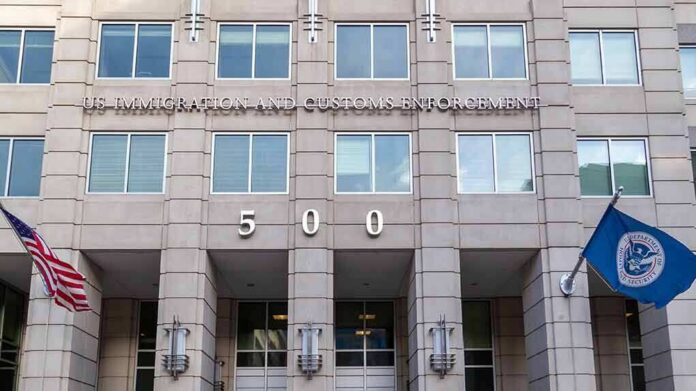
Rep. Ilhan Omar moved to reroute about $140 billion from federal immigration enforcement into grants for communities hit by large-scale raids.
Story Snapshot
- Omar introduced the Make ICE Pay Act after a Minnesota enforcement surge.
- The bill would block and redirect roughly $140 billion from Immigration and Customs Enforcement and Customs and Border Protection.
- Funds would flow to states, cities, schools, small businesses, and nonprofits tied to recovery efforts.
- The plan taps a long fight over how Washington moves and labels immigration dollars.
What The Bill Does And Why It Landed Now
Representative Ilhan Omar introduced the Make ICE Pay Act following “Operation Metro Surge” in Minnesota, a recent enforcement push that her office cites as the trigger for action. The bill’s point is simple and sweeping. It would block and redirect roughly $140 billion that Congress set for Immigration and Customs Enforcement and Customs and Border Protection into a national grant program aimed at recovery in affected areas. Omar frames it as making federal agencies “pay the price” for harms from large operations.
Representative Angie Craig joined Omar in pressing the reimbursement angle. Their materials describe grants for costs and damages linked to federal enforcement, with state and local governments, schools, small businesses, and nonprofits as eligible recipients. They pitch the Department of Housing and Urban Development as the program hub, which signals a focus on housing disruptions, business closures, and community services during raids. The idea turns enforcement money into recovery money and makes relief the first claim on those dollars.
Where The $140 Billion Number Comes From
The figure ties back to the “One, Big Beautiful Bill,” a major Republican budget and immigration package that set large multi-year funding for immigration enforcement across the Department of Homeland Security. Analyses put new or extended authorities and funding for Immigration and Customs Enforcement and Customs and Border Protection in the hundred-billion range, which Omar’s office cites as the pool to be blocked and redirected. The Make ICE Pay Act, as described, would seize that budget lane and flip its use from detention and operations to community relief.
Congress has fought for years over how much freedom the Department of Homeland Security should have to shift money among accounts after a budget passes. Congressional Research Service reports detail how these transfer and reprogramming tools expanded over time and then faced new limits. The Government Accountability Office has also noted how the department has shifted billions within its accounts to cover Immigration and Customs Enforcement needs. Omar’s plan leans into this history by locking funds on the front end.
The Policy Bet: Relief First, Enforcement Second
Supporters argue that large raids bring sudden costs. Overtime for local police, court strain, housing shocks, and school disruptions all hit at once. The proposed grants would cover those bills before anything else, rather than cleaning up later with patchwork aid. That sequence appeals to common sense budgeting: if Washington lights the fuse, Washington should pay the tab. It also echoes conservative ideas about accountability. If a federal action imposes local costs, the federal government should own those costs up front.
Critics of past budgets point to a pattern. When Immigration and Customs Enforcement overruns accounts, the department has used transfers from other missions, like disaster relief or transit security, to keep enforcement on pace. Advocacy groups and some lawmakers cite this as mission creep by budget maneuver. Whether you favor tough enforcement or not, surprise shifts complicate planning for states and cities. A bright-line grant that pays defined local costs is cleaner and more transparent.
How It Would Work: The Mechanics That Matter
The bill’s backers describe a federal grant program run through the housing department, with clear eligibility for governments, schools, nonprofits, and small businesses that can show harm or cost due to federal enforcement actions. That design pushes relief money where people actually feel the impact. A school that needs trauma counseling, a small shop that lost staff overnight, or a city that paid for emergency shelter would have a direct path to reimbursement.
Rep. Ilhan Omar's Make ICE Pay Act Would Divert $140 Billion to Communities and Nonprofits https://t.co/NrFN2nb2tP
— Marlon East Of The Pecos (@Darksideleader2) September 20, 2026
Budget process experts will watch two friction points. First, how the law would fence off the $140 billion so the Department of Homeland Security cannot move it back into enforcement through reprogramming. Second, how Congress will score and time the grants alongside multi-year immigration appropriations already on the books. Those details decide whether this is a real reversal or a message bill. Still, the core choice is stark: treat enforcement dollars as fixed mission money, or as a pool that must first make communities whole.
Sources:
twitchy.com, omar.house.gov, quiverquant.com, congress.gov, gao.gov, aila.org, immigrantjustice.org
© conservativefreepress.com 2026. All rights reserved.