A major retail chain now enforces stricter ID requirements to buy a hot dog than many states demand to cast a vote in federal elections, exposing an absurd double standard that undermines election integrity.
Story Snapshot
- Costco rolls out nationwide membership ID scans at entrances and food courts in 2026, blocking non-members from accessing services
- Rep. Ryan Zinke highlights contrast between private-sector ID enforcement and lax voter identification laws in multiple states
- Connecticut accepts Costco membership cards as valid voter ID despite TSA rejecting them for air travel under REAL ID standards
- Policy shift spotlights growing frustration among conservatives over inconsistent ID requirements that protect retail profits but not election security
Costco’s Strict Membership Verification Expands Nationwide
Costco implemented comprehensive membership ID scans across stores in early 2026, requiring barcode or QR code verification at entrances and food courts. The warehouse giant piloted the technology in Southern California locations for several years before expanding to Florida and other markets. Employees now scan membership cards to prevent non-members from accessing the retailer’s famously cheap food court offerings, including the protected $1.50 hot dog combo. The enforcement targets abuse that erodes the value proposition for paying members who contribute $65 annually for basic membership.
Double Standard Exposed in State Election Laws
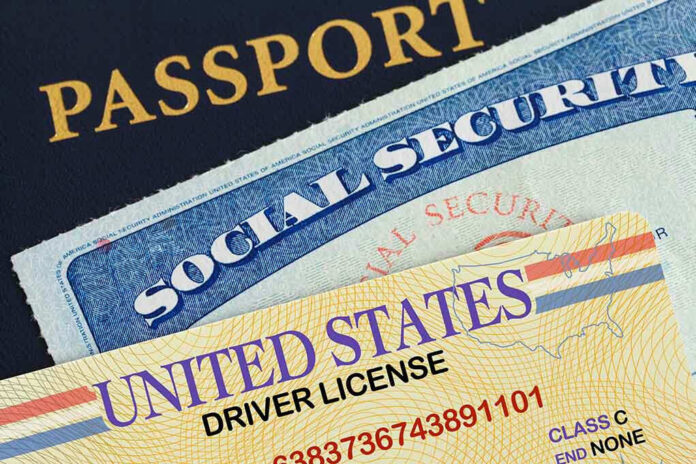
Rep. Ryan Zinke drew attention to the glaring inconsistency between retail ID enforcement and election security measures. While Costco demands verified identification to purchase a hot dog, states like Connecticut accepted Costco membership cards as valid voter identification during 2024 early voting periods. Poll observer Fred DeCaro documented this practice, which allows non-photo identification at polling locations while federal agencies like TSA explicitly reject the same cards for air travel under May 2025 REAL ID enforcement. This contradiction underscores the inadequate safeguards protecting the integrity of federal elections compared to private business transactions.
Membership Revenue Protection Versus Ballot Box Vulnerability
Costco’s ID verification system protects a business model relying on membership fees for over 90 percent of profits, preventing non-members from exploiting discounted prices without paying dues. The retailer previously imposed 5-15 percent online surcharges for non-members as an anti-abuse measure. Reddit users and employees report the scans effectively deter unauthorized food court access, with some praising it as a fair reward for paying members. This corporate diligence contrasts sharply with election systems in states lacking photo ID requirements, where mail-in voting and alternative identification create vulnerabilities that concern Americans prioritizing election security and constitutional safeguards against fraud.
Political Implications for Election Reform Debates
The Costco policy amplifies conservative arguments for uniform voter ID laws as the 2026 midterm elections approach. Retail analogies provide accessible talking points demonstrating how private businesses enforce stricter verification than government election processes. The timing coincides with heightened national scrutiny on identification standards following REAL ID implementation and post-2020 election integrity debates. Warehouse competitors like Sam’s Club may adopt similar technologies, standardizing retail ID enforcement while state election boards maintain inconsistent voter verification rules. This disparity fuels pressure on lawmakers to strengthen election safeguards matching the rigor corporations apply to protect profits, a common-sense principle conservatives champion to preserve constitutional voting rights and prevent potential fraud.
Long-term implications extend beyond immediate political rhetoric. Costco’s revenue model strengthens through protected membership value, while states with lax voter ID laws face growing scrutiny from citizens frustrated by double standards. The contrast between corporate accountability and government laxity on identification highlights erosion of election security principles that conservatives view as fundamental to constitutional governance. As retail technology advances and election reform remains contested, the gap between private-sector diligence and public-sector vulnerability may influence state legislation and federal policy discussions centered on ballot integrity and American citizens’ right to fair elections.
Sources:
Costco Food Court Change 2026: Member Verification – Mashed
TSA Tells Americans Costco Cards Won’t Fly at Airport Security Despite Love for Hotdogs – Fox News
New Costco Policy Highlights Double Standard on IDs – Long Island Herald
Voters Are Surprised That in CT You Don’t Need ID to Vote – 4Fred