conservativefreepress.com — California’s farmworker solar program is not a free-for-all giveaway, but it has become an easy target because the state will not clearly separate income-based aid from immigration politics.
Quick Take
- The Low-Income Weatherization Program’s Farmworker Housing Component provides no-cost rooftop solar photovoltaic systems and energy-efficiency upgrades to eligible low-income farmworker households.[1][5]
- California says the program is designed to cut household energy bills and reduce greenhouse-gas emissions as part of California Climate Investments.[1][5]
- Critics argue the program is opaque, expensive, and vulnerable to the accusation that it benefits undocumented immigrants, but the public materials provided do not quantify immigration status among recipients.[1][2][5]
- The state materials and implementer pages frame the program as a targeted anti-poverty and climate effort, not a general consumer solar subsidy.[1][5][6]
How the Program Is Supposed to Work
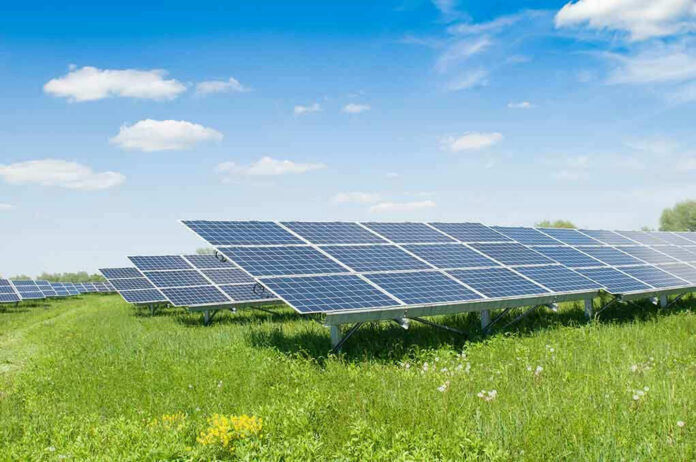
The California Department of Community Services and Development says the Low-Income Weatherization Program’s Farmworker Housing Component launched in 2019 and provides no-cost rooftop solar photovoltaic systems and energy-efficiency upgrades to low-income farmworker households.[1] The department says the program is part of California Climate Investments and is intended to reduce greenhouse-gas emissions while also lowering energy bills for participating families.[1][5] The eligible population is defined by farmworker status and income, not by a public immigration-status test.[1][6]
That distinction matters because the loudest criticism in conservative media does not actually match the program’s written eligibility rules.[2] The sources supplied here show a household-based, income-based program administered through state climate funding, with services delivered at no cost to participants.[1][5] The public record provided does not show that undocumented status is an eligibility criterion, nor does it provide a recipient breakdown by citizenship or immigration category.[1][5][6]
Why Critics Call It a Waste
City Journal reports that California has earmarked $49 million for the farmworker component since 2019 and says the program has served about 2,000 families, which it uses to argue that public money is being spread through an opaque web of agencies, nonprofits, and contractors.[1] That critique may resonate with taxpayers who are already fed up with layered bureaucracy and climate spending that is hard to track. But the article’s own figures do not prove fraud or illegality; they mainly show why the program is politically vulnerable.
The stronger conservative objection is transparency, not the existence of help for poor households. The materials available here do not include a detailed audit of per-household costs, administrative overhead, contractor selection, or performance outcomes for this specific farmworker component.[1][5][6] Without those records, it is difficult to test whether the program is lean public assistance or an overpriced bureaucracy wrapped in green branding.
What the State Claims in Return
California’s official materials present the program as a practical public service for a hard-working population that often lives with high energy burdens and aging housing stock.[1][5] The department says the farmworker component increases home efficiency, reduces bills, provides access to solar energy, and adds health-and-safety improvements.[1] Program implementers describe it the same way: no-cost energy-efficiency improvements and solar photovoltaic systems for qualified farmworker households.[6]
"Despite a $49 million budget and nearly seven years of operation, the farmworker “weatherization” program has only provided services to about 2,000 families. That means the state of California has allocated roughly $23,000 per household for its program to provide free solar… https://t.co/r7oxJtdjGo pic.twitter.com/9XKWVjaFiY
— JETSRULE60 (@JETSRULE60) May 27, 2026
There is also a broader policy context here. California’s low-income solar programs already include other income-qualified options, and the state’s energy agencies describe them as tools for helping households that cannot afford upfront installation costs.[3][4] That makes this farmworker program less like a special favor to a political class and more like a targeted subsidy buried inside a larger state climate machine. The problem is that California’s climate machine is exactly what many voters already distrust.
The Real Political Problem
The issue is not whether farmworkers deserve help. The issue is whether California can run a program with public money, minimal beneficiary transparency, and a politically charged target population without inviting backlash.[1][2] In the current environment, that is a poor bet. When the state combines climate spending, nonprofit middlemen, and weak public visibility into who receives what, critics can easily turn an income-assistance program into a symbol of government overreach.
For conservatives, the lesson is straightforward: once a state builds a system that is hard to audit, easy to politicize, and funded through a broad climate tax scheme, it should not be surprised when taxpayers assume the worst.[1][2][5] The public evidence provided here supports criticism of transparency and oversight more strongly than it supports the claim that the program is explicitly designed as “free solar panels for illegal aliens.”[1][2][5][6]
Sources:
[1] Web – You Thought You’d Heard It All, but Now We Bring You: Free Solar …
[2] Web – Farmworker Housing Energy Efficiency and Solar PV
[3] Web – California Is Giving Free Solar Panels to Illegal Aliens – City …
[4] Web – Can You Still Get Free Solar Panels From the Government in 2025?
[5] Web – Free California Solar Incentives: Register for Solar Program to …
[6] Web – Low-Income Weatherization Program
© conservativefreepress.com 2026. All rights reserved.