

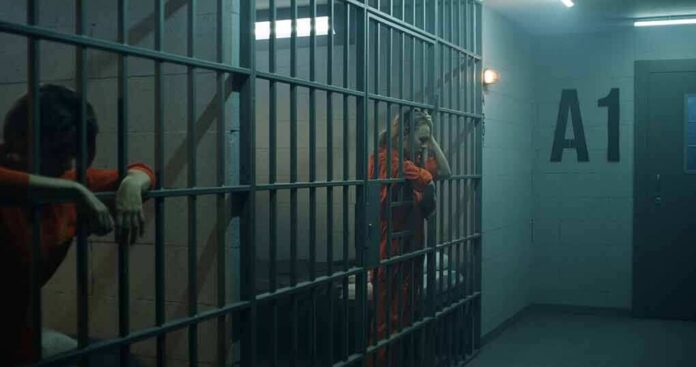
Authoritarian systems don’t only silence critics with bars and batons; they erase them from the record through concealment at the points of arrest, transfer, and pretrial detention—manufacturing confusion so that legal challenges, public scrutiny, and even family searches hit a maze with no map.
At a Glance
- Venezuelan intelligence bodies have repeatedly used aliases, masked identities, and hooded transfers to obscure who is arresting whom and where detainees are taken.
- Independent UN investigators, Amnesty International, Human Rights Watch, and others have documented a yearslong pattern of arbitrary detention, enforced disappearance, and denial of due process in Venezuela.
- The strongest evidence concerns secrecy at arrest and during incommunicado detention; claims of a system-wide practice of assigning false identities inside prisons are less substantiated in public reporting.
- This architecture of concealment weakens habeas protections, sabotages defense rights, and thwarts external monitoring—core features of a repression model that can persist without mass show trials.
How Venezuela’s concealment machinery actually works
Repression leaves fingerprints, and in Venezuela one of the clearest is procedural opacity engineered by state intelligence services. UN fact-finders have described a consistent arrest pattern: officials fail to identify themselves, sometimes hide their faces or wear unmarked clothing, use aliases, and transfer detainees hooded or blindfolded precisely to sow confusion about location and custody chain. These are not incidental abuses by outliers but operational methods observed across cases handled by the General Directorate of Military Counterintelligence (DGCIM) and allied bodies. When a detainee does not know who seized them, cannot see where they are taken, and is denied counsel or contact, the formal safeguards of criminal law—notice of charges, judicial control, petitioning a court—become paper guarantees without traction.
Arbitrary detention is the keystone that supports the rest of the structure. Over multiple reporting cycles, the UN Fact-Finding Mission, Amnesty International, and Human Rights Watch have traced hundreds to thousands of politically motivated or protest-related detentions, including short-term “disappearances,” delayed notification of whereabouts, and incommunicado periods in which even basic medical access is contested. The methods are consistent: opaque arrests, denial of legal assistance at critical stages, and “forum shopping” within security compounds rather than prompt production before an independent judge. These techniques don’t merely violate norms; they disable the mechanisms—lawyers, judges, the press—that would otherwise surface violations early enough to matter.
False identities versus identity concealment: what the record supports
The claim that Venezuelan prison authorities systematically assign false identities to political prisoners inside the penitentiary system is more specific than the evidentiary record can currently carry. The documented, well-corroborated pattern is earlier in the pipeline: security forces using aliases and masking their own identities during arrest and transfer, coupled with hooding detainees and moving them through unofficial or undisclosed sites. That is a powerful form of identity manipulation—of the captor, not the captive—and it achieves the same strategic objective: it obstructs monitoring and complicates legal redress. Where reporting is strongest, it shows concealment to frustrate traceability; what is thinner in the public domain is a generalized, systematic relabeling of prisoners’ identities within formal prison registries across the system.
This distinction matters. Identity concealment by state agents at the point of seizure cripples habeas corpus by severing the chain of accountability. Systemic relabeling inside prisons, by contrast, would imply registry-level fraud across wardens, court clerks, and custodial databases—an additional step for which open-source documentation is sporadic. Serious monitors should continue to probe both, but policy and advocacy should rest first on what is already amply established: opacity at arrest and transfer is deliberate, repeatable, and integral to the repression model.
Why authoritarian states prefer opacity to overt show trials
Show trials are noisy and galvanize opposition; secrecy is quieter and more durable. By keeping arrests deniable, locations unknown, and early proceedings invisible, authorities reduce reputational costs while extracting maximum coercive leverage. The Venezuelan pattern is textbook: a critic is picked up by unidentified men, communications are cut, and by the time any formal paperwork appears—if it appears at all—the decisive coercion has already occurred. Independent investigators have linked these conditions to broader violations, including torture and cruel, inhuman, or degrading treatment, precisely because incommunicado environments are the ripest for abuse. Even when a court later regularizes detention, the damage to due process is done.
For families and defense lawyers, opacity has concrete consequences. It collapses timelines for swift legal action, complicates medical documentation of injuries, and derails evidence preservation. For international monitors, it degrades the denominator: if you cannot reliably count who is where, you cannot credibly verify compliance or noncompliance. This is why so many independent bodies, from the UN mission to regional institutions, have centered arbitrary detention and enforced disappearance in their findings on Venezuela’s human rights landscape.
What the numbers and institutions now say
Across the last decade, independent reporting has converged on the scale and persistence of the problem. Amnesty International’s country assessments describe continuing arbitrary detentions and enforced disappearances linked to political expression and protest, with hundreds held after electoral cycles amid curtailed access to counsel. The UN Fact-Finding Mission has concluded that the Venezuelan state continues conduct amounting to crimes against humanity tied to persecution on political grounds, including imprisonment and severe deprivation of liberty; the mission’s mandate has repeatedly surfaced identity masking and incommunicado transfer as enabling tactics. Human Rights Watch’s recent country chapter details stepped-up arbitrary arrests and disappearances of critics, including children and foreign nationals, consistent with the longer arc of practice.
These are not isolated snapshots but cumulative records across institutions with different methodologies—legal analysis, survivor interviews, forensic review of case files. Where they meet is probative. When UN investigators and major NGOs separately document similar operational patterns across years—masked officers, unmarked vehicles, hooded transfers, delayed notification—the inference is not accidental misconduct; it is policy, or at minimum, a tolerated practice with systemic effect.
State 51 is a distraction. Article 138 of the Constitution: “Any usurped authority is ineffective, and its acts are null and void.”
Delcy Rodríguez possesses neither legality nor legitimacy in exercising the presidency of the Republic. Therefore, her acts are null and void. Pay…— Venezuela Electoral 🇻🇪 (@VenezuelaE14089) August 4, 2026
Legal mechanics: how concealment breaks due process
Criminal procedure depends on three through-lines: identifiable state action, timely judicial oversight, and defense participation. Concealment at the arrest and transfer stages breaks all three. If officers use aliases and refuse to identify their unit, defense counsel cannot subpoena the right chain of command or contest illegal seizure under the exclusionary rules that require identifiable actors. If a detainee is moved hooded through undisclosed locations, the clock on prompt presentment to a judge becomes functionally unenforceable. And if communication is severed during the window when confessions or statements are extracted, later court appearances formalize outcomes reached outside the law’s protections. This is why international standards treat incommunicado detention as presumptively incompatible with freedom from torture and with the right to a fair trial; it is not a mere technicality but a structural defect that infects every later step.
What genuine oversight would look like
Fixing this problem is not conceptual; it is operational. Three measures have proven practical elsewhere and would test sincerity in Venezuela. First, mandatory officer identification at the point of arrest, with unit and name disclosure recorded contemporaneously and made available to defense within hours—no masks, no aliases except in tightly controlled undercover contexts with immediate judicial notification. Second, verifiable transfer logs with GPS-time-stamped custody records accessible to judges and defense, audited by an independent ombuds office empowered to inspect any site of detention unannounced. Third, enforceable time limits to first appearance that are real—breach triggers automatic exclusion of statements and disciplinary referral of responsible officers, reported publicly. None of this requires new doctrine; it requires political will and external pressure aligned to enforce basics of the rule of law.
Where the debate legitimately remains
The strongest, well-corroborated claims involve identity masking by captors and concealment of detainee whereabouts during the earliest custody window; these are established by UN findings and leading NGOs. The narrower assertion that prisons themselves operate a systemic, registry-level false-identity relabeling program is not comparably substantiated in open sources. Monitors should keep testing that hypothesis—particularly by comparing prisoner registry extracts against court filings and family reports—but advocacy and policy design should proceed from the firmer ground: opacity at arrest and transfer is already sufficient to defeat due process, and it is already proven at scale.
The stakes for the region and for accountability
Patterns normalize through imitation. When one government successfully suppresses scrutiny via procedural darkness rather than overt mass trials, neighbors under pressure learn the lesson. Regional bodies and donor governments face a strategic choice: fund and protect independent monitoring with teeth, or watch the concealment model propagate. That means resourcing documentation groups, pressing for the return and unimpeded access of UN human rights presences, and conditioning cooperation on measurable transparency benchmarks—officer identification, transfer audits, and access for counsel within hours, not weeks. The law already knows how to deter arbitrary detention; the challenge is to pierce the shadows where it breeds.
Sources:
americanimmigrationcouncil.org, youtube.com, amnesty.org, ohchr.org, policinglaw.info
© conservativefreepress.com 2026. All rights reserved.