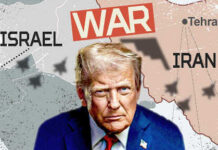

President Trump has ordered the U.S. Navy to blockade every Iranian port and coastal area starting Monday at 1400 GMT, marking a dramatic escalation after peace talks in Pakistan collapsed over Iran’s nuclear program.
Story Snapshot
- U.S. military announces complete blockade of Iranian ports following failed nuclear negotiations, halting all ship traffic in the Arabian Gulf and Gulf of Oman
- Trump warns any Iranian forces that fire on U.S. vessels “will be BLOWN TO HELL” as warships move into position after weeks of conflict
- Iran’s IRGC threatens a “deadly vortex” and refuses to submit to what it calls ridiculous threats, maintaining control over regional waters
- Blockade targets Iran’s oil-dependent economy without fully closing the Strait of Hormuz, critical to 20% of global oil supplies
- Experts warn the operation risks wider Gulf war, environmental disaster, and global energy price spikes amid heightened tensions
Failed Diplomacy Triggers Economic Chokehold
Twenty-one hours of peace talks in Islamabad ended without agreement over the weekend, shattering hopes for a diplomatic resolution to the six-week U.S.-Iran conflict. Vice President JD Vance led negotiations that collapsed primarily over Iran’s refusal to dismantle its nuclear program, with no future talks scheduled. U.S. Central Command announced the blockade Sunday, stating it would target only Iranian ports and coastal waters without obstructing the Strait of Hormuz for other nations. The operation represents a calculated escalation designed to strangle Iran’s oil exports while avoiding a complete shutdown of the vital waterway that handles one-fifth of global petroleum traffic.
Naval Standoff Intensifies in Strategic Waters
U.S. Navy warships USS Frank E. Petersen Jr. and USS Michael Murphy transited the Strait of Hormuz on Saturday for mine-clearing operations, according to American military officials. Iran released video footage denying the transit occurred and issuing “last warnings” to U.S. forces, highlighting conflicting narratives between the adversaries. The Islamic Revolutionary Guard Corps Navy has claimed full control of the region, threatening that Gulf ports would be accessible to all nations or none. Iran has laid mines throughout the Strait since February when hostilities erupted, limiting traffic primarily to allied vessels from countries like China. A temporary ceasefire established days earlier was set to last until April 22 before diplomacy failed.
Trump Invokes Cuban Missile Crisis Precedent
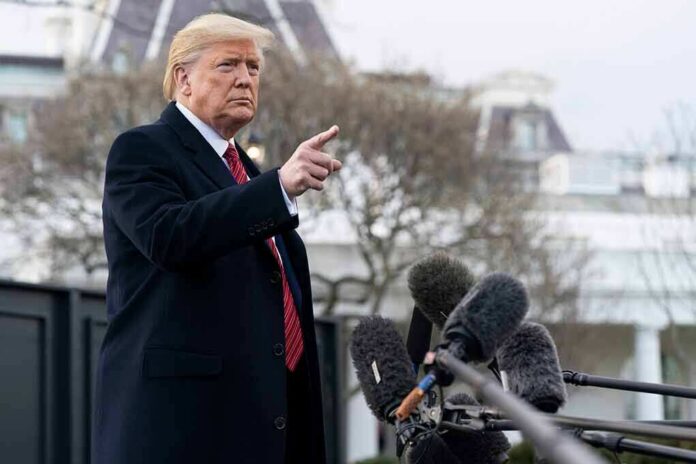
President Trump referenced the 1962 Cuban naval blockade as a model for current operations, framing the action as necessary to reopen the Strait of Hormuz and force concessions on Iran’s nuclear ambitions. His social media posts threatened devastating retaliation against any Iranian military response, employing characteristically aggressive rhetoric that critics argue risks miscalculation. The administration aims to hit what analysts describe as the “jugular” of Iran’s oil-dependent economy by preventing exports that fund the regime. Iranian Parliamentary Speaker Bagherhalib vowed his nation would “not submit to threats,” while Navy commanders dismissed American warnings as empty posturing. This standoff between U.S. naval superiority and Iran’s asymmetric tactics including fast boats and mining operations creates dangerous potential for escalation.
Global Energy Markets Face Disruption Risks
The blockade threatens immediate disruption to Iranian oil exports and imports, with experts predicting global energy price spikes as markets react to instability in the Gulf region. Shipping firms face rerouting costs and delays, while mariners from all nations navigate heightened risks from potential IRGC attacks and environmental hazards from deployed mines. Iran’s economy faces severe strain from halted petroleum revenues, though the regime has historically demonstrated resilience under sanctions through black market operations and support from nations like China. European officials have begun discussions on post-conflict security arrangements for the region, recognizing the broader implications for international commerce. Analysts question whether the blockade can achieve its stated objectives without triggering the wider regional war both sides claim they want to avoid.
Iran’s Next Move Decides Everything: Every Iranian Port Will Be Closed by the U.S. Navy.https://t.co/o13zPS3Kvb
— 19FortyFive (@19_forty_five) April 13, 2026
The operation unfolds against decades of U.S.-Iran hostility rooted in the 1979 Revolution, disputes over Tehran’s nuclear program, and Trump’s 2018 withdrawal from the JCPOA nuclear agreement. Previous incidents including 2019 tanker seizures in these same waters demonstrate the pattern of brinkmanship that has characterized relations between Washington and Tehran. With Republican control of Congress backing Trump’s hardline approach, the administration appears committed to maximum pressure tactics despite warnings from experts about feasibility and escalation risks. Americans frustrated with decades of Middle East entanglements now watch another high-stakes confrontation unfold, questioning whether their elected representatives are pursuing sustainable solutions or simply repeating failed strategies that benefit defense contractors and foreign policy elites more than ordinary citizens struggling with inflation and economic uncertainty at home.
Sources:
US to begin blockade of Iranian ports Monday – military
Iran Releases Video Of Standoff With US Warships In Strait Of Hormuz: “Last Warning”