

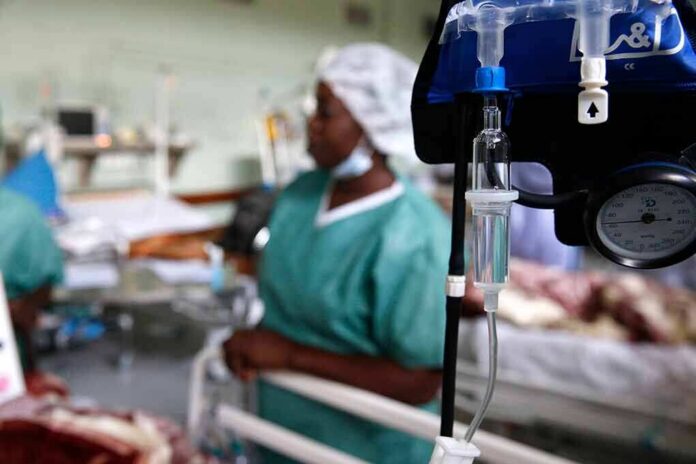
America’s own hospital scorekeeper now labels emergency hallway waits as a measurable failure in access to care.
Story Snapshot
- The federal program defines “boarding” as admitted patients stuck in emergency departments when no inpatient bed exists.
- Any boarding over four hours counts as a quality failure in the new federal measure.
- The rule also tracks long emergency stays, long waits for rooms, and patients leaving without evaluation.
- Federal guidance links access delays to higher death rates, delayed care, and staff burnout.
Washington names the problem and sets the clock
The Centers for Medicare and Medicaid Services put hallway waits on the record. The federal Emergency Care Access and Timeliness measure defines boarding as keeping admitted patients in the emergency department because no inpatient bed is available. The same measure marks four hours as the trigger that moves a delay from bad luck into a quality lapse. That clock starts at the order to admit and stops when the patient leaves the emergency department.
The framework does more than time boarding. It flags four gaps that matter to patients: waits longer than one hour for a private treatment area, leaving without evaluation, boarding beyond four hours, and total emergency-stay times beyond eight hours. Federal adoption matters because hospitals report these data and face reputational and payment pressure. That turns long hallway stays from local complaints into national performance data.
Why hallway waits cut deeper than inconvenience
Federal rationale ties access delays to higher mortality, delayed treatments, preventable errors, worse patient experience, and staff burnout. Those links fit common sense. An admitted patient stuck in a corridor still needs medications, tests, and nursing checks. Emergency nurses and doctors must split attention between new arrivals and inpatient-level care. That split raises risk for both groups and wears down staff. The problem is less an emergency department issue than a hospital-wide capacity squeeze.
National trend data point the same way. The share of emergency patients who boarded rose from near five percent in 2001 to over eleven percent in recent years, though definitions vary across studies. A five-year analysis across many sites reported boarding hours per day up more than half since 2019, while attending physician hours held flat, boosting the boarding burden per physician hour by more than fifty percent. The load grew faster than the staff assigned to carry it.
Where the system jams: input, throughput, and output
Researchers frame the crisis as access block. Input pressures include high arrivals and weak primary care access. Throughput slows with scarce staff and delayed tests. Output fails when inpatient units cannot take admissions, leaving patients to board in the emergency department. The federal measure spans this chain, but the four-hour boarding trigger spotlights the output choke point most people feel—no bed upstairs, long night downstairs. That clarity helps leaders see the fix is not at triage alone.
Hospitals that move discharge times earlier, speed bed cleaning, and smooth elective surgery schedules tend to cut boarding. International systems show that hospital-wide steps can shrink emergency crowding without hurting quality measures like return visits. Local action plans often start with real-time bed dashboards, clear bed ownership, and daily targets for discharges before noon. Those are boring words, but they open real rooms—and end real hallway nights.
What the federal yardstick will change next
The measure enters federal reporting with voluntary submission in 2027 and broader mandates later, pulling boarding into routine oversight and public view. That shift should force better data discipline. Hospitals will need clean timestamps for decisions to admit, emergency departures, and room placements. Documentation games will not fix the flow; the clock will expose whether the bed exists or not. Over time, boards and unions will use the data in staffing and safety debates.
🚨 ED overcrowding is not an emergency department problem.
It is a health system failure.
The new CAEP position statement argues that hospital access block, not inappropriate ED use, is the primary driver of crowding. Patients waiting for inpatient beds experience worse… pic.twitter.com/CmXFKUg3fl
— CJEM (@CJEMonline) November 3, 2026
Conservative instincts favor simple accountability. If a government program measures anything in health care, it should measure whether sick people reach a bed on time. Four hours is a clear line. Crossing it should trigger a plan, not an excuse. Patients deserve a room when they need inpatient care. Nurses and doctors deserve the staffing to make that happen. The federal rule does not solve hallway medicine. It does something just as important—it makes it hard to hide.
Sources:
wsj.com, ecqi.healthit.gov, qualityreportingcenter.com, academic.oup.com, link.springer.com, ena.org
© conservativefreepress.com 2026. All rights reserved.