
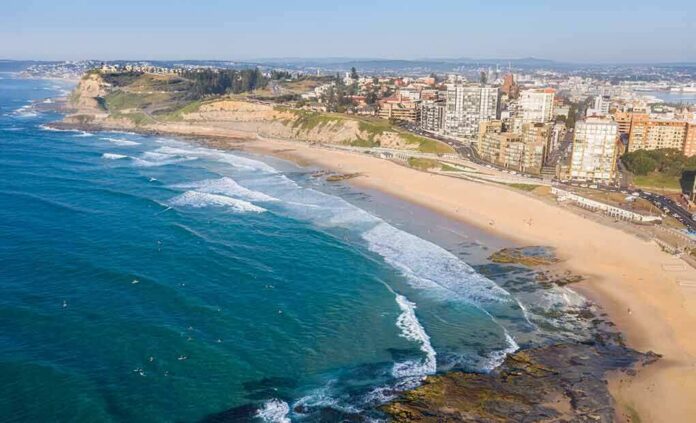
California’s coastal gatekeepers just hit a wall as Washington moves to unlock U.S. energy in waters they tried to freeze.
Story Highlights
- The Interior Department’s five-year plan opens large areas off California and Florida to offshore leasing.
- Lease sales begin between 2027 and 2030, with Eastern Gulf auctions slated for 2029 [1].
- Officials say the plan boosts energy security and protects American jobs [2].
- West Coast leaders vow legal and political resistance to block drilling [8].
What Washington Just Authorized Off The Coasts
The Department of the Interior released a formal five-year offshore drilling plan that would allow new lease sales along much of California’s coastline and a zone at least 100 nautical miles off Florida. The plan schedules California lease opportunities starting in 2027 and adds an Eastern Gulf of Mexico auction in 2029. This reverses years of minimal leasing and restarts a broader energy program after a much smaller prior plan under the last administration [1].
Interior Secretary Doug Burgum said the approach will strengthen the nation’s energy supply and keep Americans working. The department argues that offshore development supports long-term production and helps meet demand at home rather than shifting it abroad. The administration frames the strategy as rebuilding a reliable fuel base after years of constrained leasing, which industry says left rigs idle and supply thin during price spikes [2].
How California’s Regulators Collided With Federal Authority
The administration is also invoking the Defense Production Act to restart the Sable offshore platform near Santa Barbara. Officials and company leaders say the project can deliver major daily output tied to domestic transport fuel, including jet fuel for Los Angeles International Airport. California regulators had resisted a restart after a 2015 pipeline rupture, citing corrosion concerns, but federal action now overrides that position to advance production capacity on a national security basis [1].
Supporters argue that blocking local production only pushes demand to foreign suppliers with weaker standards and longer shipping routes. They say bringing barrels online in U.S. waters cuts reliance on unstable regions and shorelines controlled by rivals. Critics counter that the 2015 spill history shows safety gaps and claim reactivation lacks independent proof of corrosion fixes. The current records cited by media reports do not include new technical audits that would settle that debate [1].
Why Lawsuits And Politics Will Shape The Timeline
West Coast governors and state agencies signaled aggressive opposition. California, Oregon, and Washington announced united resistance and previewed legal and regulatory challenges. Coastal Democrats in Congress also attacked the plan and warned of spill risks to tourism and fisheries. Even some Florida Republicans expressed early concern about impacts, though administration allies say the leasing distances and review steps protect state economies and military operations [1][8].
The next steps include public comment periods, environmental reviews, and individual sale decisions. Those stages create many chances for lawsuits that could delay or reshape sale terms. The administration will need a clear administrative record that shows safety standards, response capacity, and economic need. Without published cost-benefit data or third-party safety certifications in the press accounts, agencies will face questions in court and from local officials who want hard proof, not promises [1].
Energy Security Claims And The Proof Still Missing
Officials say expanded offshore drilling helps lower costs and secure jobs, but the available reporting does not show federal price forecasts or supply-demand models that quantify the impact. That weakens claims about near-term price relief. Offshore projects often take years to deliver barrels, which means benefits arrive later. Still, stable domestic output can ease future shocks and reduce imports, a strategic goal many voters support when facing high pump prices and global turmoil [2].
On safety, the 2015 Sable pipeline failure and California’s stated corrosion concerns demand clear, public documentation. Independent inspections, repair logs, and third-party certifications would build trust. Likewise, restoring or replacing ocean monitoring programs would give neutral data on spill detection and ecosystem health. Strong oversight does not weaken drilling; it protects it from injunctions and gives families, workers, and coastal businesses confidence that America can produce energy and guard its waters at the same time [1].
Sources:
[1] Web – Trump launches crackdown on California coastal regulators
[2] Web – Trump opens parts of Florida, California waters up to offshore oil …
[8] Web – Trump Is Said to Propose a Plan That Would Open California Waters to …
© conservativefreepress.com 2026. All rights reserved.