
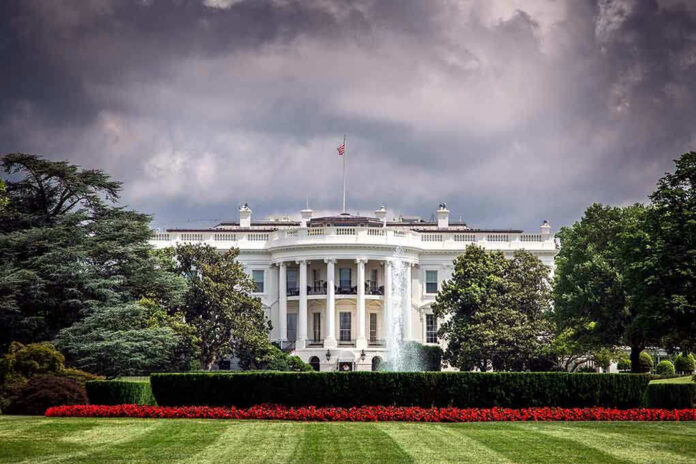
A public spat between two former White House press secretaries exposes the deepening divide in American political discourse.
Story Highlights
- Karoline Leavitt calls Democrats “Hamas terrorists, illegal aliens, and violent criminals.”
- Karine Jean-Pierre condemns Leavitt’s remarks as “deplorable” on “The View.”
- Leavitt accuses Jean-Pierre of dishonesty and covering up Biden’s health issues.
- The dispute reflects escalating partisanship and media polarization.
Escalating Tensions Between Two White House Press Secretaries
In October 2025, a public feud erupted between current White House Press Secretary Karoline Leavitt and her predecessor, Karine Jean-Pierre. This conflict began when Leavitt made inflammatory comments about the Democratic Party, labeling them as “Hamas terrorists, illegal aliens, and violent criminals.” The remarks ignited controversy and drew a sharp rebuke from Jean-Pierre, who appeared on “The View” to denounce Leavitt’s behavior as “deplorable.” The exchange quickly became a focal point in media coverage, highlighting the deep partisan divides in the current political landscape.
Jean-Pierre, who served as White House Press Secretary under President Biden, used her platform on “The View” to emphasize the responsibilities associated with the press secretary role. She criticized Leavitt’s comments as harmful and unbecoming of a government official. In response, Leavitt took to Fox News and other media outlets to accuse Jean-Pierre of dishonesty during her tenure. Leavitt specifically charged her predecessor with participating in a cover-up regarding President Biden’s cognitive health, further fueling the controversy.
Political and Media Implications
The dispute underscores the contrasting communication styles of the two press secretaries. Karine Jean-Pierre, known for her focus on decorum and inclusivity, has publicly critiqued the aggressive media tactics employed by Leavitt. Meanwhile, Leavitt, who aligns herself with the Trump administration’s confrontational media strategy, defends her direct approach as necessary to challenge perceived media bias. This clash of styles reflects the broader tensions over political rhetoric and media relations in today’s polarized environment.
The media has played a significant role in amplifying and framing the dispute. Outlets like Fox News, The Grio, and Sky News Australia have provided extensive coverage, each offering distinct editorial perspectives. While the factual sequence of events remains consistent across reports, the framing often varies, further illustrating the partisan lens through which American political discourse is viewed. This controversy not only highlights the politicization of official communications but also raises questions about the future expectations for press secretary conduct.
Long-term Impact on Political Communication
The long-term implications of this dispute could shape the expectations for future press secretaries and the tone of official communications. In the short term, it has intensified polarization and attracted media attention. The broader public, political journalists, and the White House press corps are directly affected by the tone and transparency of official communications. As the media landscape continues to evolve, the incident may set precedents for how political communications are handled, potentially impacting public trust in government transparency.
While supporters of Leavitt praise her willingness to challenge perceived media bias, critics argue that her approach undermines the dignity and purpose of the press secretary role. As the debate continues, it remains a vivid example of the escalating partisanship and polarization that define modern political discourse.