

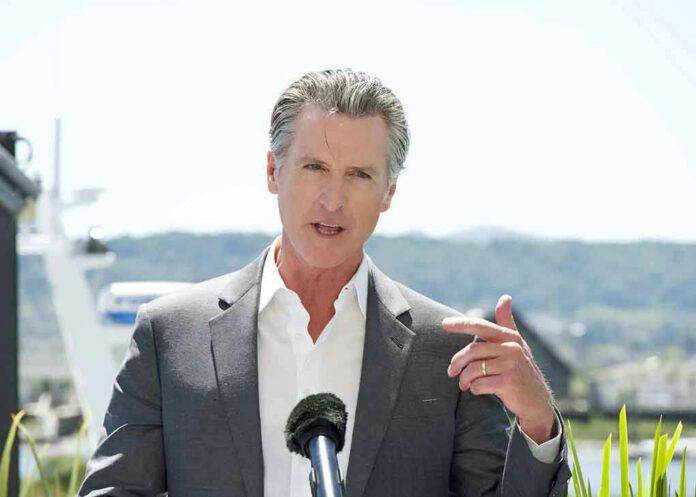
Sean Hannity delivers a brutal takedown of Gavin Newsom on his debut podcast, exposing how the California governor lives rent-free in conservatives’ heads while ignoring his state’s crises.
Story Highlights
- Hannity accuses Newsom of neglecting California’s crime, homelessness, and economy to chase podcasts, world travel, and a 2028 presidential dream.
- ESPN’s Stephen A. Smith, a Democrat, defends Hannity’s fairness and predicts Newsom will dodge tough questions from real Californians.
- Newsom’s viral outbursts and conservative podcast appearances alienate his progressive base, weakening his national ambitions.
- The feud highlights media accountability, with Hannity positioning himself as a bold voice against leftist governance failures.
Hannity’s Podcast Launch Targets Newsom
Fox News host Sean Hannity recorded the debut episode of Hang Out with Sean Hannity in his Florida man cave before March 9, 2026. Guest Stephen A. Smith joined him to critique California Governor Gavin Newsom. Hannity declared he lives “rent-free” in Newsom’s head, citing the governor’s repeated personal attacks. This stems from years of Hannity spotlighting California’s surging crime, homelessness, and economic woes under Newsom’s watch. The episode premieres March 10, 2026, with Mediaite releasing exclusive clips on March 9.
Newsom’s Distractions Over Duty
Hannity listed Newsom’s priorities: full-time podcasting with his show This is Gavin Newsom, “Trump stalking” on X, attending the World Economic Forum in February 2026, and authoring a book. California voters suffer as Newsom chases national fame amid 2028 presidential speculation. On March 5, 2026, Hannity’s radio show mocked Newsom as “all hair, nothing there,” unable to define a single specific policy. This pattern erodes trust in leaders who prioritize globalism over American families facing inflation and border chaos from past policies.
Smith Defends Hannity, Calls Out Dodging
Stephen A. Smith defended Hannity’s moderation of the 2023-2024 Newsom-Ron DeSantis debate, praising his fairness despite initial skepticism. During Super Bowl week in early February 2026, Smith confronted Newsom, urging him to appear on Smith’s podcast. Smith predicted Newsom would avoid it to dodge tough questions from everyday Californians frustrated with governance failures. As a self-identified Democrat critical of his party, Smith’s crossover support bolsters Hannity’s critique and exposes Newsom’s media selectivity.
Newsom’s strategy includes interviewing conservatives like Ben Shapiro and Charlie Kirk on transgender sports fairness, calling biological men in women’s sports “deeply unfair” in 2025 and a Democratic “deal-breaker” in January 2026. Progressives view this outreach as legitimizing opponents, a “tough swallow” that alienates his base.
Feud Roots and Escalation
The Hannity-Newsom rivalry traces to partisan clashes over California’s decline. Late February 2026, Newsom made a viral ill-considered remark to a Black audience, implying curses at critics like Hannity and Ted Cruz. A February 24 podcast discussed Newsom’s SAT scores amid 2028 talk. Hannity uses his platform to counter Newsom’s attacks, framing him as irrelevant and policy-free. This dynamic pressures Newsom, who wields gubernatorial power but risks base erosion.
EXCLUSIVE: Sean Hannity Shreds Gavin Newsom on His Debut Podcast — Says He Lives 'Rent-Free in That Man's Head' https://t.co/H92VUDZ3yb
— Mediaite (@Mediaite) March 9, 2026
Short-term, the clips boost Hannity’s podcast and amplify the feud. Long-term, they undermine Newsom’s centrist rebrand, aiding GOP narratives on California governance. Conservative audiences gain reinforcement against figures embodying overspending, illegal immigration tolerance, and woke distractions that frustrated Americans under Biden.
Sources:
He Knows He’s Toast: Newsom Melts Down as Trump Honors
California progressives think Newsom courting conservatives on his podcast a ‘tough swallow’
Sean Hannity: All Hair, Nothing There — Newsom Struggles to Define a Single Specific Policy