
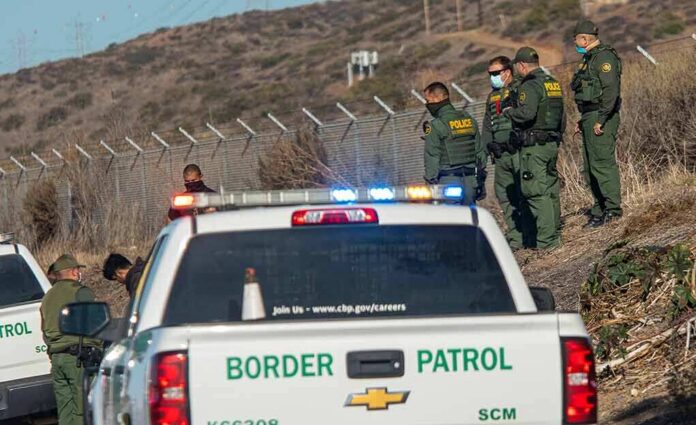
The Supreme Court cleared the way for bulldozers to roll again through Big Bend, ruling 8-1 that construction on a border wall through one of Texas’s wildest landscapes can resume while the underlying lawsuit plays out.
Quick Take
- The Supreme Court voted 8-1 to let the Trump administration restart border wall work in the Big Bend region after a lower court had halted it.
- Judge Kathleen Cardone had blocked construction on October 2, finding the challengers were likely to win their case and could suffer real harm.
- The government argued border security needs outweigh the environmental, cultural, and recreational harms raised by ranchers, river guides, and conservation groups.
- Opponents say Big Bend’s rugged, remote terrain already deters illegal crossings and that officials offered no evidence of urgent need there.
A High Court Order Breaks the Standoff
The Department of Homeland Security asked the Supreme Court on October 21, 2026, to lift Judge Cardone’s injunction and let crews return to work immediately. The government argued it had statutory waiver authority covering roughly 517 miles of border, letting the Secretary of Homeland Security bypass certain laws to build barriers and roads fast. The justices sided with the administration by an 8-1 margin, reviving a project that had sat frozen for weeks.
Officials leaned on a blunt number to make their case: more than 89,000 apprehensions across the sector between fiscal years 2021 and 2025. They told the court that border-security and operational interests “vastly outweigh any aesthetic, recreational, or cultural injuries” raised by the people suing to stop the project. That framing treats the wall as a matter of national control over who enters the country, not a scenic dispute.
Why a Federal Judge Hit Pause in the First Place
Cardone’s October 2 preliminary injunction found the challengers were likely to succeed on at least one legal claim and faced serious, irreparable harm if construction continued. Her order barred not just wall segments but related infrastructure and any ground-disturbing activity until the government complied with applicable law. That is a broad net, and it gave opponents a real courtroom win, even if it was never a final verdict on the merits.
Texas Civil Rights Project attorney Dustin Rynders argued the government’s case fell apart under scrutiny, saying officials called no witnesses and showed no evidence of high illegal entry in Big Bend or harm from a short pause. That is a fair point worth taking seriously. If the administration has solid operational data tying this specific stretch of border to real security gaps, releasing it openly would strengthen public trust far more than a bare statistic ever could.
Ranchers, River Guides, and a Church Caught in the Middle
River guide Danny William Miller testified that a wall across his property would cut off his river access and permanently scar desert terrain he compared the loss to “a bullet to the head”. Rancher Bill Guerra-Addington called a barrier “a death sentence” for his land along the Texas-Mexico border. These are real people with real stakes, and their voices deserve a hearing even as the broader security argument carries its own weight.
The Center for Biological Diversity went further, calling the waiver strategy an unprecedented rollback of protections inside a national park, including the Endangered Species Act and the National Wild and Scenic Rivers Act. Advocates for a historic adobe church in Ruidosa, Texas, say construction threatens the fragile structure too. These cultural and environmental concerns are not throwaway talking points, and any administration serious about long-term credibility should document mitigation plans rather than simply asserting that security wins outright.
🚨🇺🇸 MASSIVE WIN FOR PRESIDENT TRUMP AND BORDER SECURITY! 🇺🇸🚨
THE SUPREME COURT JUST RULED 8–1 IN FAVOR OF THE TRUMP ADMINISTRATION! ⚖️🔥
In a major victory for President Trump’s border security agenda, the U.S. Supreme Court has lifted a lower court’s injunction, allowing… pic.twitter.com/IytJ7G46EE
— NateBige (@natebige_) November 10, 2026
What the Research Actually Says About Walls
Border barriers are not a settled question in the data. One economic study found fencing cut migration from affected Mexican municipalities by about 27 percent. Other researchers found no clear effect on refugee flows and warned that barriers can simply push movement elsewhere without stopping it. That mixed record does not disprove the administration’s case, but it does mean the strongest argument for Big Bend specifically would be sector-level evidence, not a nationwide average.
Congress has already pumped money into hundreds of miles of wall construction nationwide, with government auditors tracking exactly how many miles got built and how. Big Bend now joins that long, contentious ledger. The Supreme Court’s order settles who gets to build for now, but the deeper fight over whether this particular stretch of desert needs a wall at all is far from finished.
Sources:
cbsnews.com, yahoo.com, republic.land, aljazeera.com, straitstimes.com, azcentral.com, biologicaldiversity.org, houstonpublicmedia.org, academic.oup.com
© conservativefreepress.com 2026. All rights reserved.