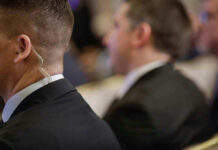

The federal government’s protective arm is drawing a hard line inside the Trump family’s private life—telling a world-famous athlete he doesn’t get to drive the President’s grandkids.
Quick Take
- Reports say Secret Service agents have barred Tiger Woods from driving President Trump’s grandchildren, citing security protocols and child-safety concerns.
- The restriction reportedly predates Woods’ March 27, 2026 DUI arrest and rollover crash in Martin County, Florida.
- Law enforcement said Woods showed signs of impairment, failed field sobriety tests, had a negative breath test, and refused a urinalysis that led to charges.
- The episode highlights how Secret Service protection rules can override celebrity access and family convenience—even when the President calls someone a “friend.”
Secret Service draws the line on who transports protectees
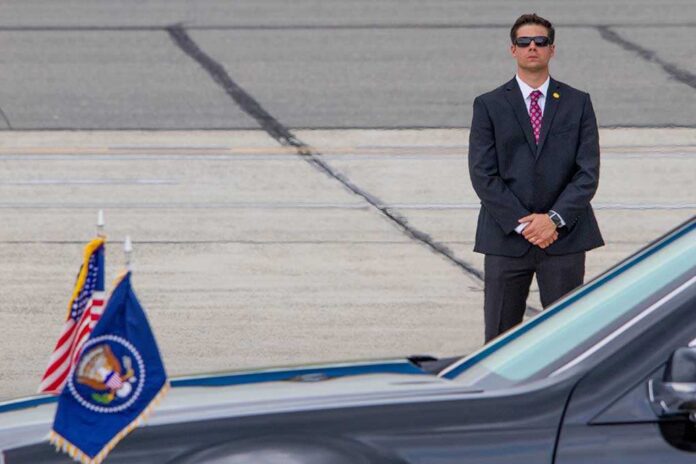
U.S. Secret Service agents have reportedly “not let” Tiger Woods drive with President Donald Trump’s grandchildren, according to a family insider cited in reporting that circulated March 29, 2026. The grandchildren referenced are the children of Donald Trump Jr. and his ex-wife, Vanessa Trump, who is reported to be in a relationship with Woods. The reason given is straightforward: agents prioritize protectee safety and do not treat celebrity status as a security credential.
Because President Trump is in office during his second term, the protective footprint around his immediate family is substantial, and logistics like transportation are not casual decisions. Agents controlling routes, vehicles, and drivers is standard in protective work, especially where minors are involved. The reporting does not cite an on-the-record Secret Service statement or a formal written policy specific to Woods, so the public details remain limited to what insiders and local law enforcement described.
The DUI arrest details make the security rationale easier to understand
Martin County Sheriff John Budensiek confirmed details surrounding Woods’ March 27 arrest after a crash involving Woods’ Land Rover. Reporting said Woods attempted to pass a truck at high speed and the vehicle rolled onto its side. Authorities described signs of impairment and said Woods failed field sobriety tests. A breathalyzer test was reported negative for alcohol, but Woods refused a urinalysis, which led to charges under Florida procedures.
Investigators reportedly found no drugs or medication in the vehicle, and the reporting did not include results from any later toxicology because the urine test was refused. Woods was detained for at least eight hours, described as a state-mandated hold. Taken together, the known facts paint an important distinction for readers: the story is not that alcohol was confirmed; it is that law enforcement said impairment indicators existed, and a refused urinalysis can still drive legal exposure and raise immediate safety questions.
Family relationships meet federal protocols—convenience loses
The reported driver restriction intersects with personal relationships that, frankly, don’t matter to a protective detail. Woods’ relationship with Vanessa Trump may complicate day-to-day parenting logistics, but Secret Service authority over protectee movement is the controlling factor. If agents believe a driver is not sufficiently vetted—or presents heightened risk—then the “no” is final. That power dynamic can feel jarring to families, but it is built into how modern executive protection operates.
What Trump’s public comments do—and don’t—change
President Trump reportedly referred to Woods as a “friend” and acknowledged he is having “difficulty,” a human response that also signals the President understands the seriousness of the situation. Still, nothing in the reporting suggests Trump ordered agents to relax rules or override protective judgments. That matters politically because it reinforces a key reality: even under a strong-willed presidency, the federal security apparatus runs on protocols and risk management, not public relations or personal loyalty.
What we know, what we don’t, and why it matters for trust
The available reporting comes primarily through one write-up that aggregates an insider quote and sheriff-confirmed arrest details, with no direct statement from Secret Service or Woods included. That limitation is important: readers should treat the “ban” framing as “reportedly,” while treating the arrest timeline and law enforcement descriptions as the more verifiable portion. As Americans debate government power in 2026, this episode is a reminder that protective authority can be sweeping—sometimes reasonably so—yet still opaque.
Secret Service Reportedly ‘Not Letting’ Tiger Woods Drive With Trump’s Grandchildren #Mediaite https://t.co/2e8xEqgtw5
— #TuckFrump (@realTuckFrumper) March 29, 2026
For conservative voters already weary of institutions that seem unaccountable, the best takeaway is to separate two issues. First, protecting minors in a presidential security envelope is a legitimate state interest, and restricting who drives them is unsurprising. Second, the public still deserves transparency where possible—clear explanations of rules and lines of authority—because trust erodes when major decisions are described only through “insiders” and leaks rather than straightforward official clarity.
Sources:
Tiger Woods Banned By Secret Service From Driving Trump’s Grandkids (Report)