A federal judge just stopped Hawaii from policing “politically deceptive” memes and deepfakes during elections—because the Constitution doesn’t let states decide which political speech is safe enough to share.
Quick Take
- U.S. District Judge Shanlyn A.S. Park permanently blocked Hawaii’s Act 191, an election-season deepfake law, after finding it violated the First Amendment.
- The lawsuit was brought by The Babylon Bee and Hawaii resident Dawn O’Brien, who argued the law chilled satire and political commentary.
- The court found the law was content-based, aimed specifically at election-related speech, and failed strict constitutional scrutiny.
- Judge Park also flagged vagueness problems, warning the law invited subjective enforcement by government officials.
- Hawaii’s attorney general said the state is reviewing the decision, leaving next steps uncertain.
Judge Park’s injunction blocks Hawaii from enforcing Act 191
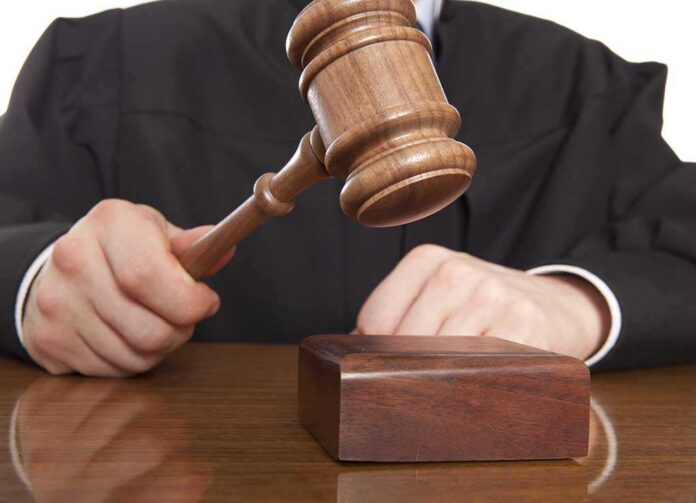
U.S. District Judge Shanlyn A.S. Park issued a permanent injunction on Jan. 30, 2026, stopping Hawaii from enforcing Act 191, the state’s attempt to regulate “materially deceptive media” during election seasons. The case was brought by The Babylon Bee LLC and Hawaii resident Dawn O’Brien, who challenged the law as an unconstitutional burden on political speech. The ruling immediately removed the threat of enforcement against creators and sharers of covered election-related content.
Hawaii’s statute targeted a wide election window, running roughly from February through November, and it focused on media involving candidates and elected officials. The law also included a safe-harbor approach tied to disclaimers and contained carve-outs for certain traditional media distributors like broadcasters and cable operators. Even with those features, the court concluded the structure still singled out election speech for special government control—precisely where First Amendment protections are at their strongest.
The law’s core problem: content-based regulation of election speech
Judge Park’s analysis emphasized that Act 191 regulated speech based on subject matter because it applied specifically to election-related communications. That matters because the Constitution generally forces governments to meet the highest burden—strict scrutiny—when they carve out particular categories of political speech for restriction. The court found Hawaii’s approach was not narrowly tailored. In plain terms, the state tried to solve a real concern—AI deception—using a tool too broad for the First Amendment to tolerate.
The court also rejected the idea that the law could be justified by pointing to historical exceptions like fraud or defamation. As reported in coverage of the ruling, the statute focused on a “risk of harm,” not on proving actual harm in a way that matches those established legal categories. That distinction is crucial for anyone who believes the Bill of Rights is meant to restrain government power, not expand it whenever officials claim they have the public’s best interest at heart.
Vagueness concerns raise the risk of selective enforcement
Judge Park also identified Fourteenth Amendment due-process problems, concluding the law was unconstitutionally vague and created an inherently subjective assessment for enforcement agencies. When a statute depends on officials judging whether media is “materially deceptive,” the line between protecting voters and punishing disfavored speakers gets dangerously thin. In today’s environment—where “misinformation” labels are routinely politicized—vagueness is not a technicality; it is a built-in pathway to viewpoint-driven enforcement.
Satire, parody, and “political memes” remain protected speech
The plaintiffs argued the law threatened satire and political commentary, and supporters framed the outcome as a win for humor and critique as long-standing tools of American political culture. Alliance Defending Freedom attorney Mathew Hoffmann said the ruling stopped Hawaii’s “war against political memes and satire,” while The Babylon Bee CEO Seth Dillon described it as another First Amendment victory against government interference in political speech. Those statements align with the court’s conclusion that the state cannot pick winners and losers in political expression.
What this means for other states racing to regulate AI in elections
The injunction blocks Hawaii’s enforcement, but it also sends a warning signal to other states pursuing similar “deepfake” election controls. The court’s reasoning indicates that laws targeting election-season content will face steep constitutional hurdles, especially when they are broad, tied to subjective standards, or built around mandated disclaimers. The ruling also highlights alternative approaches the court viewed as less speech-restrictive, including counter-speech and media literacy, rather than government gatekeeping.
Conservative satirical news publication The Babylon Bee LLC won a court order striking down Hawaii’s law regulating AI deepfakes during elections as an unconstitutional violation of the First Amendment. https://t.co/ytoeZKvOFk
— Bloomberg Law (@BLaw) February 3, 2026
For conservatives who watched recent years of “disinformation” bureaucracy expand in the name of safety, the Hawaii decision is a reminder that constitutional limits still matter—especially under political pressure. Hawaii’s attorney general said the office is reviewing the decision, but the permanent injunction stands unless an appeal changes it. For now, the First Amendment line is clear: states can’t treat election speech as a special danger zone where normal free-speech rules no longer apply.
Sources:
Hawaiis Deepfake Election Law Violates Free Speech Court Finds
Judge Strikes Hawaii Deepfake Election Law
Hawaii court blocks states satire censorship law
Hawaiis deepfake law struck down over free speech concerns
Hawaii deceptive election-related deepfake disclaimer requirement struck down
Media industry Babylon Bee scores free speech win judge rejects Hawaiis ban on election deepfakes