

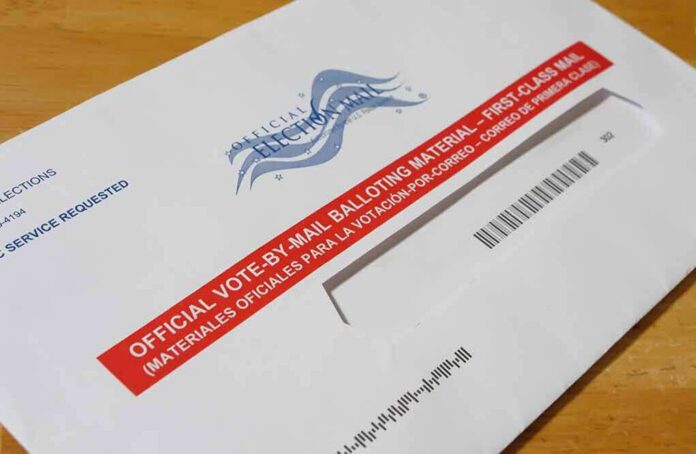
The center of gravity in U.S. abortion access has shifted from highways to mail routes: by late 2025, telehealth-enabled, mail-delivered medication abortions became a primary pathway, even for residents of states with total bans, altering how law, medicine, and geography interact.
The Short Version
- Telehealth medication abortions accounted for roughly 28–29% of U.S. abortions by December 2025, reflecting a rapid structural shift in access.
- In the 13 states with total abortion bans, more residents obtained abortion pills via telehealth than traveled out of state in 2025, according to summaries of the underlying data.
- Researchers estimate about 142,000 telehealth abortions were provided to residents of states with total, six-week, or 12-week bans in 2025, demonstrating significant cross-border care enabled by “shield law” providers.
- Methodological limits remain: counts are estimates, incomplete for informal channels, and do not equate prescriptions with completed use; nine states restrict telehealth abortion or mailing despite federal rules permitting it nationally.
What changed: a new default pathway built on telehealth and shield laws
Medication abortion was already ascendant before the pandemic; the decisive catalyst was the FDA’s removal of the in-person dispensing requirement for mifepristone, first temporarily and then permanently in 2023. That change normalized video visits, pharmacy fulfillment, and mail delivery. After Dobbs returned abortion regulation to states, jurisdictions that protect abortion enacted “shield laws” to insulate in-state clinicians from out-of-state civil and criminal exposure. The result is a cross-border service model: clinicians practicing under shield protections prescribe and mail pills to patients in states where abortion or telehealth provision is restricted, relying on federal drug regulation and postal delivery to bridge state lines.
The shift is measurable. By December 2025, telehealth accounted for roughly 28–29% of abortions nationally, based on the Society of Family Planning’s WeCount tracking, as summarized by public radio and The New York Times. These are not boutique volumes; they reflect a mainstreaming of remote care into the core of abortion access. Within states that ban abortion at all stages, the practical implication is stark: more residents reportedly received pills by mail than traveled for in-clinic procedures during 2025, a crossover that signals a new first-line option in those settings.
How the numbers stack up and what they do—and do not—measure
Two complementary datasets frame the trend. WeCount aggregates provider-reported abortion volumes, including those delivered via telehealth. Guttmacher’s analysis of travel and access patterns estimates that about 142,000 telehealth abortions reached residents of states with total, six-week, or 12-week bans in 2025, including substantial flows into Texas. In parallel, interstate travel persisted—more than 140,000 people traveled for abortion in 2025 overall—but telehealth absorbed rising demand that distance and logistics would otherwise suppress, particularly in the most restrictive states.
Methodological caveats matter, but they do not erase the direction of travel. The counts are estimates assembled from reporting systems rather than a census; they exclude pills supplied by community aid networks or international vendors without U.S. prescriptions, and they do not verify that every mailed prescription was taken or completed as an abortion. Residence disclosure can also depress travel counts and complicate apples-to-apples comparisons. These constraints argue for cautious interpretation of precise margins, not for dismissing the core finding that mail-enabled care has become the primary alternative to travel where in-state clinics are illegal or severely constrained.
The legal architecture: federal rules, state bans, and the shield-law bridge
Telehealth abortion exists at the intersection of three legal regimes: FDA authority over drug safety and dispensing, state police powers over medical practice and abortion, and federal postal and commerce rules. As of mid-2026, Supreme Court action in Louisiana v. FDA preserved nationwide access to mifepristone via telehealth and mail while litigation proceeds, keeping the federal regulatory baseline in place; that baseline enables pharmacy dispensing and mail delivery under current FDA rules. In contrast, at least nine states prohibit telehealth provision of medication abortion or mailing the drugs, and multiple total-ban states criminalize abortion care altogether. Shield laws in providers’ home states limit cooperation with out-of-state investigations and bar enforcement of foreign subpoenas or judgments against protected care, creating a practical safe harbor for cross-border telehealth.
This legal patchwork does not eliminate risk. Patients in ban states face exposure if state authorities investigate; providers rely on the durability of shield statutes and favorable interpretations of federal law. Postal and platform policies, payment processing, and pharmacy participation remain contingent. Even so, the operational reality—tens of thousands of successful remote episodes into restricted states—demonstrates that shield-law telemedicine is not a legal theory but an active delivery system.
Safety, oversight, and the scope of legitimate disagreement
Most clinical literature and federal assessments characterize mifepristone-plus-misoprostol regimens as safe and effective when used as directed, and the FDA’s decision to permit telehealth and mail dispensing rests on that evidentiary base. Critics counter with insurance-claims analyses and advocacy reports suggesting higher rates of serious complications and emphasize risks they say are magnified without in-person evaluation—missed ectopic pregnancies, absent Rh testing, and challenges obtaining urgent care if complications occur. Some also allege inadequate labeling or instructions in mailed packages and raise concerns about coercion and informed consent in remote settings.
The evidentiary asymmetry mirrors the data landscape: randomized trials and large observational cohorts support safety under protocolized care, while real-world claims datasets and anecdotal package reviews raise questions about outlier harms and uneven practice. The responsible through-line is not to pretend unanimity where it does not exist; it is to distinguish system design from system abuse. The growth of telehealth volume reflects regimented clinical workflows—screening for gestational age and contraindications, clear instructions, 24/7 support, and referral pathways—implemented by established providers. When critics surface examples of poor packaging or missing guidance, the remedy is enforcement and quality improvement, not an inference that the dominant model is inherently unsound. Litigation over standards will continue; the access trend rests on a different question: whether standardized remote protocols can be delivered at scale with quality controls—and the data thus far indicate they can.
1,129,020 abortions in America in 2025, up from 1,108,810 in 2024.
Mail-order pills are driving the rise, now 28% of all abortions.
No doctor visit. No ultrasound. No screening for ectopic pregnancy.
Tell Congress to end mail-order abortion:https://t.co/4GgWbN4bAk pic.twitter.com/f8Y7nomnnN
— Foundation for Life Northwest Ohio (@FFL_NWO) October 30, 2026
What this means going forward
Three implications follow. First, in ban states, practical access now tracks mailbox logistics more than highway mileage. Enforcement that relies on physically shuttering clinics will not meaningfully reduce availability if shield-law providers, pharmacies, and the postal system remain operative. Second, policy focus will shift upstream and downstream of the envelope: platform moderation, payment rails, pharmacy contracting, and the legal status of shield protections will be the true battlegrounds. Third, measurement must mature. To adjudicate claims with confidence—about safety, completion rates, and the telehealth–travel crossover—researchers need better-integrated provider reporting, de-identified linkage of prescriptions to outcomes, and clear denominators harmonized across telehealth and travel datasets.
Bottom line
Even allowing for estimation error and definitional gaps, the weight of the evidence supports a clear conclusion: telehealth-enabled, mail-delivered medication abortion has overtaken interstate travel as the primary workaround in states with total bans, and it now accounts for more than a quarter of abortions nationally. The model’s durability will turn on courts, state legislatures, and shield-law resilience—but as a matter of lived reality, the center of access has already moved.
Sources:
lifesitenews.com, societyfp.org, thenewsherald.com, guttmacher.org, nytimes.com, ipm.org, kbia.org, chrissmith.house.gov, kff.org, roafoundation.org
© conservativefreepress.com 2026. All rights reserved.