
Nicki Minaj’s trip aboard Air Force One to Michigan and her onstage turn with President Trump crystallize a simple, durable truth about modern campaigning: celebrity appearances are not about changing minds in an instant so much as changing the scale and tempo of a political event—driving attention, shaping who shows up, and making the message travel farther than the venue’s walls.
At a Glance
- Minaj traveled with President Trump to Port Huron, Michigan, and joined him at a rally backing Republican candidates, including Senate hopeful Mike Rogers.
- White House Communications Director Steven Cheung posted video of Minaj aboard Air Force One en route to Michigan.
- Local and national outlets independently reported the Port Huron event’s timing, location, and political objective.
- Celebrity involvement reliably boosts attention and attendance; effects on vote choice are mixed and context-dependent.
What Happened: A high-visibility cameo with a targeted purpose
The core facts are straightforward. On the day of President Trump’s Port Huron rally for Republican Senate candidate Mike Rogers, Nicki Minaj traveled with the president to Michigan and joined him at the campaign event. National and local reporting framed the Michigan stop as part of a broader Republican push, naming McMorran Place as the venue and pegging the afternoon speaking window; coverage noted Minaj’s role alongside Trump in the staging of the rally. The Washington Examiner previewed her appearance; MLive reported Minaj’s X activity amplifying the plan and later highlighted an Air Force One photo; the Times Herald’s live coverage localized the details and pointed to video circulating of Minaj speaking about Trump while in transit.
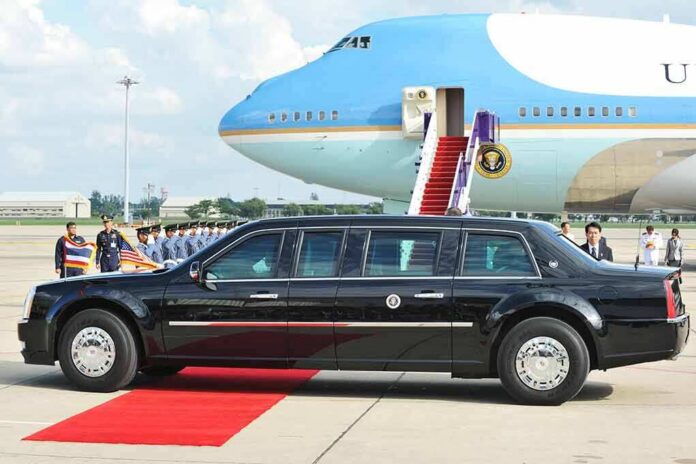
Visibility is the point of such choreography, and this one was executed in public view. Steven Cheung, the White House communications chief, posted video featuring Minaj aboard Air Force One and leaned into the moment with a joking caption about a “new press secretary,” underscoring that the White House political operation wanted the optics shared and replayed. The elements that matter to campaign professionals—the travel pairing, the social amplification, and the rally integration—were present and independently reported.
How It Works: Celebrity surrogacy as an attention engine
Campaigns do not enlist celebrities to deliver white papers; they enlist them to bend the media environment. A high-salience figure can alter an event’s composition—who attends, which cameras show up, what gets clipped for broadcasts and feeds—at a cost far lower than incremental ad buys designed to achieve the same reach. In this case, Minaj’s presence offered three multipliers: a built-in social audience, pop-cultural novelty at a political venue, and a content stream that third-party accounts (friendly and otherwise) would syndicate on their own. Even the meta-story—“Nicki Minaj aboard Air Force One”—is a headline that propagates itself, pulling new viewers into clips of the rally and into down-ballot mentions like Rogers’s Senate bid.
Academic work generally finds limited direct conversion effects from celebrity endorsements on vote intention, but robust effects on attention, fundraising, and turnout in specific scenarios. The outlier case is instructive: rigorous analysis of the 2008 Democratic primary estimated that Oprah Winfrey’s endorsement of Barack Obama yielded roughly a million additional votes, with measurable spikes in contributions and turnout in markets where her influence was strongest. Meta-analyses and experimental studies, however, regularly register near-zero average shifts in candidate evaluations from endorsements alone—reminding strategists that the power lies in mobilization and message circulation rather than persuasion at the margin.
Why Michigan, Why Now: Movement-building and down-ballot leverage
Port Huron fit a familiar template: deploy a nationally recognized figure to intensify interest in a contested state while lifting named down-ballot candidates. Reports consistently tied the stop to support for Mike Rogers’s Senate campaign and Republican prospects statewide, placing Minaj’s rally cameo in the context of coalition signaling—reach into entertainment audiences, reinforce the campaign’s culture-forward messaging, and hand local candidates a larger stage than they could summon alone. That logic extends beyond the rally’s walls: local coverage, national political sites, and celebrity-focused outlets each carry different audiences, and the overlap yields aggregate reach a standard stump speech cannot match.
Surrogacy also distributes political labor. A celebrity can voice themes the principal wants aired—energy, loyalty, cultural alignment—without the policy burden attached to the candidate. The Air Force One video and social clips function as pre-rolled assets: they authenticate proximity to the president, create a behind-the-scenes hook, and place the celebrity inside the iconography of the office. In a fragmented media market, those visuals are valuable—and reusable—currency.
What Voters Actually Hear: Message, messenger, and the limits of effect
When celebrity surrogates appear at rallies, three messages typically land. First, affirmation: the star validates the candidate as worthy of their brand. Second, identification: fans map affinity for the star onto the political stage, at least for the duration of the event. Third, amplification: local candidates ride the wake. But the same research base that documents attention gains cautions against extrapolating to persuasion. On average, endorsements do not reliably change minds about candidates; they can, however, change who shows up, how much money is raised that week, and which clips travel farthest—outcomes that, in close races, are not trivial.
For campaigns, this produces a clear design brief. Use celebrities to prime attendance and earned media; be realistic about conversion; and integrate down-ballot names into the moment so the surge of attention has a defined political outlet. Minaj’s presence checked those boxes—her travel was public, her rally role was integrated with Trump’s message cadence, and coverage tied the cameo to named Republican candidates, including Rogers.
Nicki Minaj has shared a behind-the-scenes glimpse aboard Air Force One while travelling with President Trump to a rally in Michigan. pic.twitter.com/YKIWgn1j9A
— Vanja Maximo 🇬🇧 (@VanjaMaximo) October 26, 2026
The Takeaway: Optics that scale, outcomes that hinge on execution
Minaj’s Air Force One vignette and Port Huron cameo illustrate the mature form of celebrity-politics interplay: coordinated, social-first, and designed to compound across media layers. It is not a silver bullet; the best evidence says most endorsements don’t budge evaluations, and the few that do are extraordinary for a reason. But in an attention economy where reach is precondition to persuasion or mobilization, assembling moments that travel—an aircraft corridor quip, a rally introduction, a tie-in to a Senate race—remains smart campaign craft. The Michigan lap delivered that sequence cleanly, with independent reports corroborating the pieces that matter: a joint flight, a joint rally, and a clear political objective.
Sources:
youtube.com, thetimesherald.com, thegatewaypundit.com, ground.news, mlive.com, washingtonexaminer.com, allhiphop.com, news.ncsu.edu, cambridge.org, ijoc.org
© conservativefreepress.com 2026. All rights reserved.