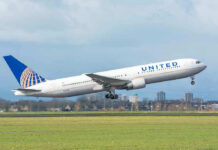
A U.S. Navy cruiser shot down an American fighter jet and nearly killed another in a preventable friendly-fire disaster, exposing dangerous readiness failures that put our sailors and pilots at risk.
Story Overview
- Newly released report on the December 22, 2024 incedent where the USS Gettysburg mistakenly fired on two returning F/A-18F Super Hornets, shooting one down and nearly hitting a second.
- Investigations found the incident was preventable, caused by degraded systems, poor training, fatigue, and command failures.
- The Truman carrier strike group suffered multiple serious mishaps, including a collision and additional aircraft losses, totaling over $160 million in damage.
- Navy leadership admitted systemic problems in training, interoperability, and crew proficiency, especially on aging cruisers like Gettysburg.
- These failures highlight the urgent need to restore readiness, fix broken systems, and hold leaders accountable so our military can actually defend America.
Tragic Friendly-Fire Incident in the Red Sea
On December 22, 2024, in the Red Sea, the Ticonderoga-class cruiser USS Gettysburg, acting as air defense commander for the USS Harry S. Truman carrier strike group, fired Standard surface-to-air missiles at what its crew believed were Houthi anti-ship cruise missiles. In reality, the targets were two U.S. Navy F/A-18F Super Hornets from Strike Fighter Squadron 11, returning to the carrier after airstrikes in Yemen. One Super Hornet was shot down; its pilot and weapons systems officer ejected safely and were rescued. A second jet was narrowly missed, with a missile passing within feet before burning out. A third friendly aircraft was also tracked as a threat but not engaged. The Navy later concluded the shoot decision was “wrong when measured across the totality of information available” and that the incident was preventable.
#ICYMI Navy cruiser mistook fighter jets for incoming missiles during chaotic night https://t.co/zLj8qJRljw
— Jeff_Schogol (@JSchogol73030) December 5, 2025
The incident occurred during a “chaotic night” in the combat information center, with multiple tracks, degraded systems, and high alert posture. Houthi forces had been conducting months of missile and drone attacks on Red Sea shipping, creating a real and dangerous threat environment. Gettysburg had been actively defending the strike group, and confusion about whether the threat had fully subsided contributed to the misidentification. The pilot of the targeted jet later described seeing his life “flash before his eyes” as the missile changed course toward them, forcing an ejection. The crew of the second jet executed aggressive maneuvers to evade, feeling the aircraft shake as the missile passed close by.
Systemic Failures Behind the Shootdown
Investigations into the Gettysburg incident, released in late 2025, identified a cascade of systemic failures. Gettysburg suffered “significant degradation” in its core interoperability and identification systems, including Identification Friend or Foe (IFF) and Precise Participant Location and Identification (PPLI). These problems undermined the ship’s ability to reliably distinguish friend from foe in a crowded, high-threat environment. Prior to deployment, the Truman strike group had fewer integrated training opportunities than planned, which “adversely impacted interoperability” between Gettysburg and Carrier Air Wing One. Crew on Gettysburg’s combat information center and air defense stations were not adequately trained or proficient in using degraded systems under pressure.
Operational tempo and fatigue were major contributing factors. The Truman strike group had been heavily engaged in combat operations against ISIS in Somalia and Houthis in Yemen, with a high operations tempo that led to fatigue and shift changes. Investigators repeatedly cited fatigue as a factor in shortcuts, diminished vigilance, and cognitive overload across multiple mishaps. Command and control also broke down: there was a lack of cohesion among warfare commanders and staff, and ineffective communication that failed to provide “forceful backup” to prevent the misidentification and mis-engagement. The commanding officer of Gettysburg was found to have low situational awareness, and the investigation concluded his decision to fire was wrong given the information available.
Broader Readiness Crisis on the Truman Deployment
The Gettysburg friendly-fire incident was part of a cluster of four major mishaps on the Truman carrier strike group’s deployment, revealing a broader readiness crisis. In February 2025, the USS Harry S. Truman collided with a merchant vessel; investigations cited multiple crew errors and noted the damage could have been far worse. In April 2025, an F/A-18F rolled backward in the hangar bay and fell overboard along with a tow tractor; the crew evacuated just in time. In May 2025, another F/A-18F was lost during landing when an arresting cable failed, due to improper reassembly and missed inspections, with fatigue again a factor. Navy public communications acknowledged a combined cost impact of over $160 million from these incidents, with about $164 million in losses from the F/A-18s and other mishaps.
Navy cruiser mistook fighter jets for incoming missiles during chaotic night
Three F/A-18 Super Hornets from the aircraft carrier USS Harry S. Truman were destroyed in mishaps during a combat-heavy deployment to the Red Sea.https://t.co/yd3ovZMe4V— TGoldieElaine (@TGoldieEla83439) December 6, 2025
These failures have sparked serious concern about the state of the surface and carrier forces. The Truman deployment’s mishaps are now cited as evidence of broader readiness and training issues, particularly on aging cruisers like Gettysburg. Navy leadership, including Vice Chief of Naval Operations Adm. Jim Kilby, has acknowledged that the service must be a “learning organization” and that these incidents highlight the need to invest in people, training, and modernization to deliver battle-ready forces. The investigations recommend improved integrated training, better proficiency on air defense systems, and fixing material deficiencies in IFF/PPLI and command-and-control networks. Restoring trust between surface and aviation communities, especially in high-threat environments, is now a top priority.
Sources:
Navy cruiser mistook fighter jets for incoming missiles, report finds
Investigations Show Failures Behind Carrier Harry S. Truman Collision, Loss of 3 Super Hornets
F/A‑18 Super Hornet Shot Down By Navy Cruiser Investigation Findings Released
Navy Blames Crew Training for Losing F-18s, Other Mishaps From Truman CSG Deployment
$164M lost due to incidents during USS Harry S. Truman’s latest deployment, docs show
F-18 Fighter Jet Pilot Reveal Moment Before Targeted by USS Gettysburg