

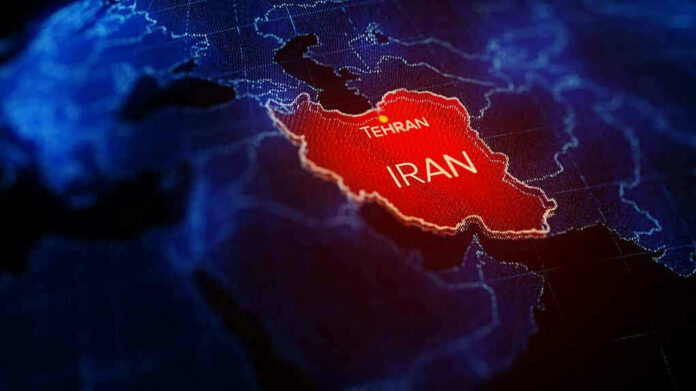
After weeks of “spectacular” airstrikes, the hard truth for Americans who hate endless wars is this: blowing up Iran’s hardware from the sky doesn’t automatically deliver a clean win—or an exit.
Quick Take
- U.S. Central Command’s air campaign has reportedly crippled major parts of Iran’s air force, missile network, and navy, including strikes on ports and command centers.
- Iran has still been able to retaliate with missiles and drones against U.S. positions and regional targets, showing the limits of air power alone.
- Historical precedents referenced in the research suggest air campaigns can achieve tactical destruction without producing strategic victory absent regime collapse or ground follow-through.
- MAGA voters who backed Trump to avoid new wars are now split between “finish the job” pressure and frustration over another open-ended conflict.
Operation Epic Fury’s Results: Massive Destruction, No Clear End State
President Donald Trump ordered Operation Epic Fury on February 27, 2026, and U.S. strikes began early February 28 with bombers, cruise missiles, fighters, and drones hitting Iranian airbases, missile facilities, and command-and-control sites. The research summary reports attacks on Tehran-linked command nodes and media infrastructure, plus heavy strikes at Bandar Abbas and other military targets, with claims of roughly 2,000 targets hit by early March.
The same reporting describes severe losses for Iran’s navy and air assets, including warship sinkings and damage to missile sites meant to threaten U.S. forces and Gulf shipping lanes. By March 6–7, strikes reportedly expanded to Tehran airports, IRGC bases, and ammunition facilities near Isfahan, while Iran responded with missile attacks that reached U.S. bases in Kuwait and Bahrain. The war is described as ongoing into mid-March, without a ceasefire.
Why Air Dominance Isn’t the Same as Winning a War
The key analytical warning in the provided research is straightforward: air power can break equipment faster than it can break an enemy’s will, governance, and ability to fight asymmetrically. Even if Iran’s conventional air and naval capabilities are badly degraded, Iran retains tools that do not require control of the skies—missiles, drones, proxy networks, and dispersed command structures. That reality helps explain why retaliation continued even after heavy strikes on fixed sites.
History also matters because it shapes what “victory” usually requires. The research points to precedents where bombing campaigns produced impressive destruction yet failed to force decisive political outcomes without a ground component or a regime capitulation. That is the nightmare scenario for an America-first electorate: tactical success that slides into a long, undefined mission—especially if the only remaining “path to win” becomes regime change, occupation, or nation-building under a different name.
Escalation Pressures: Nuclear Sites, Oil Hubs, and the Risk of Mission Creep
The research notes earlier direct U.S. strikes on Iranian nuclear facilities in June 2025 following Israeli action, including the use of bunker-busting munitions on sites such as Fordow, Natanz, and Isfahan. It also highlights that assessments of long-term nuclear disablement remain unclear in the source summary, even after claims of severe damage. That uncertainty is important because unclear results often invite calls for “one more round” of escalation.
On March 13, U.S. strikes reportedly targeted Kharg Island, a major oil hub, with public statements asserting the destruction of “every military site” there. Striking energy infrastructure or dual-use nodes can tighten economic pressure on an adversary, but it also increases the odds of regional blowback: higher oil prices, shipping disruption, and additional attacks on U.S. bases and partners. For voters already angry about inflation and energy costs, that’s not an abstract geopolitical tradeoff.
Domestic Reality Check: MAGA Division and Constitutional Guardrails
The political challenge for the administration is that the conservative coalition is not unified on foreign intervention in 2026. The research context acknowledges a pro-strike camp that views the campaign as necessary to eliminate missile and nuclear threats, while others see a bait-and-switch from “no new wars.” That split intensifies when the conflict appears to drift from deterrence into regime change, especially with no defined timeline or publicly stated conditions for ending operations.
From a constitutional and limited-government perspective, the unresolved question isn’t whether Iran is a dangerous adversary—it is what legal and strategic framework will prevent an open-ended war footing from becoming normal. Extended conflict can expand executive power, normalize emergency measures, and drive new surveillance and spending that never fully retracts after the headlines fade. With the war still described as ongoing and retaliation continuing, the demand for clear objectives and clear off-ramps is only growing.
The U.S. Has Destroyed Iran’s Air Force, Navy, and Missile Sites from the Sky: History Says That’s Not Enough to Winhttps://t.co/EJPwiQMT6x
— 19FortyFive (@19_forty_five) March 26, 2026
For now, the available reporting in the research package supports two conclusions at once: U.S. and Israeli air power has achieved real battlefield destruction, and Iran has still found ways to keep fighting. Until Americans hear a credible definition of victory—one that does not automatically default to another long regime-change project—skepticism inside the right will remain a feature of this war, not a footnote.
Sources:
https://en.wikipedia.org/wiki/Timeline_of_the_2026_Iran_war
https://www.cfr.org/timelines/us-relations-iran