
One cancelled visa in Washington just turned a slow-burning U.S.–Brazil irritation into a very public test of diplomatic muscle and political will.
Story Snapshot
- Trump administration revoked the visa of Brazil’s ambassador to the United States, Maria Luiza Ribeiro Viotti.
- U.S. officials say it was a reciprocal response to Brazil blocking Trump’s ambassador pick and denying visas to U.S. diplomats.
- The move pressures President Lula without formally expelling Brazil’s envoy or breaking relations.
- This fits a wider Trump-era pattern of using visa powers as a foreign policy tool, not just a travel rulebook.
How a blocked ambassador nomination lit the fuse
President Trump’s team had a plan: send Florida Republican Daniel Perez as the next United States ambassador to Brazil. That plan stalled when Brazil simply refused to finalize the normal diplomatic approval, known as agrément, for weeks on end. A senior State Department official told reporters that this delay was not just paperwork. It was seen as a deliberate snub of the President and of a key ally in his foreign policy circle.
The friction did not end with Perez. Brazil also denied visas to at least two American diplomats who planned to visit before Brazil’s October elections. The Brazilian government framed that denial as concern over foreign interference. Washington read it as Brazil trying to keep Trump officials away from sensitive politics on the ground. From a conservative viewpoint, that looks less like caution and more like a left-wing government picking which Americans it will allow in based on ideology.
Trump’s team reaches for the sharpest tool that is still short of expulsion
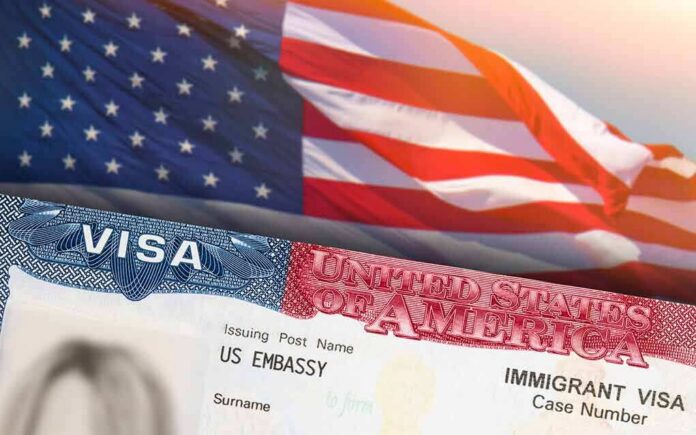
Against that backdrop, the Trump administration pulled a lever many Americans rarely think about. The State Department revoked the visa of Maria Luiza Ribeiro Viotti, Brazil’s ambassador in Washington. Officials described the step as a “reciprocal action,” not a personal vendetta. They stressed that this was not the same as kicking her out or declaring her unwelcome under formal diplomatic rules. She could remain in the country, but if she left, she would have to reapply.
That detail matters. Revoking the visa raises the cost for Brazil without burning the bridge. The same official made the pressure point very clear: if Brazil approves Daniel Perez as ambassador, Viotti’s visa can be restored quickly. In other words, this is leverage. It says to Lula’s government, “You stonewall our representative and block our people; we can touch your top envoy too.” For readers who favor common-sense reciprocity, that logic is easy to follow.
Brazil cries ‘blackmail,’ but offers little hard proof of unfair treatment
On the Brazilian side, commentators and some officials called the move a form of diplomatic blackmail and a slap in the face. They argued that Brazil has the right to take time before approving an ambassador, especially when they say Washington did not consult them properly before announcing Perez’s nomination. That claim speaks to decorum, not law. Every sovereign nation can drag its feet, and no treaty forces fast approval.
The weakness in Brazil’s case is in the details it does not provide. Reports show Brazil denied visas to American diplomats, yet there is no public record naming the officials, their visa types, or the written reasons. Without that, it is hard to prove this was a neutral bureaucratic decision, rather than political games. As long as the Brazilian argument leans on emotional words like “blackmail” instead of documents, neutral observers will see stronger grounding on the U.S. side.
Visa power as a steady Trump-era pressure tactic
This is not the first time Trump’s State Department used visas as a policy weapon with Brazil. In 2025, Secretary of State Marco Rubio announced visa revocations for Brazilian judicial officials and their families under a law that lets the United States bar entry based on foreign policy concerns. Those officials were accused of censoring conservative speech and targeting allies of former Brazilian President Jair Bolsonaro. To many conservatives, that looked like long overdue accountability, not bullying.
The Trump admin just revoked the visa of Brazilian ambassador to the U.S. Maria Luiza Ribeiro Viotti, after Brazil refused to approve Trump's nominee for U.S. ambassador to Brazil, Daniel Perez
OMG 🤣 pic.twitter.com/ZOEDY5SrJ6
— American Apex 🇺🇸 (@vinzamalo) August 5, 2026
Later, the United States also moved against Brazil’s solicitor general and other judicial figures over their role in controversial programs and political crackdowns. Each step sent the same signal: if foreign elites abuse power or block fair engagement, they may lose the privilege of easy travel to the United States. The Viotti case fits neatly into that pattern. It tells foreign governments that visas are not automatic. They are part of a larger bargain about fair dealing and basic respect.
What this showdown reveals about sovereignty and respect
For many Americans, this story is not really about one Brazilian diplomat’s travel document. It is about whether the United States should quietly accept stalling, visa denials, and public jabs from other governments, or respond with clear, measured pressure. Trump’s team chose the second path. They stopped short of expelling Viotti or closing doors to ordinary Brazilians. Instead, they used a reversible, targeted step that ties relief directly to Brazil’s next move.
From a conservative, common-sense angle, that strikes a balance. A country that blocks your ambassador and your officials cannot expect full, cost-free access for its top envoy. The United States has the right and the tools to answer in kind. If Brazil wants a calm, normal relationship, it can show that by approving Daniel Perez, allowing professional diplomats to do their work, and dropping the habit of turning visas into political weapons. Until then, Washington has made clear it will not simply sit back and take the hit.
Sources:
nypost.com, cnn.com, washingtonpost.com, aljazeera.com, wsj.com, x.com, facebook.com, reuters.com
© conservativefreepress.com 2026. All rights reserved.