After 76 days of missed paychecks and mounting airport disruptions, Congress finally moved to reopen most of Homeland Security—while leaving the biggest border-enforcement fight for another day.
Story Snapshot
- The House passed a Senate-approved bill by voice vote to fund most of the Department of Homeland Security (DHS), ending a record-long DHS shutdown.
- The funding measure excludes Immigration and Customs Enforcement (ICE) and Border Patrol components, postponing the core immigration enforcement dispute.
- Hundreds of thousands of affected workers, including TSA personnel, are positioned to receive pay once President Trump signs the bill.
- Republican leaders face pressure from both public backlash over disruptions and internal demands to secure tougher enforcement funding through reconciliation.
What Congress Passed—and What It Left Out
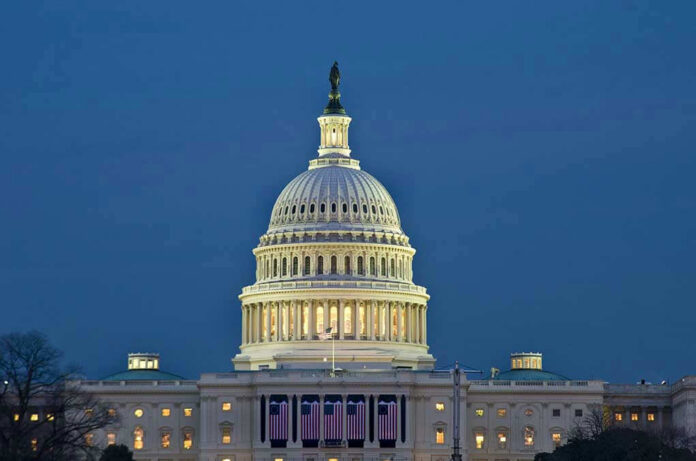
The U.S. House approved a bipartisan, Senate-passed DHS funding bill by voice vote, sending it to President Donald Trump for signature and effectively ending the 76-day shutdown. The measure restores funding for most DHS functions, which matters immediately for day-to-day operations like airport security screening. The catch is significant: the bill does not include funding for ICE or Border Patrol components, meaning immigration enforcement funding remains unresolved.
The shutdown began February 14 and became the longest DHS-specific shutdown on record. Senate action came earlier, with a unanimous consent vote in the early morning hours, increasing pressure on House leaders to act. House leaders prepared members for potential votes stretching into the weekend, but ultimately used a voice vote—an approach that avoided a prolonged floor fight and signaled a desire to close the standoff quickly.
Why a “Partial” Fix Became the Only Viable Exit
The dispute centered on DHS funding and, more specifically, the immigration enforcement parts of the agency. Republican leadership and conservatives who prioritize border security pushed to secure enforcement-related funding and policy outcomes, while Democrats resisted those approaches and sought to shape the narrative around responsibility for the shutdown. With airport delays and worker hardship becoming increasingly visible, the political incentives shifted toward getting pay restored and basic services stabilized first.
Politico’s reporting described internal GOP friction and a strategy to move quickly, including discussion of a narrower, “anorexic” approach tied to enforcement funding through budget reconciliation. That framework matters because reconciliation can bypass certain Senate hurdles, but it also heightens internal stakes: it concentrates power in leadership decisions, compresses committee scrutiny, and forces members into tough votes. The result is a temporary reopening paired with a looming deadline-driven clash over enforcement funding.
Immediate Impact: Pay, Travel, and Public Confidence
The clearest short-term effect is financial and operational: large numbers of DHS employees went without pay during the shutdown, and a signed bill would begin the process of restoring back pay and regular payroll. Travelers also felt the impact through security delays and uncertainty—especially at airports—making TSA staffing and morale a public-facing concern. Even when essential work continues during shutdowns, the disruption drains confidence in government competence and basic service delivery.
The Politics: One Government, Two Narratives
Republicans and Democrats are presenting sharply different explanations for the same outcome. House Republican messaging framed the vote as ending a “Democrat shutdown” and emphasized paying DHS personnel. House Democrats argued Republicans “finally” accepted a bipartisan Senate bill and noted similarities to earlier Democratic proposals. The hard fact underneath the spin is that unified government still struggled to prevent a 76-day lapse—fueling bipartisan public frustration that Washington incentives reward brinkmanship more than problem-solving.
For conservatives who want limited government but functional core services, the episode is a reminder that shutdown politics can backfire by harming workers and citizens while leaving major policy disputes unresolved. For liberals worried about enforcement-heavy approaches, the partial bill buys time but does not settle the broader fight. Either way, the enforcement carve-out ensures the next round will focus on ICE and Border Patrol funding—exactly where the public expects clarity on border control, national security priorities, and accountability.
House approves Senate bill to fund DHS and end 76-day shutdown
Source: CBS Chicago https://t.co/4EUNV52bAP— Ann (@vinfrankl) April 30, 2026
The next steps depend on presidential action and whether lawmakers can bridge the enforcement gap without another crisis. Republican leaders have pointed to reconciliation as a pathway for the excluded components, while the Senate’s earlier unanimous move shows how quickly pressure can build once one chamber acts. With DHS reopened but enforcement still contested, the bigger question is whether Congress can deliver stable governance—or whether Americans should expect more last-minute deals that treat essential government functions like bargaining chips.
Sources:
GOP plots quick DHS shutdown end
House passes bill to end ‘Democrat shutdown,’ pay all DHS personnel
Republicans Finally Will Pass Bipartisan Senate Bill to Fund Homeland Security