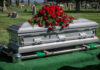
A sudden tear in Senator Lindsey Graham’s main artery has stunned Washington and raised fresh questions about how a powerful government can lose one of its own overnight and still feel unprepared to protect ordinary citizens from similar silent killers.
Story Snapshot
- Senator Lindsey Graham, 71, died Saturday night after a sudden aortic dissection linked to hardening of the arteries.
- The District of Columbia medical examiner’s preliminary report cites cardiovascular disease, with full testing and the final death certificate still pending.
- Graham’s death came just after a busy foreign trip, highlighting how fast serious heart and vessel problems can strike without warning.
- The case exposes broader worries about health risks, media spin, and a government many Americans feel responds faster to elites than to everyday patients.
A Sudden Death and a Clear Medical Finding
Senator Lindsey Graham, a longtime Republican from South Carolina and close ally of President Donald Trump, died Saturday night at age 71 after what his office called a “brief and sudden illness.” Early Sunday, his staff shared preliminary findings from the District of Columbia Office of the Chief Medical Examiner. The examiner said Graham suffered an aortic dissection due to arteriosclerotic cardiovascular disease, meaning a tear in his main artery caused by long-term hardening of the arteries.
Graham’s office also noted that his death certificate remains listed as pending until more tests are done. The medical examiner explained that toxicology and tissue studies still need time, and only after those are finished will officials formally record the final cause and manner of death. For many Americans, that sounds familiar. They see full answers come slowly, wrapped in technical language, while families are left to grieve and the public tries to make sense of sudden loss.
What An Aortic Dissection Is – And Why It Is So Deadly
Doctors describe an aortic dissection as a tear in the inner wall of the aorta, the large artery that carries blood from the heart to the rest of the body. When this inner layer rips, blood surges into the damaged wall and can split it apart. That can quickly cut off blood flow to key organs or cause massive internal bleeding. Medical experts say symptoms often start suddenly and may feel like a heart attack, with severe chest or back pain.
Reports on Graham’s case say the tear came from arteriosclerotic cardiovascular disease, a long-term condition in which arteries stiffen and narrow over many years. This hardening of the arteries is widespread in the United States and tied to diet, stress, and uneven access to good medical care. An emergency room doctor writing about Graham’s death noted that aortic dissections can be hard to spot early and often kill fast, even when people are near the best hospitals. That reality fuels public anger that the system seems better at reacting to elite emergencies than preventing everyday ones.
Graham’s Final Days and the Political Shockwave
Graham died only hours after returning from a trip to Ukraine, where he had pressed for a strong United States role in world affairs. He was just months away from another reelection fight and still active in shaping foreign and defense policy. His sudden death shook both parties in Congress, even as they remain locked in fierce fights over spending, immigration, and America First priorities. Many voters look at this and see a government that can move quickly for wars abroad but struggles to fix deep problems at home.
Media accounts say emergency responders rushed to Graham’s Washington, D.C., home late Saturday for cardiac arrest, but he could not be saved. His office’s statement asked for prayers and privacy for the family, yet the broader public debate turned almost instantly to causes, blame, and spin. Some outlets pushed dramatic stories about his final hours. Others stuck to the medical report and basic facts. That gap matches research showing political media often mix human drama with hard science in ways that can confuse citizens and deepen distrust.
Health Risks, Media Spin, and a Distrusted System
Studies of political news coverage find that media outlets shape how people see risk and government responsibility, especially after sudden deaths of public figures. When one version of events highlights medical details and another focuses on rumors or sharp quotes, audiences on the left and the right may walk away with very different pictures of what happened. Newer research also shows that highly partisan coverage can erode trust in both the press and elected leaders over time. Many Americans already feel the “deep state” and the media serve insiders first.
John Ritter and Lindsey Graham died of the same thing – Aortic Dissection, which is a tear in the inner wall of the aorta (the body's main artery). The tear causes high-pressure blood to tunnel between the artery's wall layers. pic.twitter.com/y1aqAjHP8i
— Reality Secretary of America (@RealitySecofUSA) July 13, 2026
The story of Lindsey Graham’s death fits that pattern. On one side, there is a clear, clinical cause: an aortic dissection tied to long-term cardiovascular disease. On the other, there are fast-moving narratives about his final choices, his travel schedule, and what this says about aging leaders who help run a vast federal system. People frustrated with high health costs, uneven access to care, and slow government reforms see another reminder that even the powerful are not protected from sudden breakdowns—and that the rest of the country is left to manage on its own.
Sources:
mediaite.com, foxnews.com, facebook.com, washingtonpost.com, timesofisrael.com, cordis.europa.eu, pmc.ncbi.nlm.nih.gov
© conservativefreepress.com 2026. All rights reserved.