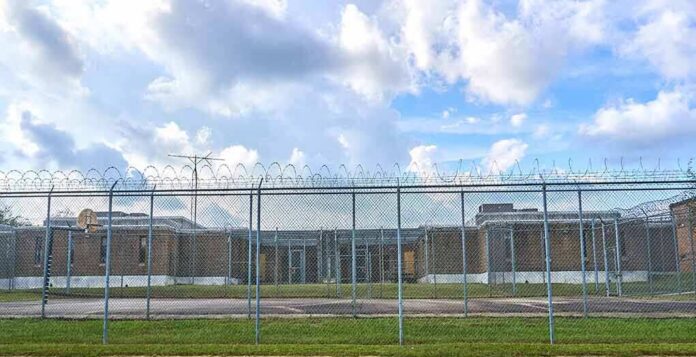
Florida’s shutdown of the notorious “Alligator Alcatraz” camp marks a major win against a chaotic, costly experiment in emergency immigration detention.
Story Snapshot
- Gov. Ron DeSantis says Alligator Alcatraz “fulfilled its mission” after helping deport about 21,000 illegal immigrants.
- The facility was built in about 10 days on a remote Everglades airstrip, using emergency powers and a large federal contract.
- Human rights groups and media reports say many detainees had no criminal record and faced harsh, possibly illegal conditions.
- The center now holds zero detainees, but questions remain about missing migrants, money, and government overreach.
DeSantis Declares Mission Accomplished At Empty Everglades Camp
Governor Ron DeSantis announced that the state-run immigration detention camp known as “Alligator Alcatraz” now holds zero detainees and is being dismantled, calling the facility a temporary tool that “fulfilled the role that it was designed to serve.”[2] He and his team say the site helped deport nearly 21,000 people by using the on-site runway for direct flights out of the country.[1] Supporters argue this aggressive approach made Florida safer by removing dangerous felons from local communities.[5]
State officials stress that Florida has become a national leader in immigration enforcement partnerships, accounting for about 40 percent of all arrests made under the federal 287(g) cooperation program.[5] DeSantis highlighted several named deportees with serious criminal histories, including suspects tied to sexual battery of a minor, aggravated homicide flagged by Interpol, kidnapping, drug trafficking, and armed robbery.[5] These examples are used to show that, at least for some detainees, the camp targeted people who posed real threats to public safety.
Built In Days With Emergency Powers And Big Federal Money
Alligator Alcatraz was thrown together at lightning speed. Reports say Florida turned the Dade-Collier Training and Transition Airport, a remote Everglades airstrip, into a tent city in roughly 8–10 days to address a bed shortage for immigration detainees.[3][5][7] The facility was funded through a roughly $68.4 million emergency contract with the Federal Emergency Management Agency (FEMA), framed as a one-year stopgap with an option to extend.[1] Separate analyses estimate annual operating costs around $450 million as capacity expanded, making it more expensive per detainee than many prisons or federal centers.[4][7]
Emails obtained by reporters show local officials were largely left in the dark while the state used an executive order to seize county-owned land and bypass normal permitting rules.[2][4] Critics say this is a textbook case of emergency powers stretching past their proper limits. No-bid contracts and fast-track deals went to select vendors, some linked with political allies, feeding fears of waste and favoritism.[4][9] For conservatives wary of bloated government and weak oversight, this episode raises serious questions about how crisis authority is used, even by leaders they generally support.
Harsh Conditions, Noncriminal Detainees, And “Enforced Disappearances”
While Florida framed Alligator Alcatraz as a way to hold and deport “dangerous people,” data from the Miami Herald and Tampa Bay Times show more than 250 detainees had only immigration violations, with no criminal convictions or charges in the United States.[5] Roughly one third of those listed had criminal records; the rest had pending charges or none at all.[5] U.S. Department of Justice lawyers also stated that detainees included people who had never been in formal removal proceedings, undercutting the claim that everyone there was already on a clear deportation track.[1][3]
Conditions inside the camp drew even sharper criticism. Media reports and interviews with detainees described food with maggots, limited showers, and poor access to lawyers.[1] Tents leaked in the heavy summer rains, insects swarmed sleeping areas, and lights reportedly stayed on through the night, making basic rest difficult.[4] Amnesty International, after on-site research, documented shackling in cramped cages, constant surveillance, and degrading treatment that it says meets international definitions of cruel, inhuman, and possibly torturous conditions.[7][9] These findings paint a picture not of tight but fair detention, but of a rough camp far below the standards many Americans expect from their government.
Missing Migrants, Environmental Fights, And The Bigger System
Perhaps the most disturbing loose end involves tracking. Rights groups and reporters say nearly 800 former detainees from Alligator Alcatraz vanished from public Immigration and Customs Enforcement (ICE) databases within weeks of being held there.[4][6] It is still unclear where many of these people were sent, whether they were deported with proper hearings, or simply moved through staging sites that lack transparent records. This gap feeds fears of “enforced disappearances,” a term Amnesty uses to describe incommunicado detention where families and lawyers cannot find loved ones.[7]
'Alligator Alcatraz' has zero detainees, says Gov. Ron DeSantis | Click on the image to read the full story https://t.co/7lptFw1KP5
— WPBF 25 News (@WPBF25News) June 26, 2026
The camp also sparked local backlash over land use. Miami-Dade’s mayor criticized the site for “inhumane conditions without meaningful due process” on sensitive Everglades land and pushed plans to transfer the property to the National Park Service for conservation.[2][9] For many residents, the idea of a massive tent prison rising almost overnight in a fragile ecosystem, without normal public input, symbolized a wider problem: a detention system that is huge, fragmented, and hard for everyday citizens to see or control. Nationwide, over 90 percent of immigration detainees are held in privately run facilities, and hundreds of thousands are cycled through this system every year.[20][23]
What This Closure Means For Conservatives
For conservative readers, Alligator Alcatraz’s closure is a mixed story. On one hand, DeSantis and the Trump administration showed they are serious about enforcing immigration law and removing criminals quickly, using tools like state-run detention and direct deportation flights.[1][5][6] On the other hand, the way this camp was built and operated — heavy emergency powers, weak transparency, and alarming reports of abuse — looks too much like the big, unaccountable government many on the right distrust. Strong borders and firm law enforcement must still respect due process, basic human dignity, and proper oversight.
As Florida dismantles Alligator Alcatraz, key questions remain: Will agencies fully account for the money spent and contracts awarded? Will families learn what happened to missing detainees? And will any future facilities better protect both public safety and constitutional rights? Answering these questions will help ensure that tough immigration enforcement stays rooted in conservative values of limited, accountable government — not in sprawling detention experiments that grow faster than the law can follow.
Sources:
[1] Web – DeSantis announces closure of Alligator Alcatraz migrant detention …
[2] Web – Deportations start at “Alligator Alcatraz” as Florida officials vow to …
[3] Web – Alligator Alcatraz housing migrants with no convictions – Miami Herald
[4] Web – USA: Human Rights Violations at “Alligator Alcatraz” and Krome
[5] YouTube – Where Are The Detainees? Hundreds of “Alligator Alcatraz …
[6] Web – Hundreds of detainees in Alligator Alcatraz have no criminal records …
[7] Web – Hundreds of immigrants once held at “Alligator Alcatraz” have …
[9] Web – Deportation Data Project
[20] Web – Immigration Detention 101
[23] Web – Detention Statistics — Freedom for Immigrants
© conservativefreepress.com 2026. All rights reserved.