
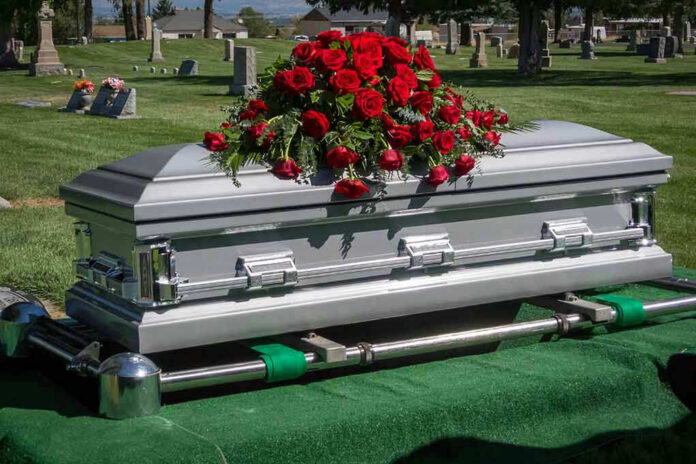
A state-run funeral in Tehran featured open calls to kill Donald Trump, turning grief into a public threat against America.
Story Highlights
- A funeral speaker questioned why Donald Trump was “still alive,” drawing cheers.
- Mourners waved signs and chanted “Death to America” and “Death to Trump” in a state-managed event.
- Footage showed crowds stoning an image of Trump and displaying a “Kill Trump” poster.
- Iranian commanders warned the United States and Israel against “miscalculation,” promising retaliation.
Funeral Rhetoric Crosses Into Direct Threats
Footage from Ali Khamenei’s state funeral showed a speaker on the main stage asking why former President Donald Trump was “still alive,” which set off loud cheers from the crowd. Reporters and video documented chants of “Death to America” and “Death to Trump,” along with anti-Israel slogans, during the mass procession. The event was organized and secured by the state, amplifying the message far beyond a fringe rally and into a national display watched worldwide.
Journalists recorded mourners hurling stones at a large Trump image in a ritual echoing “stoning the devil,” and at least one poster urged “Kill Trump,” with hit list style imagery appearing in shared clips. These scenes followed weeks of war-time messaging from Iranian officials and media. The tone at the funeral aligned with years of regime-led chants, yet it pushed into explicit, personalized threats aimed at a former American president.
State Messaging And Crowd Action Converge
Reuters described the procession as the largest day of memorials, with red banners calling for avengers and crowds passing beneath a billboard showing Trump with a bullet line near his head. A state-linked broadcast cited the “Death to America” chants and highlighted calls targeting Trump by name. While crowd excess can depart from formal policy, this display unfolded at a state-managed funeral with state media coverage, making the signals hard to dismiss as random outbursts.
Iranian commanders also issued warnings timed to the funeral period. A senior commander cautioned the United States and Israel against any attack, vowing “harsh retaliation” to any threat or move against Iran. That message, carried by state media, added an official edge to the already hostile street rhetoric. Together, the stage remarks, the placards, and the commander’s warning formed a layered signal of risk and intent during a tense moment.
Security Stakes For Americans And Policy Choices
CNN reported video of mourners stoning a Trump image and a roadside “Kill Trump” sign, along with claims of a shared list naming American advisers as targets. These images matter for security planning, since public calls for revenge can inspire lone actors even without a written order. Federal agencies study such signals for threat indicators, especially when the message is repeated at mass, state-centered events with broad media reach.
Khamenei Mourners Hold Hit List Signs Targeting Trump, Americans as Warren Staffer Attends Funeral https://t.co/FeeHQnbpOY
— gregglory.com poet (@gregglorypoet) July 7, 2026
The Trump administration now faces choices on deterrence, sanctions, and protection for named Americans. The priority is clear: shield U.S. citizens, harden facilities, and keep pressure on any state or proxy that threatens Americans. The White House can pair visible security steps with targeted diplomatic warnings. Clear red lines, backed by credible force, reduce miscalculation and remind Tehran that threats against American leaders and citizens carry real costs.
How To Read The Signal Without Overreach
Analysts often debate whether hostile crowd behavior equals state policy. In this case, the setting was a state funeral with state coverage, and a featured stage speaker targeted Trump by name. That does not prove a formal kill order, but it does show tolerance for language that points at specific Americans. Prudent policy treats the rhetoric as a risk signal while demanding accountability for any actor, state or proxy, that moves from words to action.
Sources:
pjmedia.com, reuters.com, counterterrorismgroup.com
© conservativefreepress.com 2026. All rights reserved.