

When one bereaved parent urges another to “make it your life mission,” he is not speaking in abstractions; he is handing over the only toolkit grief reliably forges—focus, persistence, and public pressure—to prevent a case from fading before justice is done.
The Short Version
- Phil Vetrano, whose daughter Karina was murdered while running in 2016, publicly urged the father of Brooklyn jogger Katie Suarez to channel grief into relentless pursuit of accountability.
- Vetrano’s message emphasized mobilizing public attention so a high-profile case is not “swept under the rug”.
- The Suarez case—an attack on a 28-year-old runner in Brooklyn—remained under active investigation as police sought witnesses and clarified her medical status across early reports.
- Research on women runners consistently documents widespread abuse and fear, underscoring why families often turn to public advocacy alongside formal investigations.
What Happened: A Father Who Has Lived the Worst Offers a Playbook for Resolve
Phil Vetrano, the father of Karina Vetrano—murdered after going for a run in Queens—addressed the father of 28-year-old runner Katie Suarez with a stark, distilled message: do not relent. In remarks reported by the New York Post, Vetrano urged Suarez’s father to “make it your life mission” to pursue justice and to drive public outcry so the case does not fade from view. The parallel between the families is painfully specific. Vetrano is the father who searched for and found his daughter’s body in 2016; in the Brooklyn attack, reporting described Suarez’s father searching for her and finding her grievously wounded near Bay 17th Street and Shore Parkway when she did not arrive to meet her parents for a run.
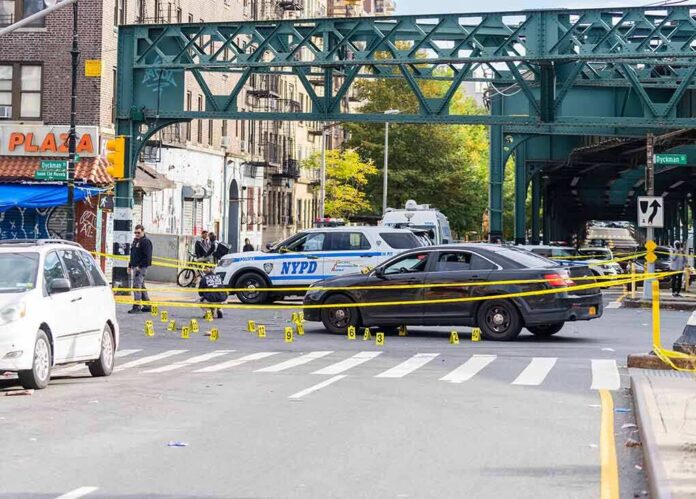
Police at the time sought witnesses, shared a photo of the victim to aid the investigation, and clarified location details on the Shore Parkway Greenway; early accounts varied on Suarez’s condition, with outlets describing her as critically injured, on life support, or brain-dead while the NYPD continued to gather information. Vetrano, drawing on a decade of lived experience with homicide investigation and advocacy, framed his advice around an action principle many victim families learn the hard way: sustained public attention disciplines institutions, encourages witnesses to come forward, and helps protect cases from inertia.
Why Vetrano’s Message Resonates: Mechanism and Memory in High-Stakes Cases
The core of Vetrano’s counsel—activate public attention and keep it activated—reflects how complex violent-crime investigations actually move. Community pressure does not replace detective work; it amplifies it. Eyewitnesses who hesitate often respond to repeated calls; camera owners review footage when a case leads local broadcasts; tips accumulate when the public remains engaged. Families who have navigated these processes learn to convert personal grief into disciplined advocacy: organizing vigils to maintain visibility, coordinating with precinct community affairs officers, using consistent case framing when speaking to media, and documenting timelines so that details do not drift as memories fade. Vetrano’s experience—searing, prolonged, and public—has taught him what attention can do and how quickly it can dissipate when the narrative quiets.
That message is not an indictment of police capacity. It is a recognition that information is distributed across a city and unlocked by social focus. A photograph aired again, a location repeated precisely, a time window reiterated—all of it raises the probability someone recognizes what they saw or remembers what a doorbell camera recorded. In the Suarez investigation, police drew attention to the Shore Parkway Greenway corridor and appealed for information; the family’s voice, amplified by Vetrano’s counsel, operates as a complementary force, not a parallel track.
Two Cases, One Through-Line: Running, Risk, and the Realities Women Manage
The Vetrano and Suarez cases differ in circumstances and outcomes, but the through-line that makes solidarity credible is the landscape women runners navigate. Rigorous research has documented how common harassment and abuse are during runs—and how normalized these experiences can become. A University of Manchester-led study of 498 women found that roughly two-thirds reported some form of abuse while running and only about 5% reported incidents to police; researchers describe a pattern of “safety work,” the constant adaptations women make—route choices, time of day, carrying alarms—to manage risk that should not be theirs to bear. Those findings are not a verdict on any single incident’s motive; they are the context for why the running community, and the families within it, respond so strongly when a runner is grievously harmed.
For families, these data help structure action. They point to underreporting, which argues for expanding channels for anonymous tips; they highlight habitual routes, which suggests focusing canvasses on predictable path segments and lighting conditions; and they capture behavioral adaptation, which can inform targeted fixes—better sightlines, camera coverage, emergency call points—where runners actually run. Research does not solve a case; it sharpens where attention and resources should go while investigators pursue offender-specific evidence.
How Families Sustain Momentum Without Overreach
Effective advocacy keeps to verified facts and specific asks. Families who lead with clarity—time, place, description of clothing or gear, known waypoints—give the public something usefully concrete. They coordinate with detectives before releasing new details publicly to avoid compromising leads. They cultivate media relationships that favor accuracy over sensationalism, correcting drift in early reports and reiterating precise investigative requests. And they build alliances: running clubs that organize awareness runs along the relevant routes; neighborhood associations that distribute flyers calibrated to the case’s current needs; faith communities that host information sessions where precinct liaisons can brief residents and process tips safely.
Vetrano’s admonition to avoid letting a case be “swept under the rug” is not a call to theorize beyond evidence but to hold the frame steady long enough for evidence to surface. The discipline required—especially amid shock—is substantial. It demands a spokesperson, a message calendar, and a willingness to say “we don’t know that yet” as often as necessary. The result is a public that stays engaged and investigators who receive leads rather than speculation.
What It Means Going Forward
For the Suarez family, Vetrano’s offer to speak is more than condolence; it is a transfer of practical know-how from someone who has navigated the slow grind of major-case work and understands how to keep a city looking, listening, and remembering. For cities, the recurring collision of running and vulnerability argues for infrastructure and policy fixes that match how runners use space: lighting contiguous greenway segments, installing visible emergency call boxes at intervals that correspond to typical pacing, and designing camera coverage with ingress and egress in mind rather than only at landmarks.
Sources:
nypost.com, people.com, pix11.com, abc7ny.com, nydailynews.com, nytimes.com, tandfonline.com, manchester.ac.uk
© conservativefreepress.com 2026. All rights reserved.