

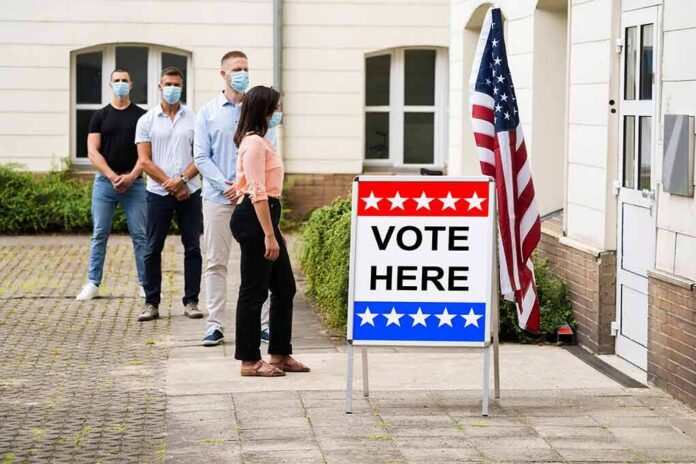
Fake Election Day texts told Fulton County voters their polling places had changed, triggering urgent county warnings to verify locations through official channels.
Story Highlights
- Fulton County confirmed unauthorized texts about polling place changes on Election Day.
- Officials urged voters to verify locations via Georgia’s My Voter Page or by phone.
- The sender, scale, and impact of the texts were not immediately identified.
- Michigan claim about 2,461 voters aged 110+ lacks verifiable public evidence.
Election Day texts claimed polling places moved, county says they were fake
Fulton County officials said voters reported receiving text messages on November 3 that claimed their polling places had changed. County statements said the messages were not sent by Fulton County and that voters should ignore them. The county directed voters to confirm their assigned location using Georgia’s My Voter Page or by calling the county elections office. The warning arrived while polls were open, when confusion could cause real harm to turnout and timely voting.
The Atlanta Journal-Constitution reported that the county had not identified the source of the texts at the time of its Election Day alert. The paper noted no count of how many voters received the messages, and no confirmed cases of voters blocked from casting a ballot because of them. Even so, officials treated the reports as credible enough to provide an immediate verification path and a dedicated phone line for help.
How the scam targets voters and how to defeat it
False messages that target where to vote strike at the most basic step in an election: getting to the correct site on time. Election administrators often warn that voters must vote at their assigned precinct, and that last-minute location changes are rare and must come from official channels. Fulton County repeated that rule and kept the focus on trusted tools, including the My Voter Page and county phone support, to reduce confusion and keep voters moving through the process.
Digital “dirty tricks” are not new. Past elections have seen fake notices about dates, locations, and even candidate details. Experts describe how modern messaging tools can blast misleading content quickly and cheaply, reaching many people during short windows when they are least able to check details. The Fulton County episode tracks with that pattern and shows why quick, plain guidance is essential to protect voters from being misled about where to cast a legal ballot.
What we know, what we do not, and why it matters to election integrity
Officials confirmed the texts were unauthorized and told voters exactly how to verify their site. That is firm ground. What remains unknown from the public record is the sender, how the messages were targeted, and how many people saw them. County statements and reporting did not list those details. That gap matters because it could show whether this was a clumsy prank, a political hit, or a broader automated blast that tried to jam voters on Election Day.
The Michigan claim about 2,461 voters aged 110 or older lacks public documentation in the available record. There is no cited court filing, voter file extract, or official audit to check the figure. Even if very old entries exist, data errors do not prove ballots were cast. Researchers and courts have warned that voter rolls can contain typos or stale entries, and that age anomalies only matter if tied to actual votes or false identities through records and audits.
What conservative voters should watch next
Local and state authorities can pursue the sender and the method used to distribute the Fulton texts. Carriers and platforms often hold logs that show sending numbers, timing, and routing. That evidence can reveal whether voters were targeted by precinct, race, or party, or if the blast was random spam. If investigators confirm a deliberate effort to mislead voters, strong penalties should follow. Protecting clear polling information protects every lawful vote, and it protects trust in fair counts.
Voters can take simple steps that shut down this tactic. Save your polling place before Election Day using Georgia’s My Voter Page. Rely on county phone lines if a last-minute message claims a move. Do not click links in unsolicited texts. Share official links with neighbors and church groups. These common-sense habits block scams, defend community voice, and support order at the polls. Strong, local verification beats chaos every time, and it keeps our elections in the hands of law-abiding citizens.
Sources:
pjmedia.com, appenmedia.com, ajc.com, roughdraftatlanta.com, palmbeachpost.com
© conservativefreepress.com 2026. All rights reserved.