
The Treasury Secretary moved his family to a U.S. military base after Iran-linked threats targeted his home and his role in pressuring Tehran.
Story Highlights
- Reports say Treasury Secretary Scott Bessent relocated to a base after Iranian threats.
- Treasury says Bessent will keep leading sanctions under Operation Economic Outcast.
- A published aerial image reportedly helped identify his Georgetown residence.
- Officials recently warned Iran-linked plots had reached an advanced stage.
What Happened and Why It Matters
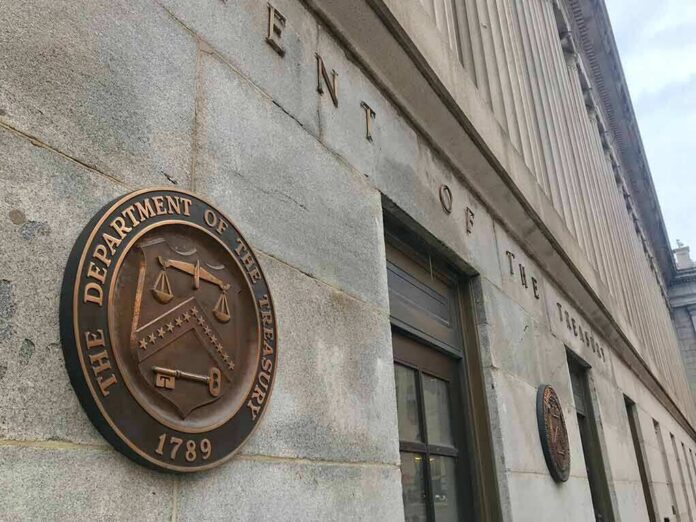
News outlets reported that Treasury Secretary Scott Bessent left his Washington-area home and moved to a military base after threats linked to Iran. The New York Times cited people with knowledge of the move, and Reuters reported similar details from two people familiar with the matter. A Treasury spokesperson said Bessent would not be deterred by threats from Iran and would continue his work leading the administration’s economic pressure campaign. The department’s public remarks confirm his formal role in that strategy.
Reports tie the security shift to Bessent’s leadership of sanctions and financial pressure on Iran. He has been a key voice for Operation Economic Outcast, which targets Iran’s access to dollars, oil revenue, and global finance. Treasury’s message stressed he will keep enforcing sanctions and the blockade against Iranian networks. That stance signals the administration does not plan to pause the program because of threats, despite the personal risk now facing a top economic official.
How a Public Image May Have Raised the Risk
Reuters reported that a person familiar with the situation linked the heightened concern to an aerial image of Bessent’s $12.5 million Georgetown home in a Wall Street Journal story. According to that source, the image made it possible to pinpoint the location of the residence, which may have increased risk for Bessent and his family. This detail underscores a growing worry on both left and right: public exposure can put officials and their families in harm’s way in an age of easy geolocation.
Officials did not release the exact timing or destination of the move, which is common for security reasons. Outlets noted that the severity and specifics of the threats to Bessent were not publicly detailed. However, the reported relocation came soon after a late October warning from a senior intelligence official that Iran-linked plots against American personnel and citizens had reached an “advanced stage”. Taken together, the pattern points to a higher alert posture for several top officials, not just one cabinet member.
The Broader Security Pattern Around Iran
Iran and its agents have a history of plotting against United States figures. Federal documents and past cases describe attempts against former national security adviser John Bolton and other officials in recent years. The Federal Bureau of Investigation (FBI) has publicly outlined Iranian external plots, including a 2011 case targeting the Saudi ambassador in Washington. Those precedents help explain why the government treats Iran-related threats against current leaders as serious, especially during active pressure campaigns.
Treasury Secretary Scott Bessent Relocates to Military Base Following Security Threats from Iran https://t.co/mwIIXK6SpE #unitedstate @BBCNews @CBSNews @nytimes @washingtonpost @WSJ
— EP News (@usepnews) November 12, 2026
This episode also taps into a deeper public concern: whether the government can protect Americans while leaders pursue high-risk global policies. Conservatives see proof that hostile regimes exploit gaps at home. Liberals see how elite exposure and weak guardrails can endanger families and staff. Both sides worry about secrecy that leaves citizens guessing about risk. Here, Treasury affirmed resolve but did not release protective details, which is normal for security, yet fuels calls for better accountability.
Policy Resolve and Practical Limits
Treasury’s signal is clear: sanctions and financial pressure will continue. Bessent’s public remarks on Operation Economic Outcast laid out steps to squeeze Iranian revenue and banking channels, and the department says that work will go on despite threats. That stance aims to show strength abroad and steadiness at home. The practical limit is that officials must balance transparency with safety. Agencies rarely share threat streams or base locations, which protects lives but leaves gaps for the public.
For citizens, the headline is stark. A cabinet official charged with guarding the dollar moved to a base for safety. That is not normal civic life. It shows that foreign conflicts reach into American neighborhoods and that media exposure can have real security effects. It also shows a federal system straining to manage risk while staying on mission. People across the spectrum can agree on this: security should not depend on luck, and policy should not rely on secrecy alone to earn trust.
What to Watch Next
Watch for new Treasury designations or actions that deepen Iran’s isolation. That would match the “stay the course” message. Watch for Congress to ask for briefings on threats to senior officials. That could bring limited new facts into public view. Watch for newsrooms to review how images and property details are published. That debate is coming, as editors weigh public interest against real risks posed by modern geolocation tools.
Sources:
insiderpaper.com, nytimes.com, newsobserver.com, upi.com, nst.com.my, home.treasury.gov
© conservativefreepress.com 2026. All rights reserved.