

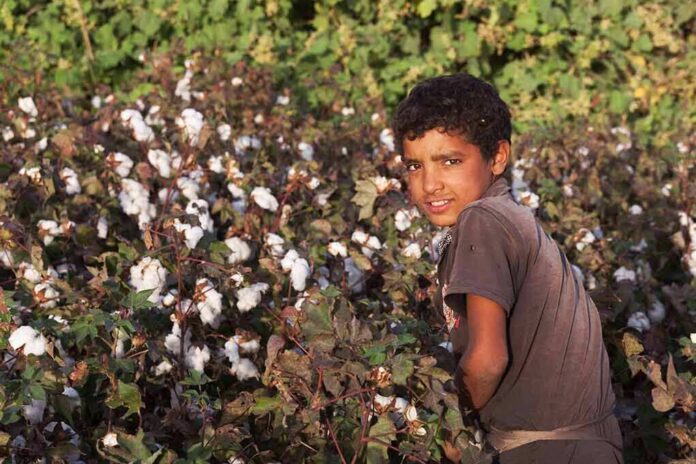
Cotton never vanished from American agriculture; what disappeared was a shared civic memory of how a modern, mechanized, globalized cotton industry operates—and how easily short-form clips can turn that amnesia into a culture-war Rorschach test.
At a Glance
- U.S. cotton farming remains active at multi-million-bale scale; it did not end with slavery.
- The viral “I didn’t think they did cotton fields anymore” reaction misstates a simple agricultural fact.
- Short-form video dynamics reward surprise and symbolism, often at the expense of context and accuracy.
- Cotton’s present is mechanized and global, even as its past carries profound historical weight.
Modern U.S. Cotton: What Actually Exists in the Field
Contemporary U.S. cotton is a sophisticated row-crop business concentrated in the Sunbelt—Texas, Georgia, Mississippi, Arkansas, Arizona—run on GPS-guided planters, boll-buggy harvest logistics, and gin yards that look more like industrial sites than pastoral set pieces. Production has fluctuated with drought, prices, and global demand, but government crop books and industry outlooks are unambiguous: the crop persists at scale. Recent USDA outlooks estimate U.S. production around the mid-teens of millions of 480‑pound bales, year after year—hardly the footprint of a vanished commodity. The National Cotton Council’s annual outlook, based on grower surveys, likewise charts acreage, yields, and abandonment rates with the dry specificity of a sector that, far from extinct, is optimizing amid tight margins.
If you’ve not driven the backroads of the Rolling Plains or the Mississippi Delta in October, the surprise is understandable. Cotton is a regional crop, visually absent from much of the country; it is easy to grow up never seeing a module builder or a stripper harvester. But the national production ledger is public and precise. In recent seasons, USDA estimated U.S. all‑cotton output in the vicinity of 14 million bales, with planted area around 10 million acres—numbers that move with weather and prices but confirm a living industry, not a relic.
How Cotton Farming Works Now: From Field Architecture to Fiber Flow
Today’s cotton system is a tight choreography. Farmers manage variety selection—upland versus extra‑long staple—alongside plant growth regulators, defoliants, and integrated pest management. Precision agriculture knits satellite guidance, variable-rate inputs, and yield mapping into decisions that would be unrecognable to a nineteenth‑century planter. Picking is mechanized: modern harvesters lift lint and seed directly from bolls, pack it into round modules on-board, and leave sealed cylinders ready for the gin. At the gin, lint is separated from seed and packaged into 480‑pound bales, sampled, and classed for staple length, micronaire (a proxy for fineness), strength, color, and trash content—attributes that set price and determine end use, from denim warp yarns to medical gauze.
This mechanization was not sudden; it’s the cumulative result of two centuries of innovation, from Eli Whitney’s gin to transgenic cultivars and boll weevil eradication programs. Industry experts have long chronicled the last few decades as a period when biotechnology and management practices—Bt traits for lepidopteran pests, herbicide tolerance, improved irrigation scheduling—redefined both yield ceilings and risk profiles. The upshot is less hand labor, more logistics; fewer workers in fields, more capital tied up in iron, firmware, and fiber‑classing certificates.
Why People Think Cotton “Went Away”
Three forces blur reality. First, geography: most Americans don’t live near cotton country, and the crop’s seasonality makes it easy to miss even if you do. Second, supply chains: textiles are global. Bales move to domestic and foreign mills; yarns and fabrics return as finished apparel without any visual link to a field in Lubbock County. Third, history’s shadow: slavery and sharecropping welded cotton to racial oppression in the American imagination. That moral freight can make the visual of a white, fluffy field feel like a plantation throwback, even when the actual operation is a family farm running six-figure equipment financed through a co‑op and selling into contract markets.
Layer onto that the grammar of today’s social platforms. Short, emotive clips reward surprise and symbolic punch. Researchers and fact‑checkers have documented how “cheap fakes”—not AI fabrications, just selective clipping and framing—can leave strong but misleading impressions by stripping context, then riding the algorithm’s feedback loop of reaction and remix. In that ecosystem, a startled “I didn’t think they did cotton fields anymore” is perfect fuel: an easy laugh for some, a teachable moment for others, and a magnet for cultural projection either way.
The Numbers, Not the Memes
When claims meet counters, the simplest adjudication is the ledger. USDA’s production forecasts and summaries—dull by design—show an industry cycling through weather and price shocks but plainly alive. One report placed all‑cotton output near 14.3 million bales for a recent marketing year, with upland cotton composing the overwhelming majority; another set a subsequent estimate at 13.9 million bales—a modest decline, not a disappearance. Early-year outlooks have pegged planted area on the order of 10 million acres, again reflecting input costs, relative crop prices (corn, soybeans, sorghum), and moisture—not abolition. For a global frame, Foreign Agricultural Service tallies put world cotton output above 119 million bales, with the U.S. a consistent top-tier producer and exporter; volatility is global, not uniquely American.
Industry groups triangulate these figures with on-the-ground surveys, estimating harvested acres, abandonment (the share planted but not brought to harvest due to drought or other losses), and varietal mix. A recent National Cotton Council outlook, for example, estimated U.S. production around 12–13 million bales depending on abandonment and yield—consistent with USDA ranges and equally inconsistent with the idea of a vanished crop.
She Thought Cotton Fields VANISHED With Slavery… | Steve Watson, Modernity
In a now viral video, a woman pulled over, pointed her phone at a cotton field, and spoke as if she had stumbled onto a dark secret.
Overlay text on the clip asks “how do we still have cotton fields?”… https://t.co/rMyH1wJuMO pic.twitter.com/AoEIwzRVLP
— Owen Gregorian (@OwenGregorian) September 24, 2026
Reconciling Cotton’s Past with Its Present
Two truths coexist. Cotton was the backbone commodity of a slave economy; it financed horrors and built fortunes. That legacy cannot be separated from the symbol. Cotton is also, today, a regulated, mechanized, globally traded fiber that undergirds jobs from gins to classing offices to export terminals. Good analysis holds both realities without collapsing one into the other. A field trip that ignores the human history of the crop is tone-deaf; a viral clip that implies the crop itself no longer exists is simply wrong. The task is not to launder history, but to insist on accuracy about the present so we can teach the past without distortion.
How to Watch the Next Viral Clip
When a snippet crosses your feed, ask three questions. What concrete, checkable claim is being made? Is there a credible, disinterested ledger—agency data, audited statistics—that confirms or denies it? And is the emotional framing doing more work than the facts? With cotton, the answers are easy: the claim that “they don’t do cotton fields anymore” contradicts public production data; the framing taps genuine historical pain but misstates the agricultural present. Consult the crop book before you consult the quote-tweet.
Sources:
usda.gov, cotton.org, ers.usda.gov, nass.usda.gov, people.com, blackenterprise.com, facebook.com, instagram.com
© conservativefreepress.com 2026. All rights reserved.