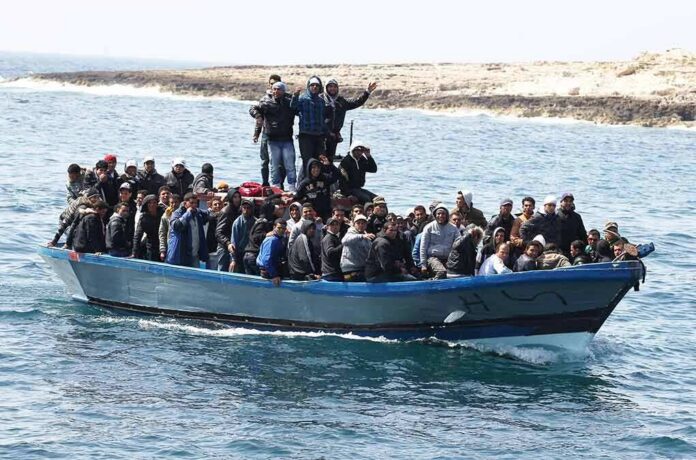
Small boats, long distances, and the narrow seams between air and sea patrols define modern human smuggling to Florida—and when those seams hold, interdictions look exactly like this: aircraft detection, fast waterborne stop, transfer to Coast Guard custody, and a seized vessel.
At a Glance
- CBP Air and Marine Operations aircraft spotted a 27-foot cuddy-cabin boat near Key Largo; CBP and the Coast Guard interdicted it at Angelfish Creek.
- Authorities detained 22 people aboard, including 13 Chinese nationals; one suspected smuggler was arrested and the vessel seized.
- Migrants were transferred to the Coast Guard cutter Pablo Valent for processing, following standard chain-of-custody practice.
- The episode fits a well-established South Florida pattern where the vast majority of U.S. maritime migrant interdictions occur.
What Happened Off Key Largo—and Why It Tracks the Playbook
U.S. Customs and Border Protection’s Air and Marine Operations (AMO) aircraft first detected a small recreational craft running near Angelfish Creek off Key Largo. Surface units coordinated with the U.S. Coast Guard to stop the boat, described as a 27-foot cuddy-cabin—essentially a day cruiser with a small enclosed berth—carrying 22 people. Reporting that drew on CBP confirmation states that 13 of those aboard were Chinese nationals; the balance included Ecuadorian and Dominican nationals. One suspected smuggler, identified as a Cuban national, was detained, and the vessel was seized. Migrants were transferred to the Coast Guard cutter Pablo Valent for processing, consistent with maritime interdiction procedure that centralizes custody and documentation aboard a cutter platform.
This sequence and division of labor are not ad hoc. AMO routinely conducts aerial surveillance to spot small, fast-moving targets that are difficult to detect from the surface; Coast Guard units close and board, then complete on-scene safety checks and take custody. CBP’s own Florida Keys releases describe near-identical interdictions—with migrant vessels escorted to Coast Guard stations for evidence collection and seizure under alien-smuggling statutes—underscoring that what unfolded near Key Largo matches established doctrine rather than a one-off improvisation.
How These Cases Work: Detection, Stop, Custody, and Evidence
The operational logic rests on physics and paperwork. Physics first: small recreational hulls can be overloaded with people, fuel, and gear, pushing them beyond their safe design envelope, particularly in the Florida Straits where wind-against-current seas can turn steep quickly. A 27-foot cuddy-cabin has modest freeboard and limited buoyancy reserves; stack twenty-plus people aboard and you diminish stability, slow the boat’s ability to maneuver, and reduce margin for error if an engine stumbles or weather changes abruptly. That is why officials characterize such runs as “extremely dangerous,” a phrase that, while pointed, reflects decades of casualty experience in this corridor.
Then the paperwork: once a stop is made, crews must secure identities, conduct medical screenings, and preserve the evidentiary chain. Moving migrants to a Coast Guard cutter is not just about space; cutters are built for sustained processing with medical capabilities, detention spaces, and communications routing to immigration databases. Naming a receiving cutter—here, the Pablo Valent—anchors the timeline and chain-of-custody, a detail that typically shows up when agencies expect follow-on prosecution or removal actions.
Why South Florida Sees So Much of This Traffic
The Florida Straits and adjacent Caribbean approaches are the nation’s principal theater for maritime migrant smuggling. In recent congressional testimony, AMO reported that the overwhelming share—about 94 percent—of maritime migrant interdictions occurs in South Florida and the Caribbean, reflecting both geographic proximity to source and transit nations and the density of interdiction assets staged to counter it. Independent government analysis has long reinforced the point: during earlier multi-year reviews, the Coast Guard interdicted nearly 92 percent of known migrants smuggled by small boats along the U.S. mainland off the Florida coast, particularly in the Keys and Straits where routes converge and enforcement coverage is layered.
That enforcement architecture—AMO aircraft overhead, Coast Guard and CBP boats forward, and joint command centers fusing radar, AIS anomalies, and human reporting—creates the conditions for short-notice intercepts like the Key Largo case. The tactical picture is dynamic; smugglers mix legitimate-looking recreational vessels with nocturnal transits and landings on remote beaches to dilute detection. But once a target is spotted from the air, the timelines compress markedly, and interdiction odds increase.
The Vessel and the Risk Calculus
To a lay eye, a cuddy-cabin boat can look capable enough: enclosed bow space, outboard power, respectable speed in calm water. What matters offshore is reserve buoyancy, load distribution, and redundancy. Overcrowding adds topweight and shifts the center of gravity upward; fuel jugs, spare props, and makeshift seating complicate emergency egress. Running dark to avoid detection removes a key collision-avoidance layer; navigating through reef cuts like Angelfish Creek amplifies the hazard if the operator is unfamiliar, fatigued, or simply unlucky with a following sea. These are not theoretical concerns: the Keys have recorded fatal capsizings in conditions that a lightly loaded vessel would have survived. When agencies call a given run “extremely dangerous,” their institutional memory is filled with those case files—even if the specific vessel makes landfall or interdiction without casualties.
Smuggling crews also weigh time and tide against patrol patterns. Narrow windows—tied to weather systems or enforcement posture—can incentivize marginal decisions: more passengers, fewer lifejackets, less fuel reserve. The presence of mixed nationalities on board, including Chinese nationals, is not unusual in today’s hemispheric flow; networks increasingly stitch together routes that move people from Asia through South and Central America before a final maritime leg toward South Florida. That, in turn, complicates screening and repatriation logistics once custody is established.
Processing and Legal Pathways After an Interdiction
After transfer to a Coast Guard cutter, migrants undergo identification, initial medical evaluation, and immigration processing. Outcomes can range from at-sea repatriation under bilateral arrangements to transfer ashore for further proceedings, including credible-fear screenings or material-witness holds if prosecutors pursue a smuggling case. The suspected smuggler—separated early for officer and migrant safety—faces potential charges under federal alien-smuggling statutes, with venue typically in the Southern District of Florida. CBP and Coast Guard media releases in similar Keys cases often foreshadow prosecutions that later appear on the federal docket; in other instances, removal takes precedence if charging standards are not met. The Key Largo interdiction contains the familiar markers that agencies associate with prosecutable conduct: overloaded craft, mixed-nationality passengers, and a designated operator in custody.
From an evidence perspective, naming the seized vessel and preserving logs, photos, and passenger statements build the record. The handoff to a specific cutter and then, as needed, to a shore station such as USCG Station Islamorada for evidence collection are the routine links that ensure both immigration outcomes and any criminal case rest on solid documentation. That is why releases and reporting emphasize the cutter name and station destination alongside headcounts and nationalities.
The Broader Implication: Enforcement Is a System, Not a Single Stop
Seen in isolation, a 27-foot boat and 22 people may look like a near miss. Seen in context, it is a node in a larger, resilient network—and in a layered enforcement system designed to detect, interdict, and process such ventures repeatedly. The South Florida operating picture will continue to feature small recreational craft repurposed for human smuggling because they blend with legitimate traffic, launch from countless ramps, and can be abandoned quickly. Airborne surveillance and coordinated surface interdiction remain the decisive counters, and when they work in tandem—as they did off Key Largo—the result is predictable: a timely stop, a safe transfer to a cutter, and a seized boat.
Sources:
nypost.com, foxnews.com, hotsheet.com, cbp.gov, news.uscg.mil
© conservativefreepress.com 2026. All rights reserved.