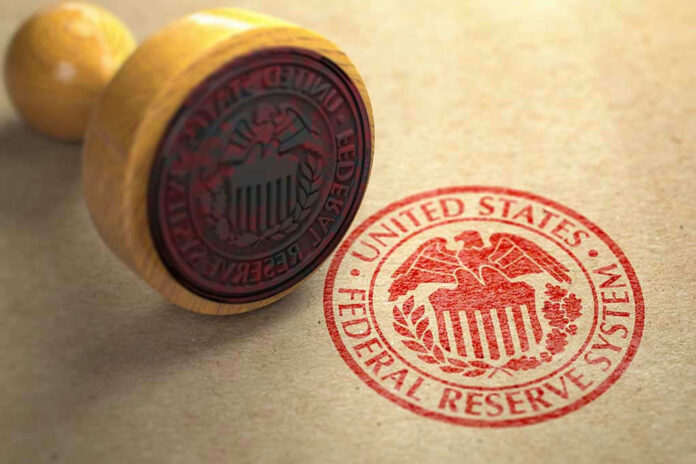
A jobs report that misses the mark on pushing the Federal Reserve to cut interest rates might signal more economic uncertainty ahead.
Story Snapshot
- The latest U.S. jobs report shows slowing hiring and rising unemployment.
- Despite softer labor data, the Federal Reserve is not expected to cut rates immediately.
- Traders anticipate potential rate cuts in 2026, reflecting cautious optimism.
Slowing Job Market Leaves Fed in a Holding Pattern
The recent U.S. nonfarm payrolls report reveals a notable slowdown in hiring, coupled with a rise in unemployment to about 4.6%. Despite these indicators of a softening labor market, the Federal Reserve has opted not to cut interest rates in its upcoming meeting. Market analysts describe this situation as “soft but not catastrophic,” pointing to a job market that isn’t deteriorating rapidly enough to necessitate an emergency policy shift.
This cautious approach reflects the Fed’s strategy to maintain rates slightly above neutral, aligning with its dual mandate of maximum employment and price stability. The ongoing tension between Fed guidance and market expectations continues to shape discussions around future monetary policy actions.
Market Reactions and Expectations
Financial markets have adjusted their expectations, with traders scaling back the odds of an immediate rate cut while still pricing in one or two reductions in 2026. This adjustment reflects a broader sentiment of cautious optimism, as the Fed’s guidance suggests a gradual easing path rather than abrupt policy changes. The narrative emerging from these developments emphasizes a “Goldilocks” scenario of cooling jobs and moderating inflation without the threat of a hard economic landing.
While some Federal Reserve officials advocate for more aggressive rate cuts, citing overly restrictive policies, others emphasize a wait-and-see approach due to inflation still running above the desired 2% target. This internal division highlights the complexity of balancing economic growth with inflation controls.
Implications for the Economy and Households
The implications of the current monetary stance extend beyond the financial markets. Households may continue facing higher borrowing costs, as mortgage rates tied to the 10-year Treasury yield are projected to rise modestly. This scenario could challenge housing affordability despite potential rate cuts in the future. Manufacturers and import-reliant firms also contend with high tariffs that elevate input costs, contributing to sustained inflation above the Fed’s target.
As the Federal Reserve navigates these economic waters, workers may experience reduced bargaining power due to slower hiring and increased unemployment. However, the broader economy is expected to see moderate growth, with real GDP projected to increase by 2.2% in 2026 before slowing slightly thereafter.
Sources:
Budget Office Expects Federal Reserve to Cut Rates in 2026
Jobs Report Expected to Show Uptick in Hiring Before Fed Cuts
Lone Fed Official Pushes for Jumbo 2026 Interest Rate Cuts
Federal Reserve Cuts Main Rate to 3.5-3.75% Range, Signals Cautious 2026 Outlook