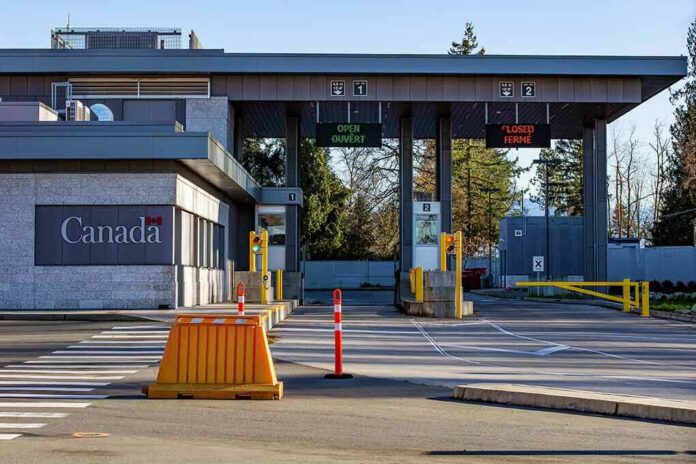
Trump froze a 50% tariff hit on Canada after saying the two countries struck a deal, and he teased a Keystone XL revival that could reset North American energy politics.
Story Snapshot
- Trump paused planned 50% tariffs after announcing a U.S.-Canada deal, pending final papers.
- White House and U.S. Trade Representative echoed the pause and deal language on social media.
- Trump tied the pause to talks that include Keystone XL, a project he backed in 2017.
- Coverage describes a last-minute pause; some reports say pipeline talks remain early.
What Trump Said And Why It Landed Like A Thunderclap
President Trump said he paused new 50% tariffs on Canadian goods because the United States and Canada reached a deal, subject to final documents. He posted that message and linked it to a possible Keystone XL revival, calling the pipeline a candidate to “awaken from the grave”. The White House and the Office of the United States Trade Representative repeated the pause-and-deal framing, signaling that this was not a trial balloon but the administration’s line. Media framed it as a last-minute move, just ahead of the deadline.
That timing matters. A pause “at the buzzer” reads like leverage that paid off, not a retreat. The Telegraph reported the deal scope could include broader market access and digital trade alignment, hints that this was not only about avoiding tariffs but about setting terms. A conservative reading says trade tools worked as designed: threaten credible pain, get movement, then trade relief for concessions. Skeptics will press for text, but leverage that changes behavior is still leverage well used.
Where Keystone XL Fits, And How Far It Goes
Trump’s Keystone XL signal did not appear out of thin air. He issued actions in 2017 to advance the project and then announced approval of the presidential permit that March. That record explains why he would use the pipeline as a marker for a larger energy-security reset. Yet reporting also says pipeline discussions are in an early stage, and no Canadian document in the public set confirms a binding pipeline pledge tied to the tariff pause. Treat the pipeline thread as real leverage, not yet a signed term.
The administration’s case gains strength from its energy logic. Keystone XL links Alberta supply to United States refiners, which can cut dependence on hostile sources and lower transport risk. That matches common-sense priorities: secure energy, stable prices, and friendly supply chains. If Keystone XL re-enters the frame as part of a broader trade-energy package, that would align with conservative values of domestic strength, private capital, and continental reliability. The facts so far show the door cracked open, not yet swung wide.
What We Know About The Tariff Pause And The Stakes
The pause came just before the tariffs would have hit a wide range of Canadian exports. Al Jazeera cited electronics, industrial machinery, furniture, and dairy among the sectors at risk. The immediate relief matters on both sides of the border. United States buyers avoid sudden cost spikes; Canadian sellers keep access while talks continue. Reports emphasize the pause is temporary and “subject to finalization of documents,” which means the legal effect rides on what gets signed next. That is standard in trade brinkmanship.
Canada’s public line has been cooler. Global Affairs Canada said the country still sought relief from existing sector tariffs and the new measures, and it pushed for progress on a modernized continental trade pact. That signals Ottawa wants broader scope before declaring victory. News outlets also said Prime Minister Mark Carney acknowledged progress but stopped short of a “done deal” label. Those statements do not dispute the pause; they frame it as provisional while Canada works for more.
The Path From Announcement To Durable Outcome
Announcements are fast; paperwork is slow. The next mile markers are clear. The Office of the United States Trade Representative and the White House need to publish the formal suspension or adjustment notice. Customs and Border Protection must issue guidance so importers know what applies at the dock. If Keystone XL advances, agencies would need to show steps on permitting and routing, and the developer would have to signal commercial readiness. Those steps turn a headline into a policy win or reveal it as a holding pattern.
The facts support a firm core: the pause exists, the administration links it to a deal framework, and Keystone XL is back in the political conversation. The counterpoints say the documents are not done yet and the pipeline is not yet a term, which is also true. On balance, the leverage worked for now. If the final text locks in market access and energy alignment, this becomes more than a timeout. If not, the pause simply bought time. The burden now is to publish the deal, lock the terms, and show the receipts.
Sources:
facebook.com, x.com, trumpwhitehouse.archives.gov, theguardian.com, telegraph.co.uk, cnn.com, everycrsreport.com, theglobeandmail.com
© conservativefreepress.com 2026. All rights reserved.