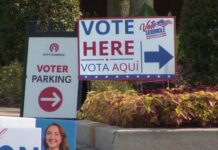
When prosecutors file five felony counts against a local candidate and specify the exact statutes, dates, and alleged false statements, the case stops being rumor and becomes a formal test of how election rules are enforced at street level.
At a Glance
- San Joaquin County prosecutors charged Desiree Lynch, a Stockton City Council District 5 candidate, with five felonies tied to alleged false residency and sworn statements.
- The counts include three perjury charges under Penal Code 118(a) and two election-fraud charges under Elections Code 18100(a) and 18203, with alleged conduct on specific 2025–2026 dates.
- Investigators say Lynch lived in Lodi and in North Stockton’s District 1 while claiming a District 5 address on voter registration and candidacy paperwork, including two addresses cited on filings.
- The case emerged from a sheriff’s referral after the June primary and culminated in a warrant, arrest, and release on bond; multiple outlets reported the same core allegation.
What prosecutors allege and why it matters
The San Joaquin County District Attorney’s Office announced five felony charges against Desiree Lynch tied to her 2025–2026 paperwork for a Stockton City Council District 5 run. The charging scheme is precise: three counts of perjury under California Penal Code 118(a) on or about November 10, 2025; February 5, 2026; and March 2, 2026; one count under Elections Code 18100(a) for false voter registration; and one count under Elections Code 18203 for a false nomination or declaration of candidacy. These are not abstract “election fraud” labels; they are concrete allegations that named statutes were violated on named days. The office publicly put its credibility behind those particulars, which signals a case built around specific sworn statements prosecutors believe they can prove false beyond a reasonable doubt.
At the center is residency—more precisely, domicile—which California treats as the touchstone for voting and district eligibility. Prosecutors say their investigators concluded Lynch actually resided in Lodi and, later, in North Stockton’s District 1 while she asserted District 5 eligibility on registration and candidate filings. Reporting consistent with the DA’s account identifies two addresses that appeared on Lynch’s paperwork: Harry’s Cocktail Lounge on East Charter Way and the Doyle Garden Apartments on East Oak Street. The theory is straightforward: if a candidate swears to a District 5 residence while living elsewhere, the sworn statements and election filings are false.
How California law frames residency, perjury, and election filings
California election law draws a bright line between where a person gets mail and where they are domiciled. For voting and candidate eligibility, “residence” means domicile—the fixed home a person intends to remain at and return to; it is intent and habit of life, not a convenient mailing address. That doctrine, repeatedly cited in California cases and commentary, is why a candidate who lists a bar, office, or short-term location as a “home” address risks criminal exposure if investigators can show their actual domicile was elsewhere. Prosecutors often use perjury counts for the sworn parts of the forms and Elections Code charges for the acts of registering or filing based on a non-qualifying residence.
The statutes charged in Stockton match that template. Penal Code 118(a) criminalizes knowingly making a false statement under oath. Elections Code 18100(a) targets fraudulent acts in voter registration, and 18203 addresses false declarations in candidate filings. This legal structure has underpinned past California prosecutions—from Los Angeles cases involving city and legislative seats to more recent local filings—though such prosecutions are relatively uncommon statewide. The pattern, not the frequency, is what matters: when prosecutors move, they tend to move on domicile.
The investigative pathway and case posture
According to public statements and contemporaneous reporting, the case did not begin as a campaign-trail whisper; it arrived via a referral from the San Joaquin County Sheriff’s Office following the June primary, triggering a DA Bureau of Investigations inquiry. The DA’s office described a defined investigative window culminating in a sworn complaint, a signed arrest warrant, and an arrest—standard procedural signposts that distinguish a fully docketed case from preliminary vetting. Multiple local outlets reported the same core allegation and charge set, including the specific claim that Lynch did not live in District 5 during key filing periods.
Procedurally, the charges span three dates for perjury, suggesting prosecutors allege distinct false statements or attestations aligned with registration updates and candidacy paperwork. The two election-fraud counts target the underlying acts: registering at and declaring a candidacy from addresses the state alleges did not reflect Lynch’s true domicile. In this charging posture, the case will likely turn on documentary evidence such as lease ledgers, utility records, and official filing copies; witness testimony from neighbors, landlords, or building managers; and any digital traces that place day-to-day life in one district versus another. The DA signaled exactly that sort of documentary theory.
Residency prosecutions are rare but legible
California has a long memory for residency cases that stuck. The prosecutions of former Los Angeles City Councilman Richard Alarcón and state Sen. Roderick Wright, each tied to domicile claims, established that juries will convict when presented with a coherent timeline showing the candidate lived one place while swearing to another. Those were bigger offices in a different county, but the kernel is the same: the law makes domicile the fulcrum, and prosecutors press there. Such cases remain a small fraction of election enforcement activity, but when they come, they come with the same legal architecture and evidentiary demands.
That architecture also explains the public emphasis on the addresses cited on filings in Stockton. If the listed locations are commercial or otherwise implausible as true domiciles—or if records show transience inconsistent with intent to remain—perjury counts become easier to frame. Conversely, if a defendant can show consistent habitation and intent to return to a District 5 address, the domicile defense gains traction. The Stockton filing sequence, with multiple dates and addresses, implies a timeline prosecutors believe will survive that contest.
🚨 ELECTION FRAUD ARREST: Stockton City Council candidate Desiree Lynch has been arrested on five felony counts, including three counts of perjury, false voter registration and filing a false declaration of candidacy.
Prosecutors allege Lynch was running in District 5 while…
— MDBayNews (@MDBayNews) August 20, 2026
Implications for campaigns, clerks, and voters
For candidates, the message is unambiguous: addresses on voter registration and candidacy forms are not administrative trivia; they are sworn attestations that sit under perjury and election-fraud statutes. Campaigns that treat residency as a box-checking exercise risk criminal liability if their candidate’s daily life points elsewhere. For election administrators, the case underscores why candidate and voter rolls are built around domicile, not convenience addresses; the system assumes truthful self-reporting and enforces it after the fact, through investigations like this one. For voters, the consequence is practical: residency requirements are how the law ensures representatives actually live among the people they serve; enforcing them protects a basic premise of local self-government.
Sources:
townhall.com, stocktonia.org, kcra.com, aol.com
© conservativefreepress.com 2026. All rights reserved.