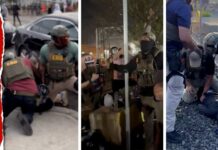
In a shocking directive, Chicago police were ordered not to assist federal Border Patrol agents under attack, raising alarm among conservatives about sanctuary city policies.
Story Highlights
- Chicago police were instructed to stand down during a distress call from ICE agents.
- The incident occurred amid heightened anti-ICE protests in Chicago.
- Dispatch audio confirmed the stand-down order from the police chief.
- The incident highlights tensions between local and federal law enforcement.
Stand-Down Order Sparks Outrage
On October 5, 2025, Chicago police officers received an order from their chief of patrol not to respond to a distress call from federal Border Patrol (ICE) agents. The agents were being attacked and surrounded by a large crowd of anti-ICE protesters on Chicago’s South Side. This controversial directive was issued despite the agents being boxed in by vehicles and calling for help. The decision to instruct officers to stand down has sparked outrage and raised serious questions about interagency cooperation and public safety.
The events leading up to this situation were marked by escalating anti-ICE protests outside the ICE processing center in Broadview, a suburb of Chicago. The ICE agents, conducting a routine patrol approximately 15 miles from the protest site, faced a hostile crowd and a dangerous situation. Despite initial preparations to assist the federal agents, the Chicago police were instructed via dispatch and internal memo to withhold aid. This directive has ignited a firestorm of criticism and concern from law enforcement advocates and conservative voices.
Implications for Interagency Cooperation
The stand-down order issued by the Chicago police chief is unprecedented and has significant implications for the relationship between local and federal law enforcement. Historically, tensions have existed between local police and federal immigration authorities, especially in sanctuary cities like Chicago, which limit cooperation with ICE. This incident exemplifies the deepening divide, as political pressures and differing policies on immigration enforcement continue to strain these relationships. The fallout from this decision is likely to influence future policy discussions and could lead to legal challenges against city leadership.
The broader implications of this incident are concerning for conservatives who value law enforcement collaboration and public safety. The decision to prioritize political considerations over immediate safety concerns sets a dangerous precedent. It raises questions about the security of federal agents operating in sanctuary cities and the ability of local police to fulfill their duty to protect and serve all citizens, regardless of political pressures.
Public and Political Reactions
The directive has elicited strong reactions from both sides of the political spectrum. Law enforcement experts warn about the risks to officer safety and public trust when local police refuse to assist federal agents in distress. Meanwhile, immigration policy analysts view the incident as a flashpoint in the ongoing conflict between sanctuary cities and federal authorities. Calls for an investigation into the decision-making process have intensified, with media coverage and public debate highlighting the controversy surrounding the stand-down order.
Despite the gravity of the situation, as of October 6, 2025, there has been no official statement from the Chicago Police Department or the Mayor’s office regarding the incident. The Department of Homeland Security has confirmed the attack on its agents and is reportedly reviewing the circumstances surrounding the event. The lack of transparency and accountability from city leadership only adds to the frustration and concern among those advocating for a thorough investigation.
Sources:
NY Post via AOL (detailed event timeline, internal memo, DHS statement)
NY police ordered to not help ICE