
When a single failing chemical tank can displace tens of thousands of people for days, the real lesson isn’t just about one company or one neighborhood—it’s about how modern industrial risks are managed, who pays when systems fail, and what long-term oversight actually looks like after the sirens stop.
At a Glance
- A proposed $125 million civil settlement with GKN Aerospace would fund resident and business claims, penalties, response reimbursement, and multi-year safety oversight.
- The Memorial Day–weekend emergency forced evacuations exceeding 50,000 residents and businesses while responders stabilized a threatened tank of methyl methacrylate.
- GKN has emphasized there were no reported injuries and asserted cooperation with authorities; the agreement resolves civil claims without an admission of liability.
- The case fits a national pattern: highly disruptive industrial events trigger immediate compensation pressure while root-cause answers and durable prevention measures take far longer.
What the settlement does—and why that structure matters
The Orange County District Attorney announced a civil agreement totaling $125 million with GKN Aerospace entities tied to the Garden Grove hazmat crisis; the filing awaits Superior Court approval and sets out four pillars: a claims program for residents and businesses, civil penalties, reimbursement of emergency-response and abatement costs, and a safety-and-monitoring regime under outside expert oversight. Public reporting describes a $100 million claims fund, $15 million in penalties, and more than $8.4 million to repay response and abatement—plus at least seven years of third-party operational oversight at the facility. That architecture is not decorative. It aligns financial relief for evacuees with regulatory accountability and, critically, builds in technical surveillance intended to prevent recurrence.
For communities, the claims fund turns diffuse disruption—evacuation costs, lost sales, temporary lodging—into a structured recovery pathway. For public agencies, reimbursement recognizes the real cost of multi-day hazardous materials deployments at industrial sites. And for prevention, third-party oversight pushes beyond a one-and-done fine into a medium-horizon intervention that touches maintenance, operating procedures, and alarm-to-action readiness—areas where near-misses are born or averted.
What actually happened over Memorial Day weekend
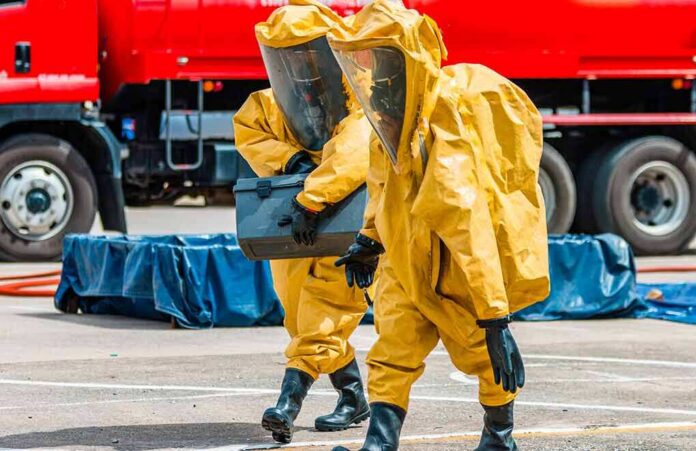
Authorities converged on GKN’s Garden Grove facility after a storage tank containing methyl methacrylate (MMA)—a volatile monomer used in acrylics—entered a failure mode that raised the prospect of a leak, release, or explosive rupture. Evacuation orders ultimately covered more than 50,000 residents and businesses across Garden Grove and Stanton while responders worked to cool, vent, and neutralize the hazard. Live briefings at the time toggled between caution and reassurance: a massive blast was eventually ruled out, but officials warned the crisis was “not over” until the system cooled, the tank was stabilized, and inventories were made safe.
In the days that followed, GKN publicly emphasized that there were no reported injuries and asserted that officials had indicated no chemical contamination; the company highlighted its cooperation with fire authorities and regulators, and noted contributions to community support funds. Those points do not negate the scale of disruption or the public costs of the response. The proposed settlement, reached months later, addresses precisely those impacts while the longer technical questions—about instrumentation, safeguards, and management systems—are channeled into extended oversight rather than litigated line-by-line in the press.
How industrial risk is supposed to be managed—and where systems break
Process-safety professionals draw a sharp line between personal safety (slips, trips, and occupational injuries) and process safety (low-frequency, high-consequence events involving hazardous substances). The Garden Grove emergency belongs to the latter. Prevention depends on layers of protection—engineered controls, interlocks, relief systems, monitoring, procedures, and trained operators—backed by management systems that ensure those layers remain credible over time. When events occur, the U.S. Chemical Safety and Hazard Investigation Board (CSB) treats “cause” broadly: not just a bad valve or hot day, but the organizational conditions that allowed a hazard to migrate past safeguards.
At the national level, tens of thousands of facilities fall under EPA’s Risk Management Program (RMP), which requires hazard assessments, prevention programs, and emergency planning—and compels facilities to report a five-year accident history when they refile plans every five years. Federal analyses of RMP data show more than 1,500 reportable accidents in a ten-year span with hundreds producing offsite impacts, underscoring that Garden Grove is part of a broader risk pattern, not an anomaly. The lesson is consistent: technical reliability and organizational vigilance must be renewed continuously, or time, complexity, and complacency will erode them.
Where the disagreement actually lies
The core facts are not meaningfully contested: a hazardous materials emergency at a GKN site triggered mass evacuations and a multi-day stabilization effort, and prosecutors negotiated a $125 million civil resolution that funds claims, penalties, and oversight subject to court approval. The company’s principal counterpoints stress the absence of reported injuries, its cooperation, and extensive mitigation steps on-site—including contracted removal and treatment of MMA from unaffected tanks—while underscoring that the settlement includes no admission of liability. Those statements address consequence and posture; they do not rebut the necessity of evacuation, the public cost, or the appropriateness of structured compensation and oversight.
Reasonable people can debate calibration: Is $100 million for claims aligned with actual losses? Are seven years of third-party monitoring sufficient to institutionalize improved practice? But the mechanism is orthodox for civil environmental enforcement: make people whole where possible, repay the public purse, penalize to deter, and hardwire improvements under independent eyes. On that logic, the settlement’s spine holds.
$125 million settlement reached after dangerous Garden Grove chemical leak
https://t.co/ybRWQOjKXW— Tim Conway Jr Show (@ConwayShow) October 13, 2026
What sustained oversight should focus on
The value of multi-year monitoring lives in its specificity. For MMA service, oversight should test the full chain: storage design and materials compatibility; temperature and inhibitor management; relief-system capacity and inspection intervals; instrumentation accuracy and alarm setpoints; management of change for any process tweaks; contractor qualification; and emergency procedures that convert abnormal-condition detection into safe, rehearsed actions. The external expert’s remit should include periodic audits, unannounced drills with local fire authorities, and a dashboard of leading indicators—overdue inspections, bypassed interlocks, nuisance trips—that correlate with near-miss risk.
Equally important, the program should build transparency. Publishing aggregated safety metrics and audit findings, within reasonable bounds of security and proprietary protection, advances community trust. It also allows neighboring facilities to learn—quietly but concretely—from what went wrong and what was fixed. In the chemical sector, lessons hoarded become accidents repeated.
The broader implications for communities and operators
Communities living near regulated facilities will continue to face episodic alarms; the nation’s RMP census ensures as much. The pragmatic goal is to reduce the frequency and severity of those alarms and to shorten their half-life when they occur. Settlements that balance compensation with enforceable, expert-led prevention are one of the few tools that operate on both timelines—today’s losses and tomorrow’s risk. They are not a substitute for federal root-cause investigation, but they are a credible bridge to safer operations.
For operators, the Garden Grove case is an expensive reminder that process safety is a system, not a checklist. If your safeguards are not demonstrably effective—tested, trended, and tied to leadership attention—the market will eventually price that risk for you. Often at $125 million or more.
Sources:
nypost.com, nbclosangeles.com, tran.house.gov, article.wn.com, cbsnews.com, en.wikipedia.org, latimes.com, calmatters.org, abcnews.com, apha.confex.com
© conservativefreepress.com 2026. All rights reserved.