

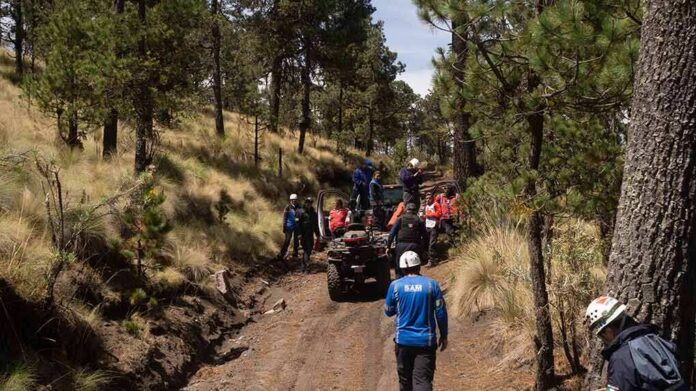
When civilians return to landscapes touched by war, the greatest danger is often not active fire but what war leaves behind; in northern Israel, a school hike turned fatal when a suspected piece of unexploded ordnance detonated, a textbook tragedy in a region where cluster submunitions and other remnants can linger for years.
At a Glance
- Police and medics reported one student killed and roughly two dozen students and staff injured during a religious-school outing near the Lebanon border; responders treated seriously and moderately wounded at the scene.
- Israeli authorities’ early read pointed to unexploded ordnance; the IDF said the blast was likely from a Hezbollah cluster submunition left in the area.
- The hiking route had been described as open or approved for public passage, underscoring the persistent risk UXO poses even in ostensibly cleared areas.
- UXO injuries and deaths follow a known pattern in the Israel–Lebanon theater, where past fighting dispersed cluster munitions across broad areas.
What happened on the school hike
The casualty picture is sadly clear. During an organized outing of a religious high school near Israel’s northern border, an explosion killed a teenage student and injured a large group of classmates and staff. Multiple contemporaneous reports described approximately 20 to 24 injured, with emergency services evacuating seriously and moderately wounded by ground and helicopter. Police quickly framed the working hypothesis: an explosive remnant in the terrain detonated during the hike, consistent with a blast pattern and injury profile seen in past unexploded-ordnance (UXO) incidents.
The Israel Defense Forces’ preliminary account went a step further on provenance, attributing the likely source to a Hezbollah cluster submunition—one of the small bomblets carried in cluster rockets that can fail to detonate on impact and remain hazardous for months or years. Parallel reporting identified the hikers as students and teachers from an ORT yeshiva high school, and local officials confirmed a school-sponsored outing on a route within the Ramim Ridge area, not far from the frontier.
Why UXO is the leading explanation
UXO behaves in ways that fit the scene. Cluster submunitions are engineered to arm after dispersal and detonate on impact or with a target signature; when they malfunction—at failure rates historically ranging from a few percent to alarming double digits—they become de facto landmines: compact, concealable, and sensitive to handling. The IDF’s reference to a likely Hezbollah submunition aligns with the types documented in cross-border attacks and with the known contamination footprint across the border region. Crucially, the mechanism of injury—one fatality, many blast and fragmentation wounds among a tightly clustered group outdoors—is consistent with a small submunition detonating at ground level.
Police and military statements were careful to label their findings preliminary, and investigators had not, at the time of reporting, resolved the exact trigger—whether a footstep, handling, or an object placed in a bag. That caveat aside, the convergent signals from first responders and the IDF put UXO at the center of the causal chain, not a fresh strike or unrelated industrial source.
The setting: a permitted route in a contaminated border zone
Parents ask the necessary question: how did a school group meet a battlefield hazard on a hike that, according to reporting, had been approved for public passage? Education officials and local authorities indicated the route was open, which generally implies coordination with security services regarding current firing and recent contamination. Yet “open” is not the same as “cleared to humanitarian-demining standards,” and the Israel–Lebanon border belt has been subject to repeated rocket fire and exchanges in recent years; each salvo can seed new UXO into previously assessed ground.
This contrast—permitted access versus residual risk—reflects a real operational tension. Clearance programs prioritize known strike footprints, critical infrastructure, and residential zones. Low-signature contamination from airburst cluster munitions can extend beyond mapped areas, especially in rugged terrain where vegetation and rock crevices conceal bomblets from visual survey. Even rigorous area reduction cannot guarantee absolute absence of hazards; it reduces probability to a level judged acceptable for civilian activity.
UXO in the Israel–Lebanon theater: history and mechanics
UXO casualties along this frontier are not aberrations; they track with decades of cluster munition use and the physics of how these weapons disperse. After the 2006 war in Lebanon, mine-action organizations documented dozens of fatalities and over a hundred injuries from cluster submunitions in the first months of clearance, a grim baseline that expanded as teams pushed into agricultural land and village perimeters. UN and humanitarian assessments have repeatedly highlighted the scale and persistence of the threat: hundreds of thousands of unexploded submunitions have been recorded and cleared in Lebanon since, with contamination described as widespread across the south.
Technically, the hazard endures because many submunitions rely on spin, setback forces, and simple mechanical fuzes; slight variances in impact angle, soil softness, or internal tolerances can interrupt arming or detonation. A “dud” is not inert. Over time, corrosion or disturbance can restore enough mechanical freedom for a fuze to complete its sequence—or defeat safety features—making late detonation possible from seemingly trivial stimuli like handling, vibration, or pressure.
Casualty numbers and the emergency response
Initial casualty counts in mass-casualty events often vary; this incident was no exception. Reports ranged from roughly 20 to 24 injured, and the deceased student’s age was cited as either 14 or 15—differences that typically resolve as hospitals finalize admissions and authorities confirm identities. What did not vary was the scale of the emergency: paramedics, police, and military units secured the site, triaged victims, and flew several to regional trauma centers. Those actions, and the on-scene assessments from bomb-disposal personnel and investigators, shaped the early UXO diagnosis.
The organized nature of the outing mattered operationally. Supervising staff could account for headcount, identify those nearest the blast, and provide immediate witness detail to first responders—a contrast to ad hoc gatherings where confusion can delay a hazard assessment. That speed helps responders cordon the site appropriately, preventing secondary casualties from additional UXO in the area or from approaching evidence that must be logged and removed safely.
🟦 EVENING RECAP:
October 12, 2026⭕️ BREAKING
• IDF launches investigation after deadly Hezbollah munition explosion: A 14-year-old Israeli boy was killed and 24 students and teachers injured during a school hike near Lebanon. IDF Chief of Staff Eyal Zamir ordered an… pic.twitter.com/unO7OHAIoe
— DEFENDERS OF ISRAEL (@Israeli_Sniper) October 12, 2026
Implications: managing risk where civilians and conflict overlap
Three imperatives follow from events like this. First, route assessment near active or recently active fronts must be a living process. If a corridor was “open” last month, it may not be safe today after a rocket exchange or artillery interdiction. Authorities typically integrate strike logs, aerial imagery, and patrol reports into dynamic risk maps; school groups and tour operators need protocols to re-confirm status within hours—not days—of departure.
Second, education saves lives. In regions where cluster munitions have circulated, standardized UXO awareness—recognizing likely shapes and colors, never handling metallic debris, marking and retreating—should be as routine as a bus safety briefing. It is not alarmism; it is risk literacy calibrated to a known environmental hazard documented repeatedly in this border zone and just across it.
What this episode says about accountability and prevention
The fact pattern points to a suspected cluster submunition detonating amid a supervised youth hike on a route reported open to the public. That combination underscores the narrow margins between “managed risk” and tragedy in contested borderlands. It also clarifies where prevention lives: in meticulous, repeated route validation; in UXO education embedded into trip planning; and in sustained clearance resources targeted at recreational corridors as well as towns and fields. The evidence record from this and similar incidents—IDF preliminary attribution to a Hezbollah-sourced bomblet, police identification of UXO as the working cause, and a casualty profile in line with a small-fragmentation blast—supports that focus.
No clearance regime can drive risk to zero in terrain seeded by cluster weapons and intermittently struck by rockets. But disciplined verification, persistent demining, and public risk hygiene can keep school outings from intersecting with lethal relics of past salvos. That is the sober lesson from Ramim Ridge—and the blueprint for avoiding the next headline like it.
Sources:
israel.com, aljazeera.com, aa.com.tr, ynetnews.com, timesofisrael.com, themedialine.org
© conservativefreepress.com 2026. All rights reserved.