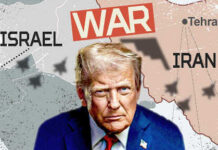

President Trump’s relentless pressure has finally forced seven reluctant allies to endorse a U.S.-led coalition against Iran’s illegal blockade of the Strait of Hormuz, a vital lifeline for global oil that threatens American energy security and economic stability.
Story Highlights
- UK, France, Germany, Italy, Netherlands, Japan, and Canada issued a joint statement on March 19, 2026, backing potential U.S. efforts to reopen the Strait of Hormuz.
- Statement condemns Iran’s attacks on shipping with mines, drones, and missiles but commits only to planning, no naval ships.
- Trump’s public criticism and NATO leverage flipped holdouts like France’s Macron and last-minute Japan joiner.
- U.S. launched massive Operation Epic Fury strikes on March 20, degrading Iran’s capabilities amid ongoing war.
- Secures political cover for America First victory, easing oil flow disruptions spiking gas prices for families.
Trump’s Diplomacy Delivers Allied Endorsement
Seven key U.S. allies released a joint statement on March 19, 2026, supporting a potential coalition to secure safe passage through the Strait of Hormuz. The United Kingdom, France, Germany, Italy, the Netherlands, Japan, and Canada condemned Iran’s blockade tactics, including attacks on commercial ships using mines, drones, and missiles. UK Prime Minister Keir Starmer rallied the group, persuading France’s Emmanuel Macron to drop opposition. Japan joined hours before Prime Minister Sanae Takaichi’s White House visit with President Trump. This marks a shift from prior rejections by these nations on naval involvement.
Background of Iran’s Disruptive Blockade
The Strait of Hormuz, a narrow 21-mile chokepoint between Iran and Oman, carries about 20 percent of global oil trade. Iran imposed an effective blockade during the escalating U.S.-Iran-Israel conflict, stranding Gulf oil exports and driving up energy prices worldwide. Historical threats date to the 1979 Iranian Revolution, including the 1980s Tanker War and 2019 attacks. U.S. and Israeli strikes targeted Iranian anti-ship sites, prompting Iran’s retaliation with ship assaults, infrastructure hits, mines, drones, and missiles. President Trump seeks swift war resolution but faces stranded oil hindering victory declaration.
Key Players and Power Shifts
President Trump criticized NATO allies on Truth Social for reluctance, stating on March 17 most were unwilling to engage. His leverage through NATO threats prompted action. UK dispatched officers to CENTCOM in Tampa for planning. Germany’s Chancellor Merz overcame doubts for energy security. NATO Secretary General Marc Rutte aided rallying. Iran enforces the blockade to deter U.S. and Israeli advances. U.S. CENTCOM plans coalition logistics while dominating military efforts. Allies provide political backing without risking troops, aligning with America’s lead in reopening the strait.
U.S. Strikes Escalate as Allies Step Up
On March 20, 2026, the U.S. executed Operation Epic Fury, its largest strike package yet against Iranian naval assets threatening Hormuz. War Secretary Hegseth detailed the operation. DNI Tulsi Gabbard testified Iran’s capabilities are degraded but persist. Trump hosted Japan’s Takaichi, praising the allies’ pivot and expecting more from Japan. The March 19 statement pledges “appropriate efforts” and preparatory work. No firm naval deployments confirmed, reflecting Europe and Japan’s domestic hesitations on military risk.
United Kingdom, France, Germany, Italy, the Netherlands, Japan, and Canada Will Now Join US to Keep the Strait of Hormuz Open
— Bruce Forman (@Brucenewsreview) March 20, 2026
Impacts on Energy Security and Global Stability
Short-term, coalition planning and U.S. strikes could ease the blockade, restoring oil flow and improving war optics for Trump. Long-term, it bolsters U.S.-led deterrence against Iranian aggression. Global consumers face higher gas and heating costs from disrupted 20 percent of oil trade. Europe and Asia importers, Gulf exporters, and shipping firms suffer most. A proposed “open for all or closed to all” policy would block Iranian tankers until compliance. This advances limited government abroad by countering threats without endless entanglements, protecting American families from inflation.
Sources:
Seven U.S. Allies Back Potential Strait of Hormuz Coalition
Fox News video/transcript (March 20) confirms strikes/allies via Hegseth/Gabbard