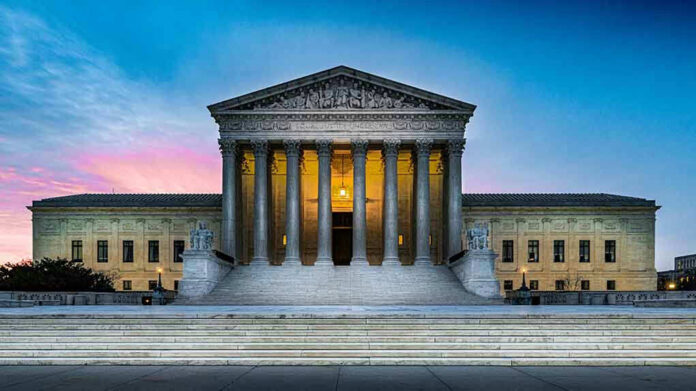
When Supreme Court Justice Elena Kagan lectures the lower courts about “respect,” one has to wonder if she’s noticed the judicial free-for-all going on beneath her robe—where activist judges play constitutional Jenga while Washington insiders clutch their pearls over “norms” and “legitimacy.”
At a Glance
- Justice Kagan faces criticism for not reining in lower courts accused of judicial activism and undermining the Supreme Court’s authority.
- Recent Supreme Court decisions have rolled back the power of lower courts to issue nationwide injunctions, centralizing judicial control with the high court’s conservative majority.
- Projects like “Project 2025” and advocacy groups are pushing for massive reforms, seeking to reclaim constitutional governance and curb runaway judicial power.
- Public trust in the courts is plummeting as the judiciary’s internal squabbles spill into the open, leaving average Americans caught between activist judges and political power plays.
Supreme Court’s Authority at Stake as Kagan Sits on the Sidelines
Justice Elena Kagan, the Supreme Court’s self-styled consensus builder, has found herself at the center of a growing storm over the proper role of federal judges. With the Court’s 2024-25 term now in the books, the conservative majority has landed decisive blows to the power of lower courts, especially their favorite trick of issuing nationwide injunctions that freeze federal policy coast-to-coast. But for all the talk of “restoring order,” critics across the political spectrum are blasting Kagan and her liberal colleagues for what they see as a hands-off approach to the rampant judicial activism infecting the lower courts.
While the Supreme Court tightens its grip, Kagan’s careful legal tap-dancing draws ridicule from those who say she’s enabling “rogue” judges to ignore Supreme Court precedent. One legal advocacy group recently accused her of being “treasonous” for supporting stricter ethics enforcement for her own colleagues—a charge so overblown it would be hilarious if it weren’t so telling about the current state of judicial politics. Meanwhile, the very people who lecture conservatives about respecting institutions are the ones cheering on lower courts when they sabotage constitutional order for political gain.
Project 2025 and the Battle to Restore Constitutional Sanity
Amid the legal chaos, “Project 2025”—a coalition effort to overhaul the judiciary and executive branch—has emerged as a rallying point for those fed up with decades of judicial overreach. Advocacy groups and policy architects are openly pushing to reclaim the courts from ideologues who treat the Constitution like an old menu at a vegan restaurant—something to be ignored, rewritten, or tossed out altogether. Their message is simple: enough is enough. Lower courts are meant to interpret the law, not turn every grievance into a national crisis while undermining the will of the people and the elected branches of government.
Justice Kagan, for her part, continues to insist on consensus and “institutional legitimacy,” but even some liberal scholars admit that her approach may be fueling confusion and emboldening activist judges. Conservative justices, meanwhile, are unapologetically using their majority to slap down runaway district courts and remind them who’s boss. In this high-stakes tug-of-war, it’s the American people who suffer—watching as unelected judges rewrite immigration, healthcare, and voting policy from the bench, while their own voices are drowned out by waves of litigation and bureaucratic doublespeak.
Consequences for Americans: Lost Trust, Delayed Justice, and Runaway Bureaucracy
The latest Supreme Court term may have brought some overdue correction, but the damage from years of judicial freelancing is already baked into the system. Lower courts, newly reined in on nationwide injunctions, now face tighter scrutiny—but don’t expect the activist bench to go quietly. Advocacy groups are already plotting their next moves, while the Biden and Trump administrations spar over the future of border enforcement, executive power, and the very limits of judicial review. Project 2025’s architects are calling for a reset, demanding judges who actually read the Constitution and understand the limits of their own authority.
Meanwhile, public faith in the judiciary sinks lower with every news cycle. Ordinary Americans—who just want their rights protected, their borders secure, and their voices heard—are left watching a reality show where activist judges and political operatives compete to see who can subvert the Constitution fastest. Justice Kagan may call for “respect,” but until the Supreme Court gets serious about enforcing its own precedents and restoring constitutional order, respect is going to be in short supply.