

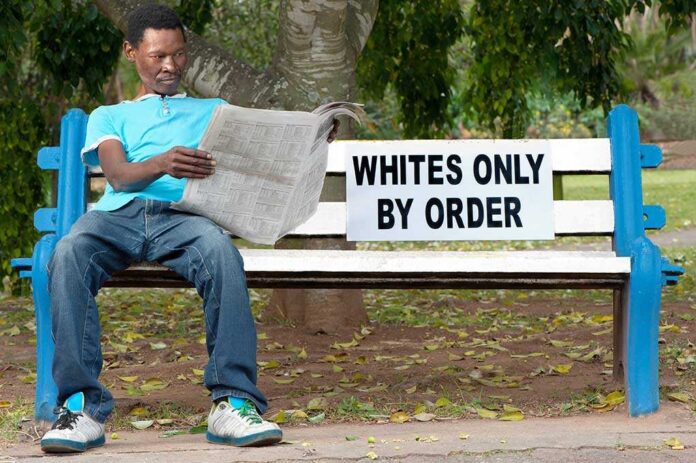
America is watching as a whites-only community in Arkansas, built under the banner of “traditional values,” sparks a national storm over race, law, and the limits of personal freedom—leaving many wondering if decades of progress are unraveling before our eyes.
At a Glance
- Return to the Land (RTTL) is a whites-only community in Arkansas, openly excluding non-white, non-Christian, Jewish, and LGBTQ individuals.
- The group claims legal exemption from civil rights laws by using a Private Membership Association (PMA) and LLC structure, now under investigation by the Arkansas Attorney General.
- RTTL is recruiting globally, boasting 40 residents in Arkansas with hundreds of paying members, and is planning expansion into Missouri and beyond.
- Civil rights groups and state officials warn that the movement threatens to revive segregationist practices and undermine existing civil rights protections.
Whites-Only Enclave in Arkansas: A New Flashpoint in America’s Culture War
Return to the Land (RTTL) planted its flag in the Ozark hills of Arkansas in late 2023, declaring itself a haven for “traditional views and European ancestry.” The founders, Eric Orwoll and Peter Csereby, have made no secret of their mission: to build an enclave that openly excludes anyone who isn’t white, Christian, or straight, including Jews and LGBTQ Americans. Their rhetoric reads like a time capsule from the bad old days, but this is happening right now, on American soil, with ambitious plans to spread. The group’s leaders say they’re fighting back against “mass immigration” and “forced integration,” as if the mere existence of diversity is a personal threat to them. Their answer? A 160-acre compound where only “like-minded” people—read: whites—need apply.
Beneath the surface, RTTL’s playbook is more cunning than some might expect. By structuring land ownership as LLC shares and operating as a private membership association, they claim to sidestep civil rights housing laws—a tactic not unfamiliar to anyone who’s watched other exclusionary groups try (and often fail) to sneak around court orders. The group’s membership is reportedly global, with about 40 people living on site and “hundreds more” paying for the privilege of association. Some reports even suggest law enforcement and federal agents are among their ranks, a detail that should have every law-abiding American demanding answers. RTTL’s next target is Missouri, with expansion plans announced in July 2025, aiming to replicate their model in other states where population is sparse and oversight is lax.
Legal Showdown: State Investigators and Civil Rights Groups Respond
Arkansas Attorney General Tim Griffin launched a formal investigation into RTTL in July, citing “all sorts of legal issues, including constitutional concerns.” Griffin, along with local and state officials, is now tasked with untangling whether this exclusionary community can really hide behind clever paperwork. Civil rights organizations, including the NAACP, have condemned the group in the strongest terms, calling it a dangerous throwback to segregation and warning that unchecked, this movement could inspire copycats across the country. There’s real concern that RTTL’s expansion could turn the clock back on decades of hard-won civil rights, as their model—if allowed to stand—might embolden other groups to set up similar enclaves under the guise of “private association.”
Community tensions are already running high. Local residents and businesses fear economic and reputational fallout, while minority groups—explicitly banned from RTTL—are left facing the threat of increased hostility. The legal battle ahead will test not just state and federal statutes, but the national will to stand up for the Constitution and reject attempts to resurrect the ghosts of institutionalized segregation.
National Spotlight: Media Scrutiny and the Battle for America’s Soul
RTTL’s arrival has drawn sharp scrutiny from national and international media, with newsrooms from The Independent to Sky News dissecting the group’s policies, recruitment tactics, and public statements. Eric Orwoll, the group’s leader, hasn’t exactly been shy about his intentions, declaring that “White Americans who value their ancestry will have the ability to live among like-minded people in the future if they choose to do so, regardless of demographic changes.” Critics—including civil rights experts and legal scholars—are united in their assessment: this is nothing but a rebranding of white supremacist ideology, now dressed up in the language of “traditional values” and “ancestry.”
RTTL frames itself as a response to demographic change and “cultural preservation”—a tired refrain that’s been used to justify segregation and exclusion for generations. The difference now is the group’s use of legal loopholes and digital recruitment to build momentum. If courts allow this gambit to stand, the implications are staggering: increased racial segregation, deepening social polarization, and a dangerous precedent for using LLCs and PMAs to dodge anti-discrimination laws. The question facing lawmakers and law enforcement is simple: will they act decisively to defend civil rights, or stand by while the country is carved up by groups seeking to drag us backward?