

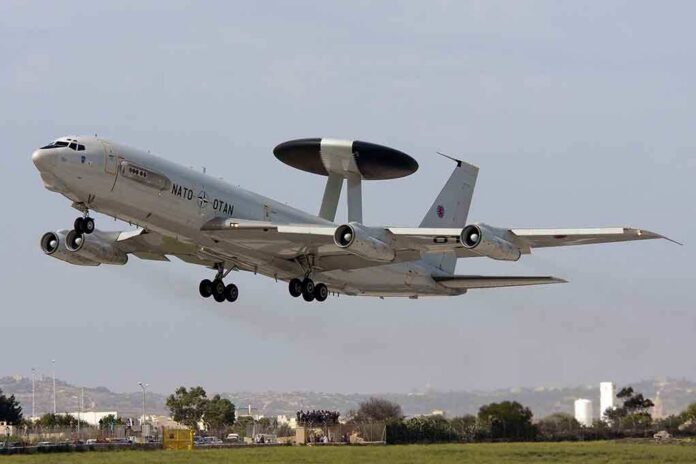
Poland just told its fighter pilots they can fire based on radar and command authorization, not only what they can see with their eyes.
Story Snapshot
- Poland will shift from visual checks to “positive identification” built on radar and other data.
- The policy covers drones, missiles, and any objects that violate Polish airspace.
- The Operational Commander will issue prior authorization so forces can act fast.
- Recent airspace violations and nearby Russian actions pushed this change.
Poland replaces peacetime visual checks with positive identification
Deputy Defense Minister Cezary Tomczyk said Poland will change its air-defense procedures. The new method replaces peacetime visual identification with “positive identification.” This means radar tracks and other approved data will be enough to make a shot decision. A pilot or the operational command chain can authorize fire once the target is confirmed by sensors and procedures. Reports describe this as a formal shift to speed up choices in high-pressure events.
Tomczyk’s remarks also point to a tighter command system. He said the head of the Operational Command issues prior authorization so air-defense crews and pilots can engage the moment a target violates airspace. This aims to cut delay and keep shooters inside the short windows that drones and missiles create. That approach matches common sense: when threats fly low and fast, eyes alone are not enough to protect people on the ground.
Scope covers drones, missiles, and other violators
Public reporting states the change is not limited to manned jets. It covers drones, missiles, and other airborne objects that cross into Poland. Soldiers will have the right to shoot down any object that violates the country’s airspace once procedures confirm it is a threat. This reflects the modern fight, where small and unmanned systems can do real harm if defenders wait too long for visual confirmation.
Recent incidents built the case for faster rules. Poland tracked a Russian military helicopter that briefly crossed the border in September. The military scrambled assets and kept air defenses on alert. Leaders have warned that provocations will get an immediate answer from Polish pilots. Those events, plus repeat spillover from strikes near Ukraine, pushed Warsaw toward this faster, sensor-led standard.
Why this shift aligns with allied practice and law
NATO countries along the eastern flank face constant drone and missile pressure. Many have moved from slow peacetime habits to sensor-fusion decisions in seconds, not minutes. Poland’s “positive identification” fits that trend and echoes allied doctrine that uses all available data to tag a target before firing. That does not mean a free-for-all. It means commanders and crews act under rules that weigh risk, evidence, and duty to shield civilians and critical sites.
Polish leaders have signaled a simple rule: do not let an intruder choose the timeline. A prior authorization standing order lets the shooter act when a violator appears. That setup is firm and accountable. It meets conservative principles of deterrence and defense. A clear rule, a clear chain of command, and a credible will to act reduce the odds that an opponent will test the border again.
What changes in the cockpit and the command post
Fighter crews and air-defense operators will rely on radar tracks, identification friend or foe returns, flight profiles, and command intelligence to confirm a target. The key is a positive match that the object is not friendly and not permitted. Visual checks still help when possible, but they no longer block a timely shot. The Operational Commander’s prior authorization removes guesswork about legal cover and lets crews focus on clean execution under pressure.
🇵🇱 Poland is reportedly changing its wartime air-defence rules to allow fighter jets and helicopters to shoot down foreign aircraft detected by radar, according to the deputy defence minister.
— GlobePulses (@GlobePulses) September 28, 2026
This approach aims to prevent the two worst outcomes: acting too late or acting without control. By anchoring decisions in sensors and a pre-cleared chain of command, Poland raises both speed and discipline. Recent border cases show why this matters. Airspace violations, even short ones, can end in debris on a farm, a hit on fuel tanks, or panic in a town. Clear rules and fast moves are how you stop that from happening again.
Sources:
insiderpaper.com, news.liga.net, x.com, grosswald.org
© conservativefreepress.com 2026. All rights reserved.