When violence on a city sidewalk unfolds in seconds, the labels we reach for often race ahead of the facts; what reliably matters first is the concrete sequence of events, the charges that follow, and how those fit a broader pattern of public-safety risk and community fear.
The Short Version
- Police arrested 31-year-old Eric Avrutov in Brooklyn after a brief, captured-on-video assault on a 66-year-old rabbi; he was charged with assault, criminal obstruction of breathing, and harassment.
- Minutes earlier, authorities say the same suspect punched a 60-year-old man at a nearby gas station; police treated that as a separate assault and harassment incident.
- The rabbi was taken to Maimonides Medical Center in stable condition after the Dahill Road attack.
- At the time of reporting, police said the case was not being investigated as a hate crime, even as Brooklyn remains a hotspot for antisemitic assaults.
What Police Say Happened on Dahill Road
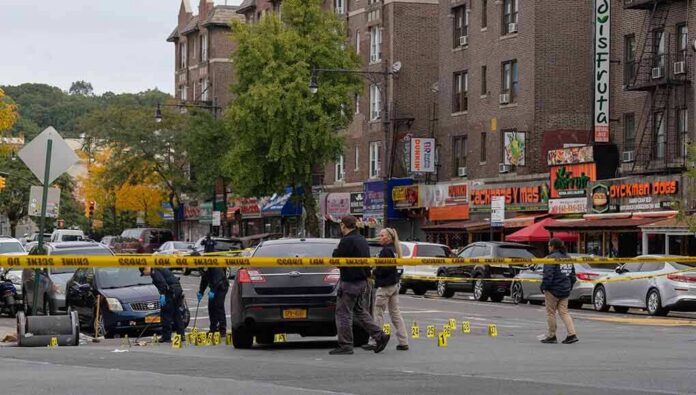
According to contemporaneous reporting that quotes police, Eric Avrutov, 31, was arrested in Brooklyn after an evening assault on a 66-year-old rabbi near Dahill Road and Cortelyou Road in the Kensington/Borough Park area. The encounter, described as lasting roughly 20 seconds and captured on community-security video, shows the assailant closing distance and striking the rabbi repeatedly. Officers charged Avrutov with assault, criminal obstruction of breathing, and harassment following the arrest; the victim was transported to Maimonides Medical Center, where he was reported in stable condition.
Authorities also linked Avrutov to another incident minutes earlier: a 60-year-old man was allegedly punched while pumping gas nearby. Police treated that as a separate assault and harassment case tied to the same suspect on the same night. Reporting further identified five prior arrests in Avrutov’s history, including an incident two days earlier; those references, while not accompanied by docket numbers in the published accounts, illustrate why officers moved quickly to interdict a suspect engaged in multiple assaults in rapid succession.
Why This Was Not Initially Labeled a Hate Crime
Readers often assume that the identity of a victim—especially when visibly affiliated with a targeted group—should determine whether an attack is treated as a hate crime. That is not the legal standard. Under New York law and guidance to law enforcement, a hate crime occurs when a specified underlying offense is committed and the offender intentionally selects the victim in whole or substantial part because of a belief or perception regarding the victim’s protected characteristics (for example, religion). In practice, that means investigators look for indicators of motive—slurs, statements, patterns of targeting, digital communications, or other evidence tying the selection to bias. Police told reporters this Brooklyn case was not being investigated as a hate crime at the time of reporting, which is a statement about available evidence of motive at intake, not a determination about the community identity of the victim.
This distinction matters in a borough where antisemitic incidents are numerically high and often violent; it helps explain the gap between public perception and initial case classification. The law narrows the label to bias-driven selection, and it does so for a reason: hate-crime enhancement elevates penalties and hinges on proof of motive, which prosecutors must be prepared to establish in court, not just in headlines.
Brooklyn’s Pattern: High Volume, High Vigilance
Context helps. Brooklyn has been a persistent hotspot in New York’s antisemitism data. The Anti-Defamation League’s 2025 reporting attributes a large share of statewide antisemitic assaults to Brooklyn and documents that assaults increased even as other categories like harassment and vandalism declined. That mix—fewer incidents overall but more physical attacks—has kept community vigilance high and strained tolerance for what can look like “random” sidewalk violence that disproportionately affects visibly Orthodox Jews.
The effect is cumulative. Each new report sits atop a stack of recent episodes, from assaults during routine commutes to high-salience cases that draw citywide attention. This is why neighborhood security groups often become the first lens through which the public sees an incident; their video releases are not adjudications, but they shape urgency and bring practical value to police investigations that hinge on quick identification and apprehension.
Mechanics of a Fast-Moving Street Case
Street assaults typically turn on proximity and momentum. In incidents like the one described on Dahill Road, the fact pattern is short and stark: approach, corner, strike. Video evidence—whether from private cameras or community patrols—matters because it collapses disputes about sequence and timing, clarifies the use of hands or other means that could support an “obstruction of breathing” count, and corroborates injury mechanisms. Medical triage then anchors injury severity and duration of treatment, which in turn can affect charging decisions and plea posture. In the Brooklyn case, the reported transport to Maimonides in stable condition sets a baseline for harm without foreclosing later medical updates or upgraded charges if new facts emerge.
When police connect near-simultaneous incidents, as they did by tying the gas-station punch to the rabbi’s assault, they build a narrative of uninterrupted conduct. That alignment affects bail arguments, risk assessments, and judicial decisions about release conditions. Add a documented arrest record—particularly a similar allegation days earlier—and prosecutors gain leverage to argue propensity and public-safety risk, while defense counsel presses for distinctions in circumstance, motive, or mental-health status. None of that changes the elements of each charge; it does shape outcomes at arraignment and beyond.
Hate-Crime Law: What It Is, and What It Isn’t
It bears precision to avoid two common errors. First, the hate-crime enhancement never replaces the underlying offense; it sits atop a predicate crime—assault, criminal mischief, aggravated harassment—when bias-based selection is proved. Second, the absence of an initial hate-crime designation is not an exoneration from bias scrutiny; investigators can reclassify if evidence surfaces later. New York’s statutory design and official guidance reflect this evidentiary discipline because motive is uniquely susceptible to speculation unless anchored by words, symbols, or behavior that can withstand cross-examination.
This is doubly important in a city of 8.5 million where heated political rhetoric, online amplification, and local grievance can blur the line between opportunistic violence and targeted animus. The law’s rigor is a public good: it protects victims by rightly enhancing penalties when bias is proven, and it protects the integrity of prosecutions by demanding proof where motive is alleged but not yet evidenced.
Eric Avrutov, 31, allegedly cornered the 66-year-old religious leader without warning and dealt multiple blows on Dahill Road near Cortelyou Road in Kensington around 9:20 p.m.
He was charged with assault, criminal obstruction of breathing and harassment.
The act is not being… https://t.co/nlkJNvZ8zu
— Crime In NYC (@Crime_In_NYC) September 25, 2026
What This Means for Public Safety and Community Trust
Three priorities flow from the facts. First, rapid interdiction remains the point of maximum leverage. Linking incidents within minutes and deploying arrest power protects potential next victims; the Brooklyn sequence underscores that value. Second, video capture and prompt release to police are force multipliers. The faster investigators can fix identity and route a suspect into custody, the lower the odds of escalation. Third, data transparency—on charging decisions, hate-crime screening, and case disposition—helps narrow the trust gap in communities that experience both frequent victimization and, at times, frustration with initial classifications. Reporting that hate-crime status is “not at this time” is properly cautious; follow-through either way builds credibility.
Sources:
nypost.com, cbsnews.com, israelnationalnews.com, jpost.com, brooklynda.org
© conservativefreepress.com 2026. All rights reserved.