
When a boat capsizes far offshore, survival depends on minutes, margins, and coordination; in the Baja incident, a single Mayday and a swift binational response made the difference for 16 people pulled from open water while the search pressed on for others.
At a Glance
- Sixteen people were rescued after a Mayday from a sinking vessel roughly 140 miles west of Ensenada; they were flown to San Diego for treatment.
- Authorities continued searching for additional people believed missing in the same area using aircraft and ships from the U.S. Coast Guard, U.S. Navy, and Mexico’s Navy.
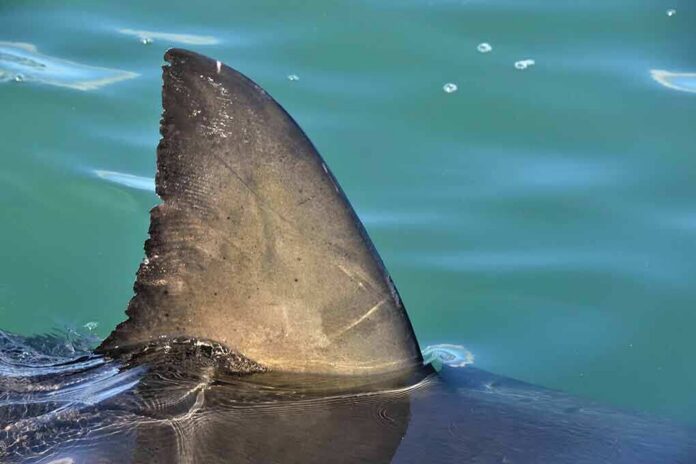
- One rescued person was treated for injuries consistent with a shark bite; others suffered hypothermia and exposure.
- The vessel had already sunk when responders arrived; debris recovery and survivor accounts informed the search.
What happened and why it mattered
A predawn distress call set the rescue in motion: a vessel reported it was sinking west of Ensenada, Baja California. Coast Guard Sector San Diego treated the transmission as a true Mayday, launched aircraft and surface assets, and ultimately hoisted 16 people from the water, transporting them to San Diego hospitals for care. The core facts are clear and uncontested: a sinking boat prompted a rapid, multi-agency search-and-rescue (SAR) operation; survivors were located where the Mayday indicated; and medical teams in San Diego treated injuries ranging from cold exposure to a suspected shark bite.
The operation did not end with the hoists. Based on survivor accounts that more people had been aboard, authorities expanded the search grid and kept aircraft and vessels on scene. The Coast Guard and U.S. Navy deployed multiple helicopters, a fixed-wing aircraft, and surface ships; Mexico’s Navy in Ensenada mounted parallel SAR efforts. The throughline is a textbook SAR sequence: validate the call, fix the last known position, concentrate initial search patterns for survivors, and then widen for those still missing as drift enlarges the probable search area.
Inside the rescue: how a modern SAR case runs
Maritime rescue is logistics and physics under pressure. Once the Mayday provided position and circumstances, watchstanders in San Diego generated a case number and spun up assets matched to range and endurance: helicopters for speed and precision hoists, fixed-wing aircraft for wide-area search, and cutters or Navy ships for on-scene command and survivor care. Aircraft flew creeping-line or sector searches—methodical patterns tuned to wind, sea state, last known position, and expected drift of persons in the water. That geometry matters: even a modest current pushes survivors miles over several hours, so the search box must move and grow accordingly.
By the time responders reached the scene, the boat was gone. That is common offshore where smaller vessels can founder quickly. Debris—floating seats among it—served a second purpose: proof of loss and a drift reference the on-scene commander could plot against wind and surface currents to refine search legs. Hoist evolutions then became the critical path: stabilize, lift, transfer to higher care. The Coast Guard delivered all 16 rescued individuals by helicopter to San Diego, where hospital teams managed hypothermia, dehydration, and trauma. One patient’s injuries were described as consistent with a shark bite, a reminder that prolonged time in productive offshore ecosystems adds predation risk to exposure and fatigue.
Location and the jurisdiction puzzle
The incident unfolded roughly 140 miles west of Ensenada—outside U.S. territorial waters—so success depended on established cross-border playbooks as much as aircraft range. The U.S. Coast Guard and Mexico’s Navy have long operated under cooperative SAR frameworks that prioritize life over line on a chart: whoever can reach survivors fastest goes, with coordination across operations centers to deconflict airspace, vector ships, and share survivor manifests once people are safe. That is why, in this case, U.S. and Mexican units moved in concert, with the Coast Guard also leveraging U.S. Navy lift and sensor capacity when speed and coverage were decisive.
The offshore location complicates after-action certainty in familiar ways. Without the hull, investigators cannot immediately specify vessel type, owner, or precise cause. And when the only passenger count is survivor testimony, the number believed missing remains an estimate until agencies reconcile interviews, family reports, and any other records. That is not evasion; it is the normal cadence of maritime casualty accounting when a boat sinks in deep water before responders arrive.
Human risk in a known corridor—without jumping to conclusions
The area west of Baja sits on a corridor used by a mix of users: commercial fishing, recreational traffic, and, in documented cases, maritime smuggling. Over recent years, attempts to move people by sea along the California–Baja coastline have increased sharply, and fatalities have mounted when overloaded or unseaworthy craft meet bad weather, surf, or simple mechanical failure. Public reporting has traced a 771% rise in maritime smuggling incidents in Southern California from 2017 to 2023 and at least 23 deaths over that span, with the caveat the true toll is higher because many sinkings occur out of sight.
Those facts provide context for why authorities treat any offshore distress west of Ensenada as potentially high-risk—and why they summon so much lift and search coverage so quickly. They do not, by themselves, prove the capsized vessel in this case was part of a smuggling venture. What the record does show is consistent with a high-hazard transit: the boat sank, there was no time for orderly abandonment, survivors were dispersed over open water, and the rescue timeline was measured in hours before daylight rather than days.
Medical realities: cold, time, and wildlife
Most offshore rescues are races against hypothermia and drowning. Even in warm seasons, extended immersion strips body heat and strength; confusion and loss of dexterity follow. That is why helicopters matter: they compress time to definitive care. In this case, emergency departments in San Diego treated exposure and trauma in multiple survivors, while one individual’s wounds matched patterns clinicians associate with sharks—arcuate lacerations and tissue avulsion rather than propeller’s linear, repeating cuts. Shark-bite suspicions in offshore California–Baja waters are credible because apex predators patrol the same food-rich currents that carry floating debris and, tragically, survivors. The Associated Press and other outlets cited clinical assessments consistent with that pattern.
For those still unaccounted for during the search window, survivability turns on initial flotation, sea state, and water temperature. SAR planners use these inputs to adjust probability of detection and allocate sorties; in practical terms, that means more aircraft cycling through the highest-likelihood sectors while cutters hold on-scene coordination and medical capability.
Baja California Boat Capsizing Leaves 11 Missing After 16 Rescued https://t.co/6KguDQjEYE
— DarrenH (@darrenHEYCEL) October 18, 2026
Lessons that endure: readiness, coordination, and communication
Three durable takeaways follow from this case. First, the Mayday worked—clear distress traffic with a position report lets watchstanders put metal in the air within minutes. Boaters of every kind should have multiple means of signaling distress—VHF with DSC, EPIRBs, and satellite messengers—because the single strongest predictor of rescue is timely, accurate location data.
Second, binational coordination is not an abstraction; it is a practiced muscle. The seamless handoffs between U.S. and Mexican maritime forces in the Baja corridor save lives when the nearest capable asset may sit across a geopolitical boundary. This case again demonstrated that doctrine in action, with helicopters, a fixed-wing aircraft, a cutter, a Navy ship, and Mexico’s Navy all stitched into one operation.
Third, public communication during an evolving SAR must balance urgency with precision. Early survivor counts can be wrong; numbers adjust as interviews and hospital records converge. Agencies did the right thing here: report the rescues decisively, acknowledge that others were believed missing, and keep searching until probability models and on-scene results say otherwise.
Sources:
military.com, nbcsandiego.com, sandiegouniontribune.com
© conservativefreepress.com 2026. All rights reserved.