

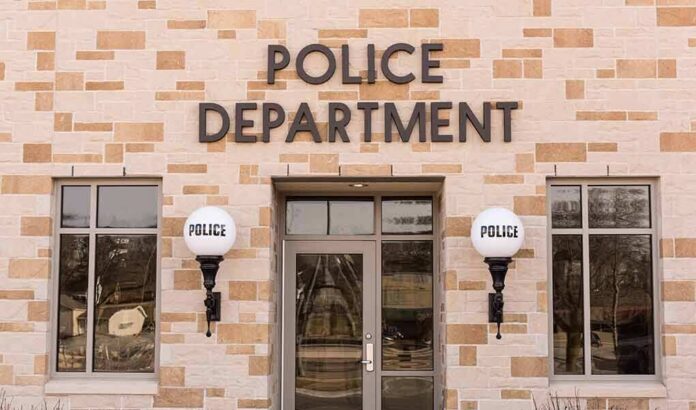
A Louisiana police chief candidate charged with raping two 13-year-old girls years ago is still on track to win unopposed.
Story Snapshot
- Sheriff says two women reported assaults from 2005 and 2006; investigators secured an arrest warrant.
- Christopher “Chris” Paul faces two counts of second-degree rape but remains the lone candidate.
- Louisiana law allows candidates with pending charges to run and serve unless convicted.
- Delayed reporting in child sex abuse cases is common in research, but it does not prove any case.
What Police Say Happened And The Charges Filed
Allen Parish Sheriff Doug Hebert said detectives received a complaint in early August 2026 that Christopher “Chris” Paul raped two girls when each was 13, in separate incidents in 2005 and 2006. Investigators interviewed the women and witnesses and then obtained an arrest warrant. Paul was arrested and charged with two counts of second-degree rape. An arrest is an allegation, not a conviction, and Paul has not entered a plea in reporting cited here.
Local and national outlets reported the timeline the sheriff described and confirmed Paul’s arrest on the two counts. Reports state the complaints were made nearly two decades after the alleged assaults. That delay matches what researchers often see in child sex abuse cases, but it does not confirm the claims in this case. Reporters noted Paul declined to comment when approached by media about the allegations.
Why He May Still Become Police Chief
Paul remains the only candidate for police chief in Elizabeth, a village in Allen Parish with roughly a few hundred residents. His opponent withdrew from the race, leaving Paul unopposed on the ballot. Under Louisiana law, pending charges alone do not bar a person from running or serving in office. Only certain convictions can disqualify a winner from taking office, according to reporting that cited state rules and local officials.
News coverage explained that election officials do not screen criminal histories during qualifying. A candidate’s legal status is handled by the courts, not by election staff. That split creates a gap between what voters may expect and what the law requires. The result is a hard truth: someone facing serious charges can still win and serve unless and until a conviction changes their status under state law.
Community Outrage, Due Process, And Trust In Institutions
Coverage described anger among residents who do not want a police chief under felony indictment leading their department. The mayor reminded residents that charges are not convictions and that every accused person is presumed innocent, echoing a core legal principle. Those two facts now collide in a very public way in a small town, where the police chief must set standards for safety and moral authority while the courts decide the case.
Christopher Paul, a Republican who on 6 August signed up to run for chief of police in the south-western Louisiana village of Elizabeth, was arrested on 8 September on allegations that he raped two girls in 2005 and 2006.#pedophiledisclosureprojecthttps://t.co/cZkPrehLqY
— PAM JONES FOR LIBERTY / PEDOPHILE EXPOSURE PROJECT (@RealPamJones) October 13, 2026
Researchers note that many survivors of child sexual abuse wait years to disclose, which helps explain why some cases emerge long after the events. Studies have found most adults who report childhood sexual abuse did not tell anyone until adulthood. At the same time, research also warns that memory and eyewitness testimony can be fragile. Those realities mean the justice system must test claims with care and evidence, not only emotion.
How This Fits A Larger Pattern Of System Gaps
This story exposes a gap between two systems that rarely align. The election system lets voters pick leaders fast, with few upfront checks. The criminal system moves slowly by design, to protect rights and seek the truth. When these clocks do not match, communities can feel let down. People on the left and right see the same picture: rules that seem built to serve the system first, and the public last.
Residents now face a narrow set of choices. They can vote as the law allows, while pressing for higher standards from local leaders. They can push state lawmakers to tighten rules on eligibility for sensitive posts like police chief. Or they can wait for the courts to act, which could take months or longer. None of these paths is easy, but each is within the power of citizens who want accountable government.
What To Watch Next
Watch for updates from the district attorney on charging decisions, court dates, and any bond changes. Look for any moves by the village board or the mayor to set policy for leave or suspension if an indicted official wins. Track any effort in Baton Rouge to revise candidacy rules for law enforcement leadership. Above all, watch the evidence that appears in court, where witnesses and records will be tested under oath and the law will decide.
Until then, the town sits in a bind that many Americans will recognize. The law says one thing, and common sense feels like it says another. That tension feeds the belief that systems protect insiders and leave regular people to live with the fallout. Clear rules, steady transparency, and timely court action are the best tools to rebuild trust here—and beyond.
Sources:
washingtontimes.com, ynetnews.com, kplctv.com, the-express.com
© conservativefreepress.com 2026. All rights reserved.