

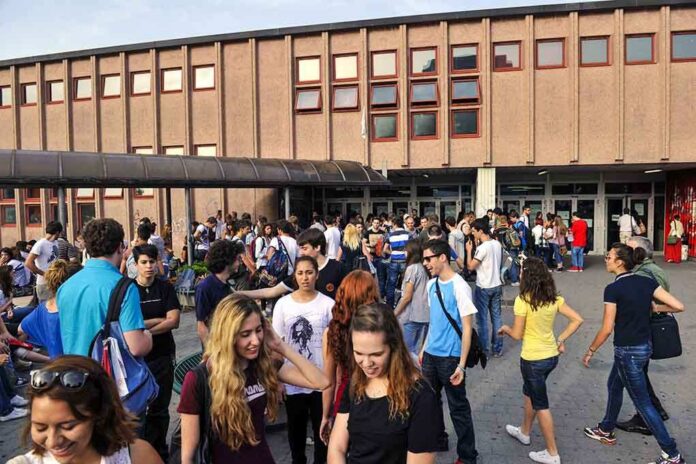
What looks like a simple back-to-school mixer is, in fact, a recurring flashpoint in the campus culture wars: identity-centered events are read by critics as ideological activism while universities frame them as student support. The Northern Illinois University “Gender and Sexuality Student Social” is a clean case study of that clash — and why the disagreement persists even when the public record is unambiguous about what the event is and is not.
The Short Version
- NIU’s socials are opt-in gatherings to connect students with gender- and sexuality-centered organizations, courses, and campus resources — not mandatory programming.
- The events are run by the Gender and Sexuality Resource Center and the Center for the Study of Women, Gender and Sexuality, units the university describes as support- and education-focused.
- Critics interpret such programming as ideological “woke” activism; the university’s own materials describe outreach, allyship, and inclusion.
- This dispute mirrors a national pattern in which identity-focused student services are contested as political advocacy amid broader DEI retrenchment.
What NIU actually organized — and who runs it
Start with the plain facts. NIU scheduled two “Gender and Sexuality Student Social” sessions early in the semester to help students “learn more about gender and sexuality-centered organizations, academics, and opportunities to connect.” The listing identifies the hosts: the Gender and Sexuality Resource Center (GSRC) and the Center for the Study of Women, Gender and Sexuality (CSWGS), with Academic Diversity, Equity and Inclusion as the department header. It is a public, voluntary event — a campus open-door, not a requirement, not a class, not a rally. That is the university’s own description of the event’s purpose and structure.
Those units’ remit matches the invitation. The GSRC describes itself as a central hub for resources and support that “centers gender and sexuality,” offering consultations, workshops, and programming in collaboration with academic and student-affairs partners. The university’s diversity office characterizes the GSRC as a “home away from home”–style resource inclusive of sexual and gender identities, which is consistent with typical student-services framing rather than partisan political mobilization.
Why critics see “activism” where universities see “support”
The semantic gap is not accidental. Identity-centered units operate at the intersection of student development, academic inquiry, and contemporary social norms — a terrain that some observers will always interpret as advocacy. When a university advertises a mixer that routes students to LGBTQ+ groups, gender-studies courses, or allyship workshops, detractors hear normative claims about identity and justice embedded in the programming; practitioners hear routine outreach to populations who benefit from navigational help, community, and referral into curricular options. The same flyer therefore reads, simultaneously, as services provisioning and as a statement of values.
NIU’s own communications embrace inclusive language — celebrating Pride Month and “allyship of LGBTQ+ equity and inclusion,” for example — which for critics confirms an ideological project and for staff is simply naming the support function the unit exists to perform. Whatever one thinks of the vocabulary, the concrete action in question is consistent with student support: an optional event connecting students to organizations, courses, and staff, run by offices chartered for that work.
Mechanism and purpose: how these centers work on most campuses
Gender and sexuality resource centers tend to do three things. First, they deliver direct services — space, advising, referrals, crisis navigation, and peer connection — especially valuable during the earliest weeks on campus when students are scanning for belonging. Second, they provide educational programming: workshops for residence life, classroom visits, student-leadership training, and co-curricular events designed to raise basic literacy about terminology, campus policy, and respectful engagement. Third, they bridge academic and student-life domains by pointing students toward relevant courses and faculty, which is precisely what an “organizations and academics” social promises to do.
The operational logic is mundane. Early-semester outreach concentrates attention; students are more likely to connect when programming is bundled into low-stakes, social formats. The event functions as a switchboard. Staff assess needs, introduce peers, and direct students to standing groups or courses. Nothing about that structure requires political litmus tests or policy advocacy; it does require clarity about who is being served and by what means — hence the specificity of “gender- and sexuality-centered organizations and academics” in the invite.
Where the real disagreement lies
Because the facts of the NIU event are straightforward, the dispute is not about what happened but how to classify it. One camp treats identity-centered support as inherently political — “woke” by definition — on the premise that naming and serving specific identities advances a contested worldview. The other camp treats the same activity as standard student-affairs practice aligned with retention, campus climate, and risk reduction, especially for students who are statistically more likely to encounter hostility or isolation. Neither side is confused about what the social does; they disagree about what it means.
That meaning fight repeats across institutions. In recent years, some states have restricted or eliminated DEI-branded offices; in tandem, multiple campuses have reduced or shuttered women’s, LGBTQ+, or multicultural centers. The closures, according to field associations and reporting, reflect legislative pressure rather than any campus-level finding that such units are unnecessary or ineffective; the function they perform — outreach, education, and community connection — remains in demand among students even where titles and signage change.
Why this pattern keeps recurring
Two structural realities sustain the conflict. First, identity-centered services are visible in ways other forms of student support are not. A tutoring lab is deemed apolitical; a social that foregrounds gender or sexuality looks, to some, like a claim about moral order because it names categories they consider normatively charged. Second, the missions of academia — inquiry and inclusion — inevitably mingle. A center that both sponsors a talk on trans healthcare and helps a first-year find the right peer group is doing academic engagement and student support in the same week; to outsiders inclined to skepticism, the bundle blurs into activism. That is why the same flyer gets radically different readings, and why the debate reignites each August.
Seen through that lens, NIU’s “Gender and Sexuality Student Social” is ordinary, not aberrant. It fits the national base rate in which identity-focused programming is common and, in some jurisdictions, contested. On its face, it performs a garden-variety student-affairs function: connect, inform, refer. The ideological label adheres not to the mechanics of the event but to the observer’s theory of what identity-conscious campus services represent.
Woke Comes to NIU! University Hosts Socials Connecting Students with Gender and Sexuality Programs https://t.co/zLMaNrwdvT #gatewaypundit via @gatewaypundit
— Eli (@wwhitney1940) August 31, 2026
How to evaluate events like NIU’s without getting lost in the label
A practical test helps. Ask four questions: Is the event voluntary? Does it clearly state its audience and purpose? Is it run by units chartered for student support and education? Does it connect attendees to recognized campus structures — registered organizations, accredited courses, official staff — rather than off-platform political campaigns? In NIU’s case, the answers point to a standard outreach function: optional, audience-specific, hosted by established offices, and aimed at on-campus organizations and academics. From there, disagreement about the wisdom of such programming is philosophical, not evidentiary.
Sources:
© conservativefreepress.com 2026. All rights reserved.