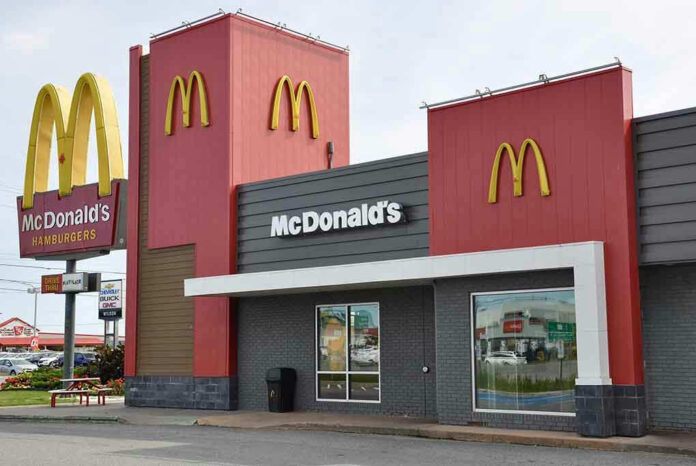
A class action lawsuit targets McDonald’s for allegedly misleading consumers with its McRib sandwich, claiming it contains no actual rib meat, sparking debate over fast-food marketing tactics.
Story Highlights
- The lawsuit accuses McDonald’s of false advertising for the McRib sandwich.
- McDonald’s maintains that the McRib is made from 100% boneless pork.
- Filed in Illinois, the case challenges the implications of the McRib name.
- The outcome could influence fast-food marketing and labeling practices.
McDonald’s Under Fire for McRib Branding
In Illinois, a class action lawsuit has been filed against McDonald’s, claiming that the fast-food giant has misled consumers with its McRib sandwich. The plaintiffs argue that the sandwich’s name and presentation suggest it contains actual rib meat, while it is actually made from 100% boneless pork. McDonald’s defends its product by stating it never claimed the McRib contained rib meat, emphasizing transparency in its ingredient list.
The lawsuit, filed in Illinois—a popular venue for consumer class actions—reflects a broader scrutiny of fast-food advertising practices. The McRib, which debuted in 1982, has a cult following due to its sporadic availability. However, this lawsuit underscores growing consumer demand for transparency and truth in advertising, particularly in food labeling.
Legal and Consumer Implications
The legal implications of this lawsuit could be significant for McDonald’s and other fast-food brands. If successful, it might lead to changes in labeling and branding practices, not just for McDonald’s but across the industry. The case hinges on whether the McRib’s name misleads a ‘reasonable consumer’—a standard in U.S. false advertising law.
Short-term impacts may include negative publicity for McDonald’s and potential financial liabilities. In the long term, this lawsuit could set a precedent affecting how fast-food items are named and marketed, potentially prompting more consumer suits against perceived misleading practices.
Consumer Expectations and Industry Standards
Consumer expectations have been shaped by decades of marketing the McRib. The lawsuit illustrates a pivotal moment where these expectations are being legally challenged. The outcome could influence how companies approach product naming, ensuring that it aligns with actual content to avoid misleading consumers.
As the case progresses, it will be crucial to monitor developments and potential settlements. The lawsuit, currently in its early stages, has not yet seen court hearings, and McDonald’s continues to defend its product. The case highlights the tension between marketing creativity and consumer protection, a balance that the fast-food industry must navigate carefully.
Sources:
Class Action Lawsuit Alleges McRib Advertising is Misleading
Lawsuit accuses Chicago-based McDonald’s of deception over McRib
McDonald’s facing class-action suit over lack of rib meat in McRib
McDonald’s facing class-action suit claiming McRib sandwich doesn’t contain any rib meat