

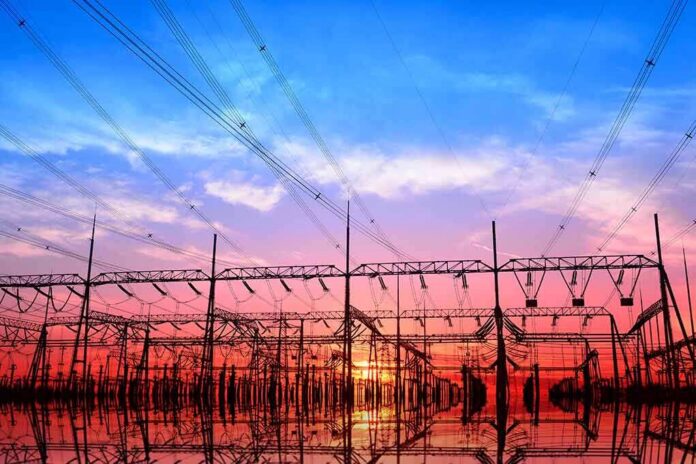
The fight over AI-era data centers is not really about computers; it is about who bears the concentrated costs of critical infrastructure so that everyone else can enjoy diffuse digital benefits.
The Short Version
- States have treated data centers as strategic assets, offering broad tax incentives in exchange for large capital investment and limited job creation.
- Local resistance is surging, driven by credible worries about electricity rates, water consumption, farmland loss, and quality-of-life impacts like noise and light.
- Best evidence shows data centers raise local economic activity and tax receipts but also put upward pressure on electricity prices over time.
- Absent clear local benefit-sharing and infrastructure upgrades, siting battles will remain the binding constraint on AI infrastructure growth.
Why the backlash exists: concentrated burdens, dispersed benefits
Data centers are the capillaries of the digital economy—capital-intensive, power-hungry facilities that translate cloud promises into physical reality. Their economics make them lightning rods. The gains—faster AI, national competitiveness, broad digital utility—accrue widely. The direct burdens—land conversion, new substation and transmission lines, round-the-clock noise, and larger utility bills—land squarely on neighbors. That asymmetry, common to power plants and logistics hubs, explains why communities that broadly support technology can still oppose the facility next door. Expert analyses describe this dynamic as a leading constraint on siting, cutting across party lines and rooted less in ideology than in utility affordability and local control.
Public concerns are neither abstract nor rare. Residents routinely cite risks to household electricity rates, heavy water use for cooling, diesel generator emissions, light and sound pollution, and the conversion of farmland or open space—especially for hyperscale campuses. Mainstream policy institutions summarize these worries as genuine and persistent, not fringe talking points.
What the economic case actually shows
Proponents argue data centers are anchors of local growth: they pour in hundreds of millions—or billions—of dollars, pay property and sales taxes, and pull through construction jobs and specialized services. State legislatures have effectively codified that premise into law. At least 38 states now extend targeted incentives—sales and use tax exemptions, property tax abatements, and, in some cases, tax credits tied to construction wages—typically contingent on sizable capital investment and sometimes minimum headcount. Illinois, for example, offers a package of exemptions plus a 20% credit on construction wages for qualifying projects.
The research record validates part of that pitch. Rigorous shift–share and instrumental-variable analyses find that localities hosting data center growth see measurable increases in total employment, construction employment, data-processing establishments, and local tax bases, alongside higher house prices; the same studies also detect upward pressure on local electricity prices as demand rises and grid upgrades follow. In short: the macroeconomic ledger is positive but not costless; growth arrives with infrastructure consequences that show up in utility bills over time.
Power, water, and the neighborhood: the technical drivers of opposition
Mechanism matters. Modern AI training and inference compress immense computation into nonstop electrical load; campuses require new substations, upgraded feeders, and in many regions, additional high-voltage transmission. Utilities recover the capital cost of those upgrades through rates. Where regulatory compacts or cost-allocation rules spread expenses broadly, residential customers feel it. Academic and policy assessments have warned that, without careful cost causation and targeted investment, data center-driven demand can lift average rates in affected service territories.
Cooling adds a second vector. Even with efficiency improvements and adiabatic systems, large facilities can consume significant volumes of water in hot months. In arid or drought-prone areas—or in towns already facing summer constraints—this becomes politically explosive. Commentators and analysts consistently list water use among the most galvanizing triggers for local moratoria and protests. Pair these with round-the-clock acoustic tones from chillers and backup generators, skyglow from security lighting, and increased heavy-truck traffic during buildout, and you have a textbook environment for sustained neighborhood opposition.
Jobs and tax math: why the ribbon-cutting glow fades
Construction surges are real: hundreds or thousands of well-paid craft jobs cycle through a multi-year build, and state programs explicitly aim to monetize that phase via wage credits and sales tax relief to win bids. But steady-state staffing at a hyperscale facility is lean by design—dozens, not thousands. That mismatch between ribbon-cutting rhetoric and operational headcount is one reason expectations sour. Neutral assessments underscore the point: yes, data centers create local jobs and bump activity in related sectors, but the long-run employment footprint is modest relative to the land, power, and fiscal concessions involved.
Local leaders therefore lean heavily on property tax growth to justify approvals. When assessments are strong and abatements time out, this can work; in soft markets or with overly generous, long-dated incentives, the net fiscal gain can disappoint. The credibility gap widens when negotiations occur under non-disclosure agreements, leaving residents to infer terms and fear the worst. Secrecy short-circuits trust—and invites backlash.
Where the genuine disagreement lies—and what the evidence supports
Two claims dominate the fight. First, that data centers are essential infrastructure for the AI economy and deliver net economic gains. Second, that they raise local utility bills, strain water systems, and offer too few durable jobs to justify the disruption. The best available causal work supports parts of both: local economic activity and tax bases rise, and electricity prices tend to move up in host markets as demand and grid investment ramp. On water, place matters: in humid regions with water-efficient designs, impacts can be moderate; in constrained basins, they become a binding limit and the central public grievance.
What does not hold up is the idea that these outcomes are fixed. Rate design that allocates upgrade costs to the drivers of demand, power purchase structures that bring new generation online in tandem with load, reclaimed-water or dry-cooling strategies adapted to local climate, and enforceable noise and lighting standards can materially change the community balance sheet. Where developers finance on-site or dedicated generation and storage—and regulators ensure those costs are not socialized—the rate impact can be attenuated. But absent those guardrails, residents’ warnings about bills, water, and livability are not alarmism; they are a forecast grounded in the way utility economics and site engineering work.
"Why Communities Nationwide Are Halting AI Data Centers"
Water & electricity strains, secrecy, & fast‑track deals ignite a coast‑to‑coast backlash. Data center bans, recalls of backroom dealing politicians.And in both conservative & liberal cities & stateshttps://t.co/CADthfAYKf— Steven Hill (@StevenHill1776) August 31, 2026
What it means going forward: siting as the real bottleneck
The AI buildout is colliding with the limits of local patience. Analysts now anticipate that community opposition will be the leading constraint on U.S. data center siting, not capital or chip supply. States can keep sweetening incentives, but unless projects demonstrate credible, enforceable community benefits—transparent tax terms, targeted rate protections, water-conservation plans attuned to the basin, and mitigation of noise and lighting—approvals will stall and moratoria will spread. The policy center of gravity will shift from “how to recruit” to “how to internalize costs and share gains.”
That reframing is overdue. Data centers are infrastructure. Treat them like it. Align rate design with cost causation. Tie incentives to measurable public returns, not just capital outlays. Require water and energy plans that scale with local constraints. And move negotiations out of the shadows; secrecy breeds opposition, while verifiable commitments earn consent. Do those things and the country can expand the digital backbone it needs without asking neighbors to underwrite it blindly. Fail, and the backlash will continue to be the grid’s most powerful load-shedding device.
Sources:
knowledge.sdialliance.org, news.harvard.edu, ncsl.org, usatoday.com, dceo.illinois.gov, forbes.com, ir.lawnet.fordham.edu, brookings.edu, nber.org, fortune.com
© conservativefreepress.com 2026. All rights reserved.