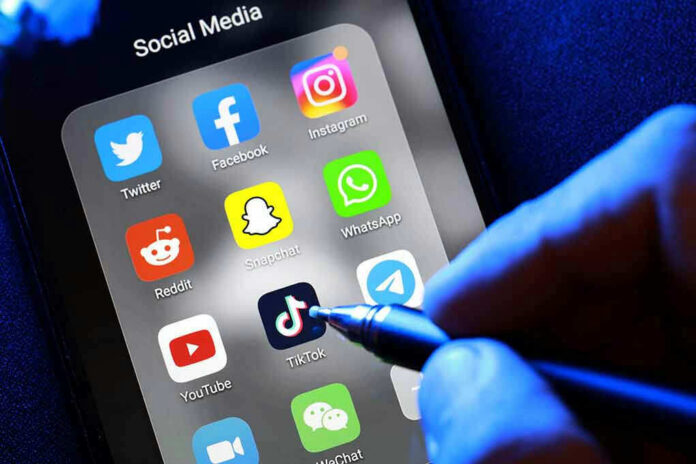
TikTok quietly settled at the courthouse door—leaving Meta and YouTube to face the first jury trial that could crack Big Tech’s legal armor over allegedly addictive design aimed at kids.
Story Snapshot
- TikTok reached a last-minute settlement in late January 2026 as a landmark youth addiction lawsuit moved into jury selection in Los Angeles.
- Meta’s Instagram and Google’s YouTube are proceeding to a 6–8 week jury trial centered on a 19-year-old plaintiff known as “KGM.”
- Judges have allowed key claims to proceed by focusing on product design features—an approach that may limit traditional defenses like Section 230 and First Amendment arguments.
- Dozens of state attorneys general, families, and school districts are pursuing parallel cases, with a federal bellwether trial for school districts scheduled for June 2026 in Oakland.
TikTok’s Settlement Leaves a High-Stakes Trial for Meta and YouTube
Los Angeles County Superior Court began jury selection in late January 2026 for what multiple outlets describe as the first social-media addiction case to reach a jury. TikTok agreed to settle shortly before trial, while Meta and YouTube remained as defendants facing claims their platforms deliberately addict minors and contribute to serious harms. The bellwether structure matters: one verdict can shape settlement pressure, discovery demands, and legal strategies across hundreds of similar cases already queued up.
The plaintiff in the case, identified as “KGM,” is now 19 and alleges years of compulsive use contributed to depression and suicidal ideation. Plaintiff lawyers are expected to frame the dispute less as a content-moderation fight and more as a product-design case—what the platforms built and how they tuned it to maximize time-on-app. That distinction matters because it aims to sidestep the legal shields that have protected tech companies for decades.
Design Features, Not “Speech,” Are the Core Legal Battle
The allegations focus on features that keep users engaged: algorithmic feeds, endless scroll, notifications, and engagement metrics that reward constant checking. By arguing the harm comes from design choices rather than user posts, plaintiffs are attempting to move the case into product-liability territory. For Americans who value limited government, this is a complicated moment: courts must weigh accountability for corporate conduct without creating a censorship regime that undermines lawful speech and parental authority.
Recent court decisions have already narrowed the defendants’ off-ramps. In 2024, a federal judge denied Meta’s bid to dismiss, letting claims alleging unfairness, deception, and failure to warn move forward. Discovery disputes followed, including an order requiring Meta to turn over requested information after arguing it was too burdensome. In January 2026, another judge ordered Meta to provide more detailed written responses about its policies for minors, signaling sustained judicial interest in how these systems function.
Parallel Lawsuits Show Broad Pressure—and a Roadmap for Regulation
The trial sits inside a wider campaign involving more than 40 state attorneys general, along with hundreds of private suits. School districts have also filed cases, arguing the platforms intensify student mental-health problems and disrupt learning, with a federal bellwether trial slated for June 2026 in Oakland. This multi-front approach resembles past “industry accountability” fights: not one sweeping law passed in Washington, but a slow build of discovery, testimony, and jury findings that forces change.
Supporters of the litigation say it is comparable to the tobacco battles of the 1990s because it targets marketing and product design alleged to hook minors for profit. Critics of that analogy can fairly point out a key limitation: the public record in this case, as summarized by major reporting, includes allegations and expert comparisons, but does not yet include a jury’s fact-findings. That is exactly why this first trial is pivotal—claims become precedent only after evidence is tested.
What Conservatives Should Watch: Accountability Without a Free-Speech Trap
Conservatives are right to be skeptical of any outcome that becomes an excuse for federal micromanagement of speech, algorithms, or “approved” viewpoints—especially after years when “misinformation” labels and political pressure campaigns were used to police debate. At the same time, the core question here is not whether Americans can speak online; it is whether a handful of corporations engineered attention traps for minors, then resisted transparency when asked to explain the mechanics.
The most concrete near-term markers will be witness testimony, internal documents revealed in discovery, and whether jurors accept the argument that addictive design can be treated like a defective product. Settlement terms for TikTok and Snap have not been disclosed, so the public cannot yet measure how much financial pressure is already building behind the scenes. Until a verdict lands, the smartest read is straightforward: Big Tech’s courtroom defenses are being tested in public—and the ripple effects could reach every family.
Sources:
TikTok Settles as Social Media Giants Face Landmark Trial Over Youth Addiction Claims
Social Media Addiction Lawsuit
Social media addiction suits in California