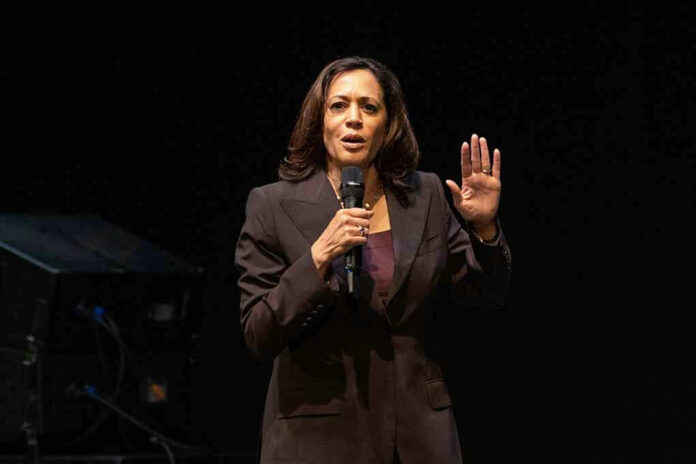
A high-profile cabinet member’s rebuke of Kamala Harris has ignited debate over identity politics and meritocracy.
Story Highlights
- Scott Bessent criticizes Kamala Harris for memoir comments about Pete Buttigieg.
- Bessent, openly gay, accuses Harris of identity politics in VP selection process.
- Harris defends her decision, citing strategic concerns over ticket viability.
- Debate centers around representation and political calculation in U.S. elections.
Scott Bessent’s Public Rebuke
On September 24, 2025, U.S. Treasury Secretary Scott Bessent publicly criticized former Vice President Kamala Harris over comments in her new memoir. Harris had revealed concerns about the American public’s readiness for a ticket featuring both a Black woman and an openly gay man, referring to Pete Buttigieg, who she considered as her running mate. Bessent, himself openly gay, accused Harris of engaging in identity politics, questioning her judgment and leadership in the process.
Bessent did not mince words, labeling Harris a “terrible candidate” and Buttigieg the “worst transportation secretary in history.” His remarks came during an appearance on Fox News and Fox Business, where he leveraged his platform to challenge the Democratic Party’s leadership on diversity and meritocracy. The story quickly gained traction in major outlets and on social media, sparking a wide-ranging debate over the implications of Harris’s statements.
The Context of Harris’s Decision
Kamala Harris’s decision-making process during her 2024 presidential campaign has been under scrutiny since she released her memoir. In the book, she candidly discusses her concerns about choosing Pete Buttigieg as her running mate, a decision she justified by citing the perceived risks of a ticket that might not resonate with the electorate due to its diversity. Harris defended her decision as strategic, emphasizing the pressures of the election climate at the time.
The Democratic Party has long grappled with balancing diversity and electability in national tickets, and Harris’s comments have reignited discussions around these themes. Her memoir’s revelations highlight the ongoing tension between representation and perceived electability, a topic that continues to resonate across party lines.
Implications for Future Elections
Bessent’s vocal critique of Harris has implications for both short-term and long-term political strategies. In the short term, it has intensified scrutiny of Harris’s leadership and the Democratic Party’s approach to diversity. Long-term, it could influence how future candidates navigate the balance between identity and merit, potentially reshaping intra-party debates.
The controversy underscores the broader ideological divides over diversity and representation in U.S. politics. Bessent’s remarks have not only challenged the Democratic leadership but also sparked discussions within the LGBTQ+ community and beyond, highlighting the complexities of identity politics in contemporary political discourse.
Sources:
Scott Bessent Slams Kamala Harris Over Memoir Comments on Pete Buttigieg
Gay Cabinet Secretary Slams Harris for Snubbing Buttigieg: She Judged Him on His Identity