
A U.S. commander just told American troops they’re no longer “deterring” Iran—they’re in “active combat,” and the mission is being framed as history-changing.
Story Snapshot
- CENTCOM chief Adm. Brad Cooper issued a letter to troops as Operation Epic Fury began, describing a shift from deterrence to direct combat against Iran.
- The U.S.-Israeli campaign reportedly struck more than 1,000 targets in the first 24 hours, with a broader target set described as over 1,250 Iranian sites.
- Pentagon leaders warned the public to expect more U.S. losses as additional troops and tactical aircraft deploy to the region.
- President Trump said the operation is “ahead of schedule” while warning Iran that further escalation will be met with a massive response.
- Key claims—especially casualty totals and the status of Iranian leadership—remain difficult to independently verify in real time.
Cooper’s Letter Signals a Clear Break From “Deterrence”
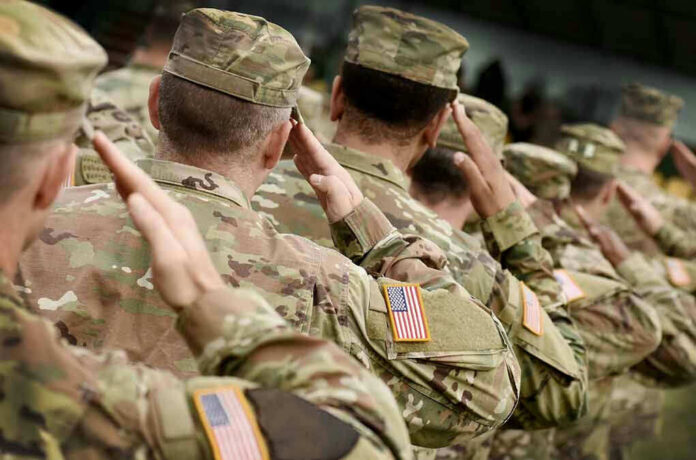
Adm. Brad Cooper, the head of U.S. Central Command, sent a letter to American service members in the Middle East on Feb. 28, 2026—the same window U.S. forces began striking inside Iran alongside Israel. Cooper characterized the operation as a move from deterrence to “active combat,” telling troops they would “change the course of human history.” The letter framed the mission as a response to Iran’s decades-long attacks on Americans.
Top officer in Middle East tells US troops ‘you will change the course of human history’ https://t.co/rqZzvvKDGy
— Task & Purpose (@TaskandPurpose) March 3, 2026
Operation Epic Fury was described in reporting as a large-scale campaign aimed at Iranian command centers, missile sites, and naval assets, including ships and submarines. Early coverage said more than 1,000 targets were hit within the first day, while the broader target list was reported at over 1,250 sites. The scale matters because it marks a shift from limited, episodic strikes to a sustained air and missile effort designed to reduce Iran’s ability to project power.
Why This Fight Started: The Kuwait Attack and a New U.S. Response
The immediate trigger cited in the reporting was an Iranian strike that killed six U.S. troops and wounded 18 at a tactical operations center in Kuwait, prompting a retaliatory campaign rather than another round of calibrated signaling. That context is central to understanding the administration’s posture: the stated intent is to stop the “archer,” not simply intercept more “arrows.” The mission’s framing places accountability on Tehran, not faceless proxies.
U.S. officials also emphasized the operational reality that this will not be a one-night event. Joint Chiefs Chairman Gen. Dan Caine said Americans should expect additional losses, and the Pentagon announced added troops and tactical aviation flowing into the theater. Separate reporting described U.S. aircraft losses, including F-15E jets lost to friendly fire with crews reported safe—an example of how fast-moving large operations can produce risks even without enemy contact.
Trump, Hegseth, and Caine: A Unified Message With Different Emphases
President Trump publicly warned that more U.S. casualties are “likely,” while also stating operations were “ahead of schedule.” Defense Secretary Pete Hegseth emphasized objectives focused on neutralizing Iranian threats rather than declaring a formal regime-change war, though he also made clear the campaign could reshape Iran’s leadership environment. Caine’s message was more operational: the U.S. can surge combat power quickly, but the fight will be sustained and costly.
Competing Claims, Rising Casualties, and What We Still Can’t Verify
Battlefield information is inherently messy, and the reporting itself reflects that fog. Early casualty counts varied before later updates confirmed additional U.S. dead, and Iranian casualty figures cited from the Iranian Red Crescent are not independently verified in the provided sources. Separate coverage also reported an Iranian naval vessel struck and sunk in the Gulf of Oman and Israeli strikes reaching Tehran—details that point to both geographic breadth and escalation risk across the region’s most sensitive corridors.
One of the most consequential claims in the coverage is that Iran’s supreme leader, Ayatollah Ali Khamenei, was killed during the strikes. That allegation, if accurate, would represent a historic shock to Iran’s system and to regional stability. However, the research notes limitations: independent confirmation is difficult, and casualty and leadership-status claims can be shaped by wartime incentives. For Americans who value constitutional government and sober accountability, verification—not hype—remains essential.
Sources:
US commander tells troops Iran strikes ‘will change human history’
Additional troops to deploy to Middle East as Gen. Caine says to expect additional losses
3 American troops killed and Trump says more likely in war against Iran